Saturday, May 31, 2008

the ways we read

If you got The Age today and love reading books, flick to page 3 of "A2 Culture and Life" and have a squiz at Kate Holden's beautiful piece on the different ways we read books. Here's what she says:

I have just emerged blinking from several glorious months dediated to a single trove of books, Patrick O'Brian's Napoleonic war novels, including Master and Commander, which was adapted into a film by Peter Weir. For week after week after week, enthralled, I learnt and loved the characters as I witnessed them growing older, enduring, exploring and sometimes expiring. What a marvellous experience! Finishing this flowing sequence of novels ... brings me a sense almost of grief. It has been joy to immerse myself so utterly in another world, and to experience the careful development of sublime authorship over 20 books.

By contrast, my friend Beth never approaches a book from start to finish. She's a voracious and astute reader. But Beth likes her reading to be an adventure. She'll open the book near the end; sample a few pages, then flick through to a chapter in the middle, and slowly work her way back and forth around the book until she's satisfied she's got the best flavour of it. ... She starts with Anna Karenina's demise, and works backwards to find out why. A true post-modern girl. ... Life is a rush; quite probably Beth gets just as much - or more - from her gypsy wandering.

I read like Kate, not Beth: doggedly, from start to finish. And I can relate to the feeling of grief which comes at the end of an epic series of novels.

Reading is my favourite and my best. Which is why my most loved romantic comedy will always be You've Got Mail. "So much of what I see reminds me of something I read in a book, when shouldn't it be the other way around?"

And I'm going to go and borrow Patrick O'Brian's Master and Commander from the library again. Time to get "the wind back in my sails."

dieting and gluttony (5h) John Piper on how eating affects our spiritual lives

Don't worry, I am planning to tie up the loose ends and conclude this series on gluttony, dieting, and honouring God with our eating!

Just a few more quotes to go, addressing an issue we haven't really looked at yet: how eating and physical health impact our spiritual life. Then I want to review a helpful book Hate to Eat, Love to Eat by Elyse Fitzpatrick on food addiction for those of you who struggle in this area, and conclude by giving you practical applications from my own experience.

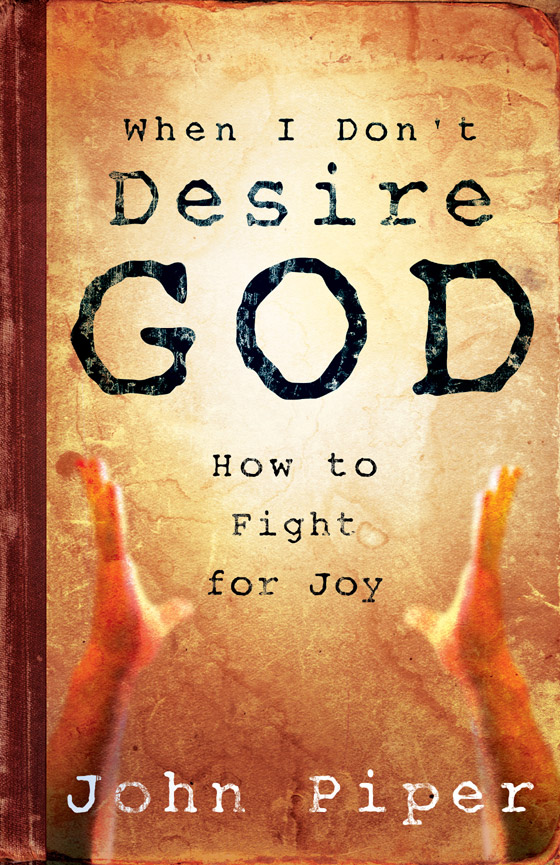
So here's some helpful comments by John Piper on how eating can help or hinder our joy in God, from his excellent book When I Don't Desire God. This quote is from a chapter on how things like sleep, food, exercise, music, relationships and beauty affect our physical bodies, and since we are embodied creatures, impact our joy in God. I commend this book and this chapter to you!

The proper or improper use of our bodies can have a huge effect on the way we experience spiritual reality. ... Proper eating and exercising and sleeping has a marked effect on the mind and its ability to process natural beauty and biblical truth.

So the question must be faced: How do we use the created world around us, including our own bodies, to help us fight for joy in God? ... We all make choices about how we sleep and exercise and eat. ... There is no way around the issue. ... Our physical lives will affect our spiritual lives whether we plan it or not. Better to think it through and be intentional. ... Take steps to keep our bodies and minds as fit as we can for spiritual use. ...

Please don't interpret this as a kind of chipper health and happiness regimen. The question is not whether God can reveal himself in precious ways to those who suffer. He can and does. ... The questions is what we should do during times when we can choose our own lifestyle of eating and exercising and resting. In what indirect ways can we improve the ability of our bodies and minds for their partnership in perceiving the glory of God? ...

Sereno Dwight tells us that Jonathan Edwards "carefully observed the effects of the different sorts of food, and selected those which best suited his constitution, and rendered him most fit for mental labour." Thus he abstained from every quantity and kind of food that made him sick or sleepy. Edwards had set this pattern when he was twenty-one years old when he wrote in his diary, "By a sparingness in diet, and eating as much as may be what is light and easy of digestion, I shall doubtless be able to think more clearly, and shall gain time." Hence he was "Resolved, to maintain the strictest temperance in eating and drinking."

The point here is not to commend the particulars of Edwards's eating habits. The point is that we be intentional about how our eating affects the ability of our body to be a helpful partner in seeing the glory of God. We live in an era of eating disorders. I am not eager to create another one. I commend balance. Put the following two texts beside each other. On the one hand, Paul made food and drink clearly secondary: "The kingdom of God is not a matter of eating and drinking but of righteousness and peace and joy in the Holy Spirit" (Rom. 14:17). But on the other hand, he said, in regard to food, "I will not be enslaved by anything" (1 Cor. 6:12). In the balance of these two truths we can find a way to eat that will provide both the denial and the delight that will fit us for seeing the glory of God in the Word and in the world. ...

Contemporary medical knowledge would include the fact that obesity kills and contributes to dozens of ailments. Not all obesity is self-inflicted. Some medical conditions make it virtually impossible to avoid it. But most of it is self-inflicted, and this kind of self-destruction does not enhance the ability of the body or the mind to see and savour the glory of God in this world, or the glory of Christ who endured the cross by postponing the feast till the age to come (Heb. 12:2).

This quote is from the chapter "How to wield the world in the fight for joy" in John Piper's When I Don't Desire God, pp.201-2.

You can follow the thread on eating, gluttony and dieting here.

Friday, May 30, 2008

Equip book club

Hear ye, hear ye, hear ye, the Equip book club is here!!! (I would have told you a couple of weeks back, but I've been a little distracted recently.)

The Equip book club is planned and run by my bloggy friend Nicole, who I met a couple of weeks ago at Equip. What a privilege, to meet my bloggy friend in the flesh!

Like me, you probably struggle to find time to read Christian books. Being part of a book club can encourage you to stay on course with your reading.

The Equip book club has chosen 11 books (one for each month until Equip 2008) which they think Christian women will enjoy reading, thinking, and chatting about. Each month someone writes about a book, and you're invited to respond with comments.

The book for June is Bryson Smith's Faith: A Matter of Trust, so you might want to get reading!

I was thrilled to be asked to contribute. In November I'll be writing about John Bunyan's The Pilgrim's Progress, the story of Christian's journey to the Celestial City.

Just to whet your appetite, I'm thinking of writing about the Christian life in terms of "journey," "geography," "battle" (thank to Jenny for these ideas) and the final hurdle, the "river" of death. I'd also love to write about Puritanism and John Bunyan, and review some editions of Pilgrim's Progress for children, but we'll see.

So join us for the ride: a book a month, lots of great posts, a chance to make your own comments, and encouragement from your sisters in Christ to read good books which feed your faith and encourage your joy.

Thursday, May 29, 2008

a lesson in kindness

Last week, under the fatherly hand of God, I learned a short, sharp lesson in kindness.

I have dear friends who excel in kindness. As soon as they hear of someone in need, they are there with loving service: making plates of food for a child's party, baby-sitting during a time of stress, cooking meals for someone who's ill.

I easily forget simple acts of kindness. When people share their problems with me, I tend to listen and advise rather than offering practical help. I don't even think of providing such help, and if I do, it often seems too hard for this mother of 4. I say this to my shame.

But last week I learned first hand what it is to go through a difficult time without much help. Not through anyone else's fault! I refused the help that was offered, because of my own pride and inexperience of grief. Like many of us, I prefer independence to the humility of accepting service, and I didn't realise how debilitating grief would be.

I learnt first-hand how important other people's kindness is in helping us deal with the difficult experiences of life. I was reminded that kindness isn't academic, that it has an impact on real people in the real world. I realised that when I fail to offer kindness to someone, I may be increasing their exhaustion and discouragement.

I needed this small rebuke from God! I hope and pray that next time someone tells me about a difficult time they're going through, the first words out of my mouth will be, "Tell me something I can do to help!"

Wednesday, May 28, 2008

Superwoman: the Proverbs 31 woman

I've always found the Proverbs 31 woman more than a little intimidating.

Here's a woman who gets up before dawn, provides for an extended household, weaves her family's clothes and bedding, runs a successful business, speculates in farmland, cares for the poor, works far into the night, and earns the praise of husband, children and her community! "Superwoman" indeed.

But I understand her a little better after hearing Claire Smith's "Superwoman" seminar at Equip a couple of weeks ago (sorry it's taken a while to write about it!).

Claire's seminar was so thorough, thoughtful, and heavy with gold, that no blog post can do it justice. A woman after my own heart, she obviously weighed and analysed every word before presenting her thoughts to us.

I thought I'd share some of her insights (you might like to read Proverbs 31:10-31 first):

  • Songs about women were usually about their erotic appeal, not their domestic prowess. But the woman in Proverbs 31 is described in military terms. She's strong, resourceful, energetic, intelligent, independent, productive, and vigourous.

  • The Proverbs 31 woman is rare, like rubies. Worth looking for, you men.

  • But don't expect to find her! She's an historical possibility, but she's also a stereotype, the good version of all the bad versions of women in Proverbs. For Proverbs sees things in black and white. She's not labouring under the burden of grief, a sick child, or a chronic illness (phew!).

  • She's no doormat or lackey. She's a responsible moral agent. Her approach to life is purposeful and thoughtful. She "selects", "considers", "sets about" and "watches over." She is who she decides to be.

  • Yet she's no feminist hero. Her primary sphere is the home. She works outside the home, but only for the benefit of her husband, children and home. She enhances her husband's work by what she does. (I found this very challenging. Do I think of my family or my own satisfaction when choosing what to do outside the home?)

  • She's active in the community, helping the poor and needy. (A question: should ministry and charity ever be at cost to our family? I think it's good for children to learn the cost of discipleship. Our aim is not to make them comfortable. But ministry and charity shouldn't undermine the primary responsibility to support, teach and nurture our family. [1 Tim. 5:8])

  • In her we see the truth that work is not only under God's curse, making it difficult and unrewarding, but also that work is a great blessing from God, which we can enjoy with thanksgiving (Gen. 1:28; Eccles. 3:13). This transformed my thinking about work!

  • She's is one of a long line of women who give wise instruction (Deut. 6:7, Ex. 15:20, 2 Kgs. 22:14; Ac. 21:9; 2 Tim. 3:14-15; 1 Cor. 11, 14).
  • She clothes herself beautifully and makes rich coverings for her bed (Prov. 31:22), in contrast to the adulteress, who perfumes her bed and covers it with fine linens (Prov. 7:17-18). Good sex in marriage helps prevent bad sex.
  • Beauty may fade, but the fear of God remains. All that she does flows from her love for, obedience to, and trust in God. The Proverbs 31 woman may seem too good to be true, but like us, she lives under God's grace.

Tuesday, May 27, 2008

trusting God with the life of a child

Last Tuesday afternoon, I sat on our back verandah, looked up at the lemon-scented gums, and sobbed. And no, it wasn't about my father-in-law, who died 5 days before, although I've shed many tears for him.

I was crying out to God for the ability to trust him with the life of my only daughter.

Lizzy has been sick for over a month. Sore stomach, a bizarre headache in the back of her head, aching muscles. She's been dragging herself through school and putting herself to bed an hour early every night, as her skin grows whiter and the circles under her eyes more purple.

The doctor examined her and found nothing wrong. "Try these pills (the implication being they probably won't do much) and come back in 2 weeks if she's still sick." One week later and I'd had enough, so the doctor booked her in for a battery of blood tests last Monday.

The final brick in my towering wall of anxiety came when Lizzy's teacher approached me last Tuesday afternoon, obviously worried about the sick, pale little girl struggling to sit through 6 1/2 hours of school every day.

You probably understand the thoughts that go through a parent's mind at times like these. Thoughts you barely dare to name, certainly not to the doctor, for fear they'll think you're an over-anxious parent (which, let's face it, you are). Cancer. Brain cancer. Leukemia.

And if you give in to the impulse to look it up on the internet (I succumbed after a month of anxiety) you get big medical names for your worries, like slow-growing chronic myelogenous leukemia, with symptoms vague enough for any vague set of symptoms.

So I sat on the verandah and cried out my worry and fear to God.

I committed my children to God years ago. I pray,

Keep them safe. Please keep them safe! But do with them as you will. They are yours, you love them more than I do, you know what is best for them. Watch over them, grow them into the people you want them to be, and use their lives for the good of your kingdom. Even at cost to me - or them.

God's preparation for the times when the pit of fear opens before my feet. So I was able to say through my tears "The Lord gives and the Lord takes away. Blessed be the name of the Lord" (Job 1:21). I was able to tell God I love him more than anything, more than life itself, more even than the life of my children.

But I was unable to trust him.

I know God isn't capricious. I know he doesn't delight in hurting us. I know he's no cosmic kill-joy. I know "all things work together for good for those who love God," the good of making us more like Christ (Rom. 8:28).

I've said it myself: "He gives us only the suffering that is needful, no more."

But is it really true? Does God give me just enough suffering to make me more like Christ? Is the Christian who suffers more in need of being made like Christ than the one who doesn't? Of course not! So what does it mean to say God gives us only the suffering that is needful?

Is there always a reason for the suffering of God's people? What does it mean to say we may never know the reason? Does it mean there isn't a reason, or that there is a reason, but it may stay hidden in God? And what kinds of reasons does God have for our suffering?

In other words: can I trust God with the life of my only daughter?

Here's how my wise husband answered my questions: Yes, there's always a reason for our suffering, as there was for Job. But no, we won't always know the reason, just as Job didn't. God's reasons aren't limited to making us Christ-like, so there's certainly no direct link between the amount of suffering I experience and my lack of Christ-likeness. All suffering is used by God to make us more like Christ, but he may have other reasons as well.

For there are many reasons for suffering. God's fatherly discipline for things I do wrong. His training ground to produce greater Christ-likeness in me. An encouragement to find comfort and joy in God. The testing and and refining of my faith. Prying my fingers away from holding too tightly to the good things of this world. Increasing my sympathy for another's suffering. The catalyst to lead someone else to Christ.

Above all, I hope suffering will always be an opportunity for God's great and holy name to be glorified in my life.

And I can live with this uncertainty. I like to know the reasons, but I can live without a reason. I can live with the absolute certainty that God loves me and my children more than I will ever know, that he always has a reason for allowing us to suffer, and that the reason may stay hidden in his loving Father's heart.

I can trust my heavenly Father with my life and the lives of my children.

It turned out that Lizzy probably has coeliac disease, like her father: an intolerance to gluten, which means she'll be unable to eat wheat, barley or rye for the rest of her life. Good news, especially for a family already used to coping with this condition! I am already praying God will use this condition to grow her in thankfulness, patience and self-control.

Monday, May 26, 2008

seasons of life and Bible college

Many of you are studying at theology college, or married to people studying at theology college, and I thought you might find this encouraging. Also any mothers among you, or anyone going through any season of life - which I think covers all the readers of this blog.

It's a Q&A from John Piper's How to Fight for Joy conference talks, which I've been listening to on my iPod. Enjoy!

Q. Do you have any practical advice for seminary students dealing with marriage and work and study and ministry - how to get through that, and to keep your affections with God, and not in all these other things?

A. Resolve to live as simply as you can so that you and your wife can work as little as possible and not burn the candle at both ends. Choose a simple apartment, eat simple food, don't eat out very often, don't go to a lot of movies. Keep your life pressured by things that matter: schoolwork, marriage, kids, health - "physical health does a little bit of good" the Bible says (1 Tim. 4:8). That's the first thing. Try to strip away the non-essentials.

And then, within the essentials, put your time with God in a place and a time that is sacred and inviolable. He does not get the dregs, not even after your wife. Meet him in the morning, and if you have to, get up 1/2 hour earlier. Do what George Mueller did. He said, "The first task of my life every morning is to get my heart happy in God, because I'm of no use spiritually to anybody if I can't share the delight that I have in God." Fight that fight. That's more important than assignments, marriage, children, and health. Keep yourself alive in God. When that's in its place, you can be a better husband, and you can be a better father, and you can be a better student.

If you weren't married, I'd say marry the right woman, namely a woman who can do without you for 3 years! (laughs) It does help to have a wonderfully self-resilient wife who says, "This is a season. This is a season."

Whether you're 60 or 16, life is seasons. There's a season with little kids in nappies. There's a nappy season, then there's a pre-school season, then there's a school season. Life is seasons.

And if you take any one season, then it feels like this is all life is going to be. No. Seminary is not the end of life. It's a tough season. Maximise it. Even the hard things. Maximise the hard things in it, for your own sanctification.

Then you'll enter into another kind of hardness afterwards.

Sunday, May 25, 2008

fruit of the Spirit bag tags

And here's the craft Liz and the kids made for their Sunday School lesson on goodness: bag tags with Micah 6:8 on them. The kids wrote their names on the back, cut them out and laminated them to hang on their school bags, to remind them to live for God while they're at school. Clever!

Sunday School - fruit of the Spirit - goodness

Today the children are looking at the word goodness. The fruit: a banana, of course! Bananas are full of goodness, aren't they?

I'm not leading Sunday School today. A kind friend offered to lead it for me, to give Steve and me time to rest and recover. But let me tell you what I learned about "goodness" as I prepared the lesson, and how I would have taught it.

It took some work to look up all the "goods" and "goodnesses" in the concordance! The Bible word "good" has a huge range of meanings, from "pleasant" to "righteous," as it does in English. Like all the fruit of the Spirit, this quality springs from God, who is "good" and the giver of "good" things to his people.

Those who are "good" imitate God in two ways:
- they are morally upright, doing what is right, fair and just;
- they do good to others, treating them with loving kindess, mercy and generosity.

The children will hear the story of one of the "good" kings of Israel, who did "what was good and right and faithful before the LORD" and "walked in the ways of his father David" (2 Chron. 31:20, 34:2). The story of Josiah, who became king when he was only 8 years old.

Do you remember how, as a teenager, Josiah began to seek God? How he ordered the ruthless destruction of idols and false priests (no pretty Sunday School story this!) and scattered their ground remains over the graves of their worshippers? How he repaired the temple, and restored the worship of the one true God?

Do you remember the glorious and terrible day the scroll of God's Law was discovered lying dusty and neglected in the temple? How Josiah tore his robes and mourned because of God's anger which was coming on his people because they had not followed God's Word?

Do you remember how Josiah read the Book of the Covenant loudly to all the people, and how they repented and pledged themselves to obey God's commands? How they celebrated the forgotten Passover once again?

I think I would have chosen an 8-year old boy from our class, put a paper crown on his head (although Josiah was much older when the law was found) and asked him to read the 10 commandments as Josiah would have to the Israelites.

Not to return the children to law-keeping! But to remind them of the goodness God demands from his people, even after our law-breaking has been paid for by Jesus' death.

The children will talk about how God's Word shows us what is "good": to love others, obey parents and teachers, and refuse to lie, cheat or steal, even when their friends act differently. They'll listen to the Colin Buchanan song "Do not lie, do not steal, do not deceive one another" (Lev. 19:11).

The craft will be a pendant or bag tag, perhaps made from bakeable clay, to hang aroung their necks or on their school bags. To remind them to stay true to God, even when it's hard because it sets them apart from friends and classmates.

I'll leave you with the Bible verse the kids may learn today:
He has showed you, O man, what is good. And what does the LORD require of you? To act justly and to love mercy and to walk humbly with your God. Micah 6:8

Friday, May 23, 2008

grieving through the eyes of a 4-year-old

We all grieve in our own way.

One of the most challenging things about this week has been answering Thomas' questions about his Poppa's death.

Our children saw their Poppa's body, peacefully laid out in his own bed. I think this was important to give them closure and help them understand the reality of death: that the real Poppa is no longer on this earth, but that he has gone to heaven to be with Jesus.

Here are some of the comments and questions we have heard from Thomas:

- If I touch Poppa's body, will I go to heaven?
- Why isn't Poppa talking to me?
- When Poppa went to heaven, he left his face behind.
- At the big table there will be an empty seat, because of Poppa.
- Is Poppa everywhere?
- No more Poppas in the world now, Mummy.

And Andrew's comment when he saw the powerpoint about David's life at the funeral?

- Poppa. Poppa!

Then, looking around the church:

- Poppa?