Showing posts with label God's sovereignty. Show all posts

Thursday, September 29, 2016

The hero of my story

We begin by thinking we are the authors and heroes of our stories. We give ourselves a starring role. We start with plans, aspirations and expectations: studies, marriage, children, career. Perhaps our dreams have the appearance of selflessness: ministry, mission, service. But still we are the heroes, preferably sung rather than unsung. Our families flourish. Our ministries are fruitful. Our plans succeed.

And then they don’t. Earlier this year, I was at the hospital – again – with my chronically ill son. We walked past the room where my husband had chemotherapy two years ago. Sometimes I wonder if I imagined that chemotherapy has a smell, and then I walk down that corridor and realise, nope, it wasn’t just in my mind. It’s a chemical smell that sticks to the back of your throat and lingers in your nasal passages. One sniff, and I was swallowed up by memories: weeks of sitting by Steve’s hospital bed, and months of watching him endure chemotherapy. We’re now in that nervous waiting stage where we don’t know whether the cancer will return. In a few weeks, we’ll get the results of another scan. You learn not to dwell on it; but the awareness is always there, like something flickering at the edge of your sight. This has become my story; a very different story from the one I would have written for myself.

Life refuses to shape itself to the neat narratives we write for it. When you’re young, you lay your plans: you’ll study this course, get that job, marry, have this many kids, do these ministries. At some point you realise life isn’t turning out the way you thought it would. Sometimes, as in my case, this might be because life takes an unexpected turn – our son’s chronic ill health, my husband’s cancer – but often it’s simply because we’ve reached a certain age and our hopes haven’t been realised (aka: the midlife crisis). This can lead to grief and fear. But it’s also an opportunity to learn something we should have known already: that we’re not the author of our stories; God is. He is the one who ordains every one of our days (Psalm 139:16 cf. Prov 16:9).

God is the author of my story. And he’s a far better author than I could ever be. I wouldn’t have written so much hardship into the recent pages of our life. But as I look back, I’m surprised to realise that, in some ways, the suffering is the part I’m most grateful for. It’s helped me see just how weak I am, and driven me to rely on God’s strength. It’s chased me into his arms, and deepened my knowledge of him. It compels me to set my hope on eternity rather than this life, and moves me to comfort others with the comfort I’ve received (2 Cor 1:3-7). I don’t fear the future like I used to, because God has been with me in the darkest times. I have tested him, and he has proved true. His faithfulness seems tangible to me now, solid rock under my feet. My faith is more stable, my joy more intense, and Jesus more precious. No one would ask for it – the grief, pain and fear – but in God’s mercy I have gained more than I have lost.

Of course, this perspective is only possible at one of those pauses in the story when you stop and reflect on what is past. On the darker pages that perspective is lost. There was one morning – I don’t like to remember it – when I woke out of a deep sleep to gut-wrenching tears and faced fully, perhaps for the first time, what all this might mean: my husband gone and four children to bring up on my own. On that day going on seemed too hard, because I don’t want to live this story – who would? Yet I know that, however dark these pages – however hard it is to see now – the day will come when I will see and understand. For the author of this story is a master story-teller, and no sentence is wasted. He crafts every paragraph with care and precision. I may be bruised and battered and broken – sometimes I wonder if I will make it at all – but he turns my weakness into strength and my brokenness into blessing. This story may pass through darkness, yet in his hands, I know it will end in joy.

Better than that, this author hasn’t stayed outside the story, an omniscient, removed narrator; he has become a character on its pages. He knows what it is to cry out in the dark, and he is the one who overcomes the darkness. For in the end, this isn’t my story at all. Not only am I not the author of my story, I’m not the hero either. My part in this narrative serves to do one thing: highlight and direct attention to Jesus. He is the hero of this story, not me. My story is a tiny part of a much bigger one, the story of God making and winning a people for himself, from the creation of the first quark, to the crisis of the cross, to the climax when everything is brought under the kingship of the Son (1 Cor 15: 22-28; Eph 1:3-10; Col 1:15-20).

So forget me being the author of my story. The real Author is far more skilled than I am. Forget me being the hero of my story. Jesus is front and centre on all its pages. Forget this being my story. It’s God’s story, and it’s moving towards the glory of his Son. We’re all caught up in a bigger story, you and I, and that’s exactly the way it should be.

This post first appeared at The Gospel Coalition Australia

Image: Manuscript of David Copperfield, © Victoria and Albert Museum, London.

Monday, October 12, 2015

life in God's waiting room

I’ve been thinking about waiting. The waiting you do when your hopes and dreams have been deferred—again. The waiting you do when you’re offered the opportunity you longed for but have to turn it down—again. The waiting you do when the future is uncertain and your plans can only be tentative and provisional—again.

Waiting, through twelve years of raising young children and five years of our son’s chronic illness, for a time when I can do more of the ministry I love outside the home. Waiting, through my husband’s cancer diagnosis, a six-week hospital stay and half a year of chemotherapy, to be washed up on the shores of not-quite-ordinary life again. Waiting, now, for his medical scans, the fork in the road; one path leading to further treatment, the other to four more years of waiting until we receive the all-clear.

Waiting for the waiting to be over.

So what do I do, here in life’s waiting room? Do I choose escapism? Do I complain and grow resentful? I do both, sometimes. But surely there are better uses of this time.

Here’s how I see it. There are two possible things going on here.

The first is that this isn’t so much a waiting room as God’s training-ground. A hothouse where I’m grown in Christlike character (Jas 1:2-4). A boot-camp to strengthen the muscles of perseverance, humility and hope (Rom 5:3-4; 1 Pet 5:6-11). God’s university, where he teaches me to mourn with those who mourn (Rom 12:15) and gives me the comfort that I will one day share with others (2 Cor 1:3-7), preparing me for life and ministry.

The second is that this isn’t a waiting room for life; it is life. These hardships may continue for many years. In which case, this isn’t preparation for anything more than the hard slog of patient endurance. And that’s okay. Because if I never get to do the ministries I long for, and just keep encouraging others by trusting God in hardship, that will be sufficient service for a lifetime.

Come to think of it, those aren’t alternatives. They are different perspectives, views of the same reality from opposite sides. Whatever God has in store, this is both training for life and life itself. This is the life God has given us. You don’t stop living just because you are waiting.

So what do I do, here in the waiting room?
  • I fulfil the duties of this time. I may not have chosen them—the doctors’ visits, the extra school trips, the weight of care—but this is the good work God has given me, and I try (and often fail!) to do it cheerfully, patiently and well. 
  • I make the most of the time we have together as a family to build strong relationships as a foundation for whatever may come (I’ve planned more family holidays and weekends with my husband this year). 
  • I train my own mind, and the hearts and minds of our children, to trust God during the trials we face now and the ones we may face in the future. 
  • I remember all those who have waited: for an affliction to end (Ps 27:14), a prayer to be answered (Ps 5:3), a ministry to begin (Exod 7:7), a hope to be fulfilled (1 Sam 1), and (this includes all of us) for Jesus to return (Rev 22:20). I am not alone. 
  • I put one foot in front of the other. Sometimes this means telling myself, “I know you feel lousy, but just do the next thing. It might make you feel a little better, and if it doesn’t, at least you will have finished one more task.” 
  • I pray the prayers of those who wait (e.g. Ps 130), bringing my fear, grief, disappointment and frustration to God, turning to him rather than away from him. 
  • I make plans that assume life will continue the way it is but that allow for uncertainty, then commit these plans into God’s hands (Jas 4:13-15). 
  • I manage my energy levels so I can keep serving: a good night’s sleep, regular exercise, a daily time of rest, and a weekly morning off to read an encouraging book, pray, and reflect on life. 
  • I live the ordinary Christian life wherever we are, from hospital to home (1 Pet 4:19). I read my Bible, pray for others, turn from sin, meet with God’s people, and try to use every opportunity to make Jesus known. 
  • I choose ministries that I can maintain, that use my limited time effectively to meet others’ needs, and that allow for interruptions. It helps if some of these ministries energize me so I can fulfil my primary ministry to our family. 
  • I learn the lessons that waiting teaches me: that we may plan, but God directs our steps (Prov 16:9); that the building of his kingdom doesn’t depend on our usefulness (Ps 127:1-2; 1 Cor 3:7-9); that his grace is sufficient for every day he gives us to face (2 Cor 12:9-10). 
  • I fight to choose contentment, thanksgiving, trust, and joy (1 Thess 5:16-18), remembering that God’s plans for me are better than any I could make for myself.
I don’t want to waste this time in the waiting room. I want to use it, every bit of it. Whether it turns out to be a waiting room or simply the life God has given us, I want to be able to look back and say: I did the work God gave me to do, in his strength and for his glory. And that is more honour than I deserve, and joy and privilege enough for me.

This article first appeared at GoThereFor.com.

Photo credit: Erich Ferdinand

Monday, June 15, 2015

what I'm reading: why God allows evil

I was hunting through some old drafts, looking for something to post on a mostly empty blog (we have been away), when I came across this quote from Tim Keller's Walking with God through pain and suffering. Such an encouragement!
Why could it not be that God allowed evil because it will bring us all to a far greater glory and joy than we would have had otherwise? Isn't it possible that the eventual glory and joy we will know will be infinitely greater than it would have been had there been no evil?

What if that future world will somehow be greater for having once been broken and lost? If such is the case, that would truly mean the utter defeat of evil. Evil would not just be an obstacle to our beauty and bliss, but it will have only made it better. Evil would have accomplished the very opposite of what it intended.

How might that come about? At the simplest level, we know that only if there is danger can there be courage. And apart from sin and evil we would never have seen the courage of God, or the astonishing extent of his love, or the glolry of a deity who lays aside his glory and goes to the cross.

For us here in this life, the thought of God's glory is rather remote and abstract. But we must realize that the most rapturous delights you have ever had - in the beauty of a landscape, or in the pleasure of food, or in the fulfillment of a loving embrace - are like dewdrops compared to the bottomless ocean of joy that it will be to see God face-to-face (1 John 3:1-3). That is what we are in for, nothing less.

And according to the Bible, that glorious beauty, and our enjoyment of it, has been immeasurable enhanced by Christ's redemption of us from evil and death ... Because of our fall and redemption, we will achieve a level of intimacy with God that cannot be received any other way ...

And why could it not be that our future glory will actually so "swallow" the evil of the past that in some unimaginable way even the memory of the evil won't darken our hearts but only make us happier? (117-118)

Sunday, October 19, 2014

my times are in your hands

"My times are in your hands" (Psalm 31:5) - two days in a row we received this verse in a card in the mail.

A wonderful reminder that it is God who ordains and numbers our days (Psalm 139:6; Job 14:5) - not, ultimately, illness or health professionals.

Jesus said, "Who of you by worrying can add a single hour to your life?" (Luke 12:25) - an encouragement against health anxiety.

Our times are in his hands.

Monday, December 9, 2013

what I'm reading: God will never again know perfect and unmixed happiness until he has brought us home

The love of God is no fitful, fluctuating thing, as human love is. It is a spontaneous determination of God's whole being, an attitude freely chosen and firmly fixed.

God loves creatures who have become unlovely and (one would have thought) unloveable. There was nothing whatever in the objects of his love to call it forth; nothing in us could attract or prompt it.

The love of God is free, spontaneous, unevoked, uncaused. God loves people because he has chosen to love them, and no reason for his love can be given save his own sovereign good pleasure.

Through setting his love on human beings God has voluntarily bound up his own final happiness with theirs. God's happiness will not be complete till all his beloved ones are finally out of trouble.

He has set his love upon particular sinners, and this means that, by his own free voluntary choice, he will not know perfect and unmixed happiness again till he has brought every one of them to heaven.

He has in effect resolved that henceforth for all eternity his happiness shall be conditional upon ours.

Thus God saves, not only for his glory, but also for his gladness.

JI Packer Knowing God 137, 140, 141

Monday, September 23, 2013

what I'm reading: the difference between cause and purpose in the "why?" of suffering

I finished Nancy Guthrie's Holding on to hope a few weeks ago; a book written  after the loss of a daughter while facing the loss of a son.

Now I'm reading Hearing Jesus speak into your sorrow. Written 10 years later, it's perhaps a little less raw and a little more mature, but equally helpful.

Once again, I'd highly recommend this book as suitable to give to someone who's suffering. It's wise, biblical and comforting, a collection of reflections that can be read during your devotions.

So far, chapter 6 - "I have a purpose in your pain" - has been the most helpful chapter, for 4 reasons:
  • it has a clear, biblical explanation of God's sovereignty in suffering (one of the best I've read)
  • it explains why suffering is never punishment for a Christian's sin (I was surprised to find how common and painful the thoughts "I deserve this" and "I did something to cause this" are when you suffer)
  • it lists three truths about God that got Nancy through her suffering (very familiar ones to me)
  • it reframes the question "Why?" (in terms of purpose rather than cause).
It's the last one that stood out for me. Nancy Guthrie says,
Why? is the questions that seems to haunt most people who suffer deeply. In fact, many of us get stuck there. Until we get an acceptable answer to this question, we can't move forward.

In asking why, I think we really have two questions. We want to know what caused the suffering, as well as what purpose there is in it. We want to know what or who is responsible and then figure out if there was any good reason for it. ...

Honestly, I've come to think that looking for a specific answer to the question Why? is mostly an unsatisfying quest.

What we really are in search of is not an explanation but a sense of meaning. We want to know that there is some meaning and purpose in our losses - that they are not random or worthless.

God wants us to stop being stuck on figuring out the cause of our suffering so we can fulfill the purpose he has in our suffering.

What allows us as God's children to endure it is that while it's painful, we're confident it's purposeful. Never punitive. Never random. Never too harsh. Always out of love.
And then she outlines some of God's purpose in our suffering:
What's the purpose? God's desire is that "afterward there will be a peaceful harvest of right living for those who are trained in this way" (Hebrews 12:11).

God is at work cutting away the dead places and destructive patterns in our lives so we can flourish and grow.

His purpose for your suffering and my suffering is that in the midst of it, we would put the work of God in our lives on display for the world to see.
Of course, there is still much that we won't understand in this life:
Sometimes God, in his goodness, draws back the curtain and shows us; we can see how he is using our loss in our lives or in the lives of those around us.

Other times we have to wait. Certainly we can never expect to see the complete purposes of God in this life.

That is where faith is required -

faith that God is working out all things for the good of those who love him,

faith that the day will come when what we can't see now will become clear,

faith that he will give us the grace we need to put his glory on display for the world to see.

Thursday, May 30, 2013

God’s gifts in suffering (4) Suffering deepens our knowledge of God

For I know that the Lord is great,
and that our Lord is above all gods.
Whatever the Lord pleases, he does,
in heaven and on earth,
in the seas and all deeps. (Psalm 135:5,6)
Melancholy  ... I write this post with a heavy heart, because we are neck-deep in this particular season of suffering. It’s not showing any signs of letting up, at least for now. It’s only bearable because God no longer seems like a stranger.

Of all the effects of suffering, this is one of the most disquieting: the God I meet in suffering is different from the God I thought I knew. It’s as if you turn to a friend and catch an expression on their face that you never expected to see there. Your wife of twenty years does something so completely out of character that you wonder if you really know her. Your father turns out to be fundamentally different to the man you loved and respected all these years.

The fault, of course, doesn’t lie with God. It never did. It’s that we live with unconscious assumptions about God and his dealings towards us, beliefs that would probably horrify us if we pulled them into the light (“I am exempt.” “God will do what I ask.” “That would never happen to me.”). So we leave our assumptions hidden and unquestioned, where they lend us a kind of empty comfort. The worst will never come, because… (here we fill in our own A, B and C).

This can happen even if we are well-prepared, our theology of suffering carefully laid down. In my early 20s, I read How Long O Lord, because we were told that those who read this book would be ready for suffering when it came. There was great truth in that. I still repeat this lesson to those younger than me. I don’t know how I would have weathered this storm without a strong doctrine of God’s sovereignty and goodness in suffering. But it doesn’t matter how prepared you are, suffering always comes as a surprise.

The storm front approaches, but you don’t see it coming. The world crumbles, the earth shakes, and you cry out in shock. Cracks appear in your theology. Suffering forces its way in and wedges them apart. They grow bigger and bigger, until your view of God threatens to collapse like a house on the sand. Suffering shows you the weak points. It enlarges them and says, “There!”.

I’m sure the weak points are different for everyone, but in my case, as I watch my son trudge through days of pain, it doesn’t take long to realise there’s something odd about my view of God’s providence. I can’t understand why medicine helps but God, it seems, doesn’t. Is it that he can’t? Or that he won’t? I know it’s not the first, but I can’t quite get my head around the second.

My son’s doctors, on the other hand, seem eager to help. They can’t do much, but what they can do, they do. It’s the same with the people around me. So why does God seem so unwilling? Why is he depending on medicine, when he could heal with a single thought? At some level, a level I barely dare to acknowledge, I ask, “Doesn’t he want to? Is he powerless? Does he care?”

So I turn to the same place I turned to all those years ago. I open How Long O Lord and struggle through those last, difficult chapters on God’s providence. I begin to read Joni Tada Eareckson and Stephen Estes’ When God Weeps, and Paul Grimmond’s Suffering Well. I search the Scriptures, and painstakingly rebuild my theology, brick by brick, starting with these words by Don Carson:
A miracle is not an instance of God doing something for a change; it is an instance of God doing something out of the ordinary. That God normally operates the universe consistently makes science possible; that he does not always do so ought to keep science humble.1

An odd paragraph to bring so much comfort; but comfort me it does. I begin to see that the God who made and sustains the universe works through medicine as well as what we call “miracles”: they are both gifts direct from his hands. Health slowly and painstakingly regained, or never regained at all, is as much an indication of his love as instant healing. What he wants to do in us may take time and hardship. His plans for us are bigger and better than the ones we make for ourselves.

The God I am getting to know is no cheap-and-easy vending machine: put in a dollar, get out a chocolate bar. He’s our Father, wise beyond knowing. His mercy is severe and his love relentless. He may never give us what we ask for, and we may never know why; but this God, who gave his only Son to die for us, who knows suffering from the inside out, can be trusted to be just and loving and good. As my knowledge of him deepens, he no longer seems like a stranger. I run into his arms and find comfort and strength and a secure refuge (Ps 46:1).

The God I meet in suffering isn’t the God I thought I knew. He’s better.


1. Don Carson, How Long O Lord, page 217.

Thursday, April 25, 2013

God’s gifts in suffering (2) suffering reminds us that we are part of this fallen world

flickr: ulisse albiati
For we know that the whole creation has been groaning together in the pains of childbirth until now. And not only the creation, but we ourselves, who have the first fruits of the Spirit, groan inwardly as we wait eagerly for adoption as sons, the redemption of our bodies. (Rom 8:22-23)
Deep down, in some hidden part of me, I think I’m exempt. I’m convinced that life isn’t meant to be this hard. That God owes me healing. That he owes my son relief. That the fact that I pray, “Heal my son!”, and he wakes up sick, calls God’s goodness into question.

I am astonished! dismayed! horrified! that God hasn’t stepped in and taken this away.

It shows how little I believed God when he told me suffering would come (1 Pet 4:12-13). That this life would sometimes feel long and weary (Eccles 1:1-11 cf. Gal 6:9; 2 Thess 3:13; Heb 12:3, 5). That those who follow God will get sick and not always be healed and will one day die (Acts 9:37; 2 Cor 12:7-10; Phil 2:26-27; 2 Tim 4:20).

That suffering actually hurts (Heb 12:11). That life in this fallen world will make us groan and sigh and weep (Ps 6:6-7, 90:9; 2 Cor 5:2-4). That the pattern of the Christian life is suffering then glory (Rom 8:18; 1 Pet 5:1). I believed all this in theory, but suffering rubs my face in the truth.

It also shows how myopic my vision is, how loveless my perspective, how self-absorbed my heart. I know, at some theoretical level, that people are suffering agonisingly across the world. I’ve watched the news. I’ve read the stories. Seemingly, other people’s suffering fits with my faith just fine.

But when suffering touches me and mine, it’s a different story. Suffering is a blunt instrument battering faith on the head. My faith reels. And the suffering of others begin to sweep in on me, to mean something to me.

We are part of this fallen, frightening world (Rom 8:18-25). We belong to those around us. When I suffer, it drives me to feel this, to pray with tears, to love. I realise I’m part of this place, and this is good.

It’s good that Christians aren’t exempt from the suffering of those around us. It’s good that we share it. Otherwise, how can we reach out to those around us? How can I weep with those who weep, unless I know what it is to weep (Rom 12:15)? How can I help the weak, unless I know myself to be weak?


This post first appeared at The Briefing

Thursday, April 18, 2013

God's gifts in suffering (1) Introduction

flickr: Sadness by SashaW
Suffering. You don't know it till it's grabbed you by the neck and held you down for weeks, months, even years.

It drives out every subterfuge and scours out every illusion. It chases you into every corner and steals every illusion of control. It empties you of every vanity and robs you of every trace of self-reliance.

If you're stubborn like me, this takes some time. Your brain chases its tail, trying to invent reasons, explanations, answers. Your faith wilts and staggers. You doubt, question, beg. You cling to your strength. You don't quite let yourself cry. You say, "Help me, God", but what you mean is "Do what I want. Get rid of this! Now!". And when he doesn't, doubt sweeps in, dark and hovering.

Then the day comes when you wake up and know you can't do it any more. There are no excuses left. There are no explanations. There are no illusions. There's just you and God and sorrow.

I wake at 5 o'clock. For the first time in months, I weep until my eyes are puffy and red. There have been tears before, but not like this. I whimper into the dark, "I can't do this any more. I just can't do this!" All of me has been reduced, like stock in a pan, to a single cry.

And in that moment, at the bottom of the well, I begin to feel it: solid ground.

In the weeks ahead, in one sense, nothing changes. My son, after three years of increasing illness, is still sick. He wakes, every day, to pain. We find out that he has a chronic condition, and there's some clarity and a sense of purpose. There's also ongoing grief.

In another sense, everything changes. God's goodness is no longer a theory I struggle to believe, an equation that doesn't quite add up, a sentence I can't parse. Instead, it becomes real, tangible, precious. He is there, so close I swear I could reach out and touch him. Something in me lightens and lifts its face to his light.

I look back over the long months and begin to see how this has changed me. All of the Bible's words about suffering, that for so long sounded like ill-tuned bells in my ears, heard with gritted teeth and small appreciation, suddenly ring with a true chime, and I wonder that I was deaf to them before.

Today's post is the first in a series. I want to share the ways God is using suffering to transform me. I want to take his promises and clothe them in flesh. I want to talk about truths I couldn't have talked about a year ago, truths that only now speak to me. This is my testimony, my act of thanksgiving. For God is good, even and especially when we suffer, even when we can't see it.

Monday, April 15, 2013

what I'm reading: When God Weeps - part 1 - God's character in suffering

I am reading the most wonderful book - Joni Eareckson Tada and Stephen Estes' When God Weeps - and wondering why no one recommended it to me sooner.

Maybe God was saving it for this time. I'm so glad he did!

When I suffer, I need someone to weep with me. I need, at least at some level, to understand. I don't need evasions and empty words, but comfort and true hope.

So far (I've only read the first section) this book gives me these in abundance:
  • It's beautifully written in colourful, fresh prose that surprises and moves me with God's truth (you'll love this retelling of Jesus' death).
  • It's honest about just how bad suffering can be. It doesn't pretend things are better than they are, but weeps with those who weep.
  • It's full of true, tested comfort because it's written by someone deeply experienced in suffering: quadriplegic Joni Eareckson Tada.
  • It's thoughtful and biblical. Co-author Stephen Estes handles the difficult doctrine of God's loving and sovereign purpose in suffering with clarity and accuracy.

Here's a quote I read, and knew immediately I would post. Every word spoke deep into my need.
First, despite Christ's compassionate death for our sins, God's plan - not plan B or C or D, but his plan - calls for all Christians to suffer, sometimes intensely. To encourage us, he may write some light moments into the script of our lives - he may include adventure or romance. An amusing situation will get us chuckling, and an occasional twist of plot may delight us to tears, for God loves to give. But without fail, some scenes are going to break your heart, some of your favourite characters will die, and the movie may end earlier than you wish.

Second, God's plan is specific ... He screens the trials that come to each of us - allowing only those that accomplish his good plan, because he takes no joy in human agony. These trials aren't evenly distributed from person to person. This can discourage us, for we aren't privy to his reasons. But in God's wisdom and love, every trial in a Christian's life is ordained from eternity past, custom-made for that believer's eternal good, even when it doesn't seem like it. Nothing happens by accident... not even tragedy... not even sins committed against us.

Third, the core of his plan is to rescue us from our sins ... God cares most - not about making us comfortable - but about teaching us to hate our sins, grow spiritually, and love him. To do this, he gives us salvation's benefits only gradually, sometimes painfully gradually. In other words, he lets us continue to feel much of sin's sting while we are headed for heaven. This constantly reminds us of what we're being delivered from, exposing sin for the poison it is. Thus evil (suffering) is turned on it's head to defeat evil (sin) - all to the praise of God's wisdom.

Last, every sorrow we taste will one day prove to be the best possible thing that could have happened. We will thank God endlessly in heaven for the trials he sent us here. This is not Disneyland - it is truth.

Quote is from Joni Eareckson Tada and Stephen Estes' When God Weeps p. 56, emphases in bold mine.

Monday, April 8, 2013

what I'm reading: when worry comes from a need to control from King's Cross

I came across this quote while reading Tim Keller's King's Cross the other day, and found it profoundly helpful. It reminded me that my worry - including my worry about those dear to me - is so often rooted in a need to control:
At some level, your normal assumptions, your pride and your egotistical way of thinking, are blinding you to the truth.
One prime example of this is worry. Naturally, if you love people, you're going to worry about them.
But do you know where constant worry comes from? It's rooted in an arrogance that assumes, I know the way my life has to go, and God's not getting it right.
Real humility means to relax.
One of the hardest things for me is trusting God about things that I have absolutely no control over. Usually, when I worry, the first thing I do is try to fix things. But there are some things you just can't fix.

My son's ongoing illness is one thing I can't fix. God has ripped the reins out of my hands. Yes, I can take my son to (lots and lots of) doctors; I can structure his days and care for his needs; I can talk to his teachers about how to care for him - but nothing I do can make him better.

Sometimes it feels like God has been whispering - no, shouting! (I'm a little hard of hearing) - in my ears, over and over, for years now, as I've loved and raised my children: "You aren't the one in control - I AM!"

I don't find this easy to hear. I'm stubborn. I like to be in control. I worry, I struggle, I fight. But then I give up and give my son up to God. I don't do this by choice. God has left me with no other choice.

I guess God, in his severe mercy, sometimes lets these things into our lives to remind us that, ultimately, we really have very little control at all. All we can do is give up our striving and pray and trust him. And that is HARD.

But if God is all that we believe he is - if he is all that we can see he is in Jesus - if he is love, and power, and compassion, and wisdom, and sovereignty, and grace - then we can give up our striving, our worry, and rest in him, knowing that he wants what is best, both for us and for those we love.

Quote is from Tim Keller King's Cross 147.

Tuesday, March 5, 2013

what I'm reading: a call to prayer from How Long O Lord

Do you ever feel like there's not much point praying? Or that there's not much point praying persistently, fervently, and at length?

I do. I found this deeply challenging. It's from Don Carson's How Long O Lord.
There are some Christians who think that intercessory prayer is likely to be successful in proportion to its length, fervency, intensity, volume, and high-mindedness, that individual conversions or even wide-scale revival can be had for the asking, and that the key to successful praying is badgering God into doing what he otherwise would not be willing to do.

There are other Christians who...cannot quite see what the point of prolonged intercessory prayer is at all. They know, of course, they should engage in prayer...But...they find it easier to make sense of Jesus’ injunction not to let our prayers rabbit on and on under the assumption we will be heard because of our many words (Matt. 6:7), than to imitate Jesus’ example in praying right through the night (Luke 6:12)....

The false prophets of Israel are denounced in these terms: “You have not gone up to the breaks in the wall to repair it for the house of Israel so that it will stand firm in the battle on the day of the LORD” (Ezek. 13:5)...They have not interceded with God on behalf of the nation...So judgement threatens:
I looked for a man among them who would build up the wall and stand before me in the gap on behalf of the land so I would not have to destroy it, but I found none. So I will pour out my wrath on them and consume them with my fiery anger, bringing down on their own heads all they have done, declares the Sovereign LORD. (Ezek. 22:30-31)
This is remarkable. God seeks out believers who will pray in this intercessory way. He expects to be pleaded with along these lines...

The responsibility of his people to pray rests heavily upon them.

Monday, March 12, 2012

when suffering doesn't make sense (what I'm reading: Mark Dever on Job)

I don't know if it's age. I don't know if it's experience. What I do know is that the Old Testament book of Job means so much more to me this time around. I read it in big gulps; the only way, I'm realising, that Job can be read.

You can't tame Job: reading it is like watching a Shakespearean play, the language flowing over you as the tragedy plays out in grand gestures. You enter the court-room of heaven, are repelled by Job's open sores, cling with him to the shreds of his faith. You're left face-down, gob-smacked by God's glory.

When I get to the end of Job, I pick up Mark Dever's The Message of the Old Testament, and he drives the point of Job's story hard into my heart:

Demanding that suffering have a reason and meaning that fits within the narrow scope of our human understanding prejudices the explanation that can be given...When we fail to recognize our limitations, it's like deciding that because our own car radio is not picking up any radio broadcasts, then there must be no radio stations sending out a broadcast anywhere. But why assume that? Is that the only possible explanation?...The book of Job teaches us that we do not possess all the facts.

At times, God does graciously allow us to see how He has used a difficult situation for our good. And surely we should thank Him for the consolation such moments of understanding afford. But there is danger in assuming that He must give us such understanding...The only one who is worthy of our trust is not ourselves; nor is it our own clever ability to figure out life's knotty questions; it is God Himself...

Your very suffering can exquisitely display the glory of God as you serve and worship him in a way that simply defies the world's comprehension and abilities. If you, Christian, are presently enduring a season of suffering, it may be that God is sitting in heaven right now and saying to the heavenly host about him, "Have you considered my servant?" and then pointing to you...

We often suffer. We sometimes understand. And by God‟s grace, we can always trust.

Mark Dever's The Message of the Old Testament, pages 474, 478-9.

Wednesday, November 24, 2010

not needing the "why"

There's an interesting little verse in 1 Peter: "Humble yourselves, therefore, under God's mighty hand, that he may lift you up in due time." It's the lesser-known twin to this verse: "Cast all your anxiety on him because he cares for you." (1 Pet 5:6-7)

When life gets messy, it's time to humble myself under God's hand. It's time to acknowledge that I don't understand it all, but that I know that God does. It's time to beg God for deliverance, and trust him to deliver me when the time is right. It's time to look to him for comfort and strength to endure. It's time to cast my cares on him.

Life is messy. It's exhausting and, at times, horrible. But God hasn't lost the plot. Nothing that happens to me is senseless. I don't need to know the "why". I don't need to understand the problem so I can create a solution. I don't need to know how to fix it. What I do need is to know is that God is in control, loving me every step of the way.

image is from Cecilia Levy at flickr

Thursday, October 14, 2010

busyness, burnout and the grace of God (7) needs

2008: a year of activism. I dream of changing things. I dream of talks, articles, books. I travel to see what's happening in women's ministry. I meet women with the kind of impact I dream of having. One day, I sit in an auditorium and realise that, of these 3000 women, perhaps 5 have heard my name. I rejoice in my smallness, and in the hugeness of the God who changes lives.

I get too busy when ... I think I'm the one who has to solve problems, change things and meet people's needs.

What I was thinking. "People need encouragement. They need teaching. They need support. If I just work hard enough, I can do what needs to be done. If I don't, who will? Things will get out of control without me. Everything depends on me."

What I'm learning.
I'm not the one who meets needs - God is.
I'm called to bear others' burdens (Gal 6:2). I'm called to serve those around me (Gal 5:13). I'm called to share the good news of Jesus (1 Pet 3:15-16). But ultimately, I'm not the need-meeter: God is. If I say "yes" to every need because I think it all depends on me or because I think no-one else will, I'll be pulled in a thousand different directions, doing nothing well. Instead, may I prayerfully prioritise the things I say "yes" to, and trust God with the rest. People don't need me - they need God.

God is the Saviour, not me.
How arrogant it is to think that I am the one who changes people! Yes, I have a responsibility to love others and speak God's truth. But if I look around my church and community and think things need to change and I'm the one to change them, I'm in danger of putting myself at the centre. I'm not the Saviour: God is. I'm not the one who changes hearts: God is. I'm not indispensable: God is. It's good to do what I can, then stop and rest, trusting God to do his work in people's lives. My responsibility is to serve, not to save.

God is the Ruler, not me.
Even as I say this, I find it a little hard to believe. Doesn't God see how many problems need solving? Why does he let things get so out of hand? Perhaps if I step in, things will get better. It's that kind of thinking which gets me into trouble. Yes, I need to love and serve. Yes, God's sovereignty doesn't let me off the hook. But if I'm running around frantically trying to fix everything, then I've forgotten that God is the wise Ruler of his world. I'm finite; he is infinite. He is big and good enough to provide. I can rest in his sovereign love.

God is working, even when I can't see it.
During the last few years I've seen how God is working in places and people I've never heard of. It's easy to stand arrogantly over people thinking I'm the one who has something to offer. But there are many faithful women teaching and encouraging their sisters in Christ. If I can help them to do this, what a privilege! But it doesn't depend on me. We're a team, each with our own roles and responsibilities, and God is working even when I can't see it.

My responsibility, God's responsibility, their responsibility.
It's natural for me to carry others' burdens. I worry when women are struggling. I get frustrated when they don't grow the way I want them to. I'm weighed down by their grief. These are all signs that I'm bearing burdens that don't belong to me. A wise friend suggested that I write down 3 things - my responsibility, God's responsibility, and others' responsibility - then do the first and pray about the rest. When I'm burdened by others' needs, what a relief it is to bring their burdens to God in prayer!

In writing this, I've been encouraged and challenged by chapter 9 of Tim Chester's The Busy Christian's Guide to Busyness.

First and last images are by Bjorn1101 and Crystl from flickr; others are from stock.xchng.

Monday, October 11, 2010

what I'm reading: when our hopes are disappointed from The Briefing

Here's a wonderful reminder, from a woman battling long-term illness, that when life goes in a different direction to what we expected - when we struggle with broken dreams and disappointed hopes - when we're in the middle of a difficult season that doesn't seem to end - God is still faithfully working in our lives for his glory.

I had so many plans, hopes and dreams for my days on this earth, but I'm learning I'm to surrender even these to God. I thought I had good plans, but God's promise is that his plans are best. He's reminding me that the main purpose of my life isn't to necessarily do all these things (though I would greatly enjoy that!), it's to bring glory to my creator and Saviour, whatever my life looks like. My hopes and dreams seem distant, and often even dead, but God's work of shaping me into Jesus' likeness has been made even more alive by this trial (1 Pet 1:6-7). May I accept that he is the one that chooses how he will use me for his glory. I need to want for my life what God wants for my life (Matt 6:9-10), even when that means missing out on things I deeply desire, and to learn that there are more important things than what I think will make me happy or successful.

From the Briefing article "Giving up your life" by Rachel Pettett, who has suffered from Chronic Fatigue Syndrome for 3 years.

image is by sweethardt from flickr

Thursday, September 30, 2010

a letter from Meredith

Here's another great way for women to encourage women: letter-writing.

I was tidying the enormous pile of papers near my phone recently (including an alarmingly large number of forms I haven't filled in) when I found a letter from Meredith, written 6 months before she started blogging in January 2009. I also found a plastic packet full of cards and letters sent after my father-in-law died.

It seemed an appropriate (re)discovery, since Meredith's letter says she'd decided not to start a blog so she could use her spare moments to write letters (a decision she revised a few months later) and since she's just written her last blog post so she can get on with writing letters.

Letters. They're an increasingly uncommon way to encourage people, but they're more meaningful than an email and more personal than a blog. They show someone has made the effort to put pen to paper, and I've seen again and again how they bring comfort and encouragement during times of hardship or grief.

Near the end of Meredith's letter she wrote out the words to this wonderful hymn by Horatio Bonar (1808-1889):

Thy way, not mine, O Lord,
However dark it be;
Lead me by Thine own hand,
Choose out the path for me.

Smooth let it be or rough,
It will be still the best;
Winding or straight, it leads
Right onward to Thy rest.

I dare not choose my lot;
I would not, if I might;
Choose Thou for me, my God,
So I shall walk aright.

Take Thou my cup, and it
With joy or sorrow fill,
As best to Thee may seem;
Choose Thou my good and ill.

Choose Thou for me my friends,
My sickness or my health;
Choose Thou my cares for me
My poverty or wealth.

The kingdom that I seek
Is Thine: so let the way
That leads to it be Thine,
Else I must surely stray.

Not mine, not mine the choice
In things or great or small;
Be Thou my Guide, my Strength
My Wisdom, and my All.

Keep writing, Meredith!

image is from a.drian at flickr

Monday, August 23, 2010

what I'm reading: not needing to make sense of it from in tandem

When bad things happen, I try to work out why. This isn't just when big things go wrong, but also during the small inconveniences of life.

Why can't I find a parking spot when we're already late for school? Why did our car battery go flat? Why have I got a cold? What is God trying to teach me? As you can imagine, asking "why?" can get very exhausting.

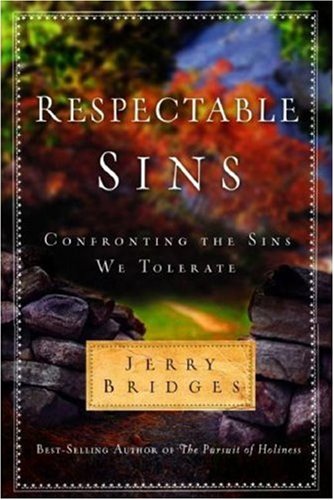
The following words jumped out at me when in tandem arrived in my inbox last Monday. They're from one of my favourite books, Respectable Sins, by one of my favourite authors, Jerry Bridges, introduced by Nicole :

Bridges actually says that we don't have to work out the exact way that God might use a painful event, but we:

...are to give God thanks that He will use the situation in some way to develop our Christian character. We don't need to speculate as to how He might use it, for His ways are often mysterious and beyond our understanding. So by faith in the promise of God in Rom 8:28-29, we obey the command of 1 Thess 5:18 to give thanks in all circumstances.

I've been trying to remember this. When the traffic lights are red, or I break my favourite mug, or my child wakes up vomiting, I don't need to know why. What I do need to know is that God is sovereign, wise and good. Instead of trusting my ability to figure out the answer to the question "why?", I need to trust in Him.

Brought to you courtesy of in tandem.

Friday, January 8, 2010

untethered

Written two days ago.

It's 1.51 pm when our car turns into the driveway after our seaside holiday.

Somehow, the house looks shabbier than when we left. I see it half with the eyes of an owner, and half with the eyes of a stranger, as if I'm wearing 3D goggles.

The grass is shaggy and overlong. A faded brown Christmas tree lies at the foot of the driveway. I'm relieved to see that the two pot-plants near the front steps are still green and healthy. Two unopened parcels are propped next to the front door (the postman, at least, knows we've been away).

We open the door, and we're greeted by the detritus we didn't have time to tidy away before we left. The house smells comfortingly familiar, but also like it belongs to someone else. The Venus fly trap we gave our son for Christmas is holding onto life by its dry root tips.

I stand at the sink, and for a flickering moment I see a view of rolling green seaside hills through the blank tiled wall. I look out the back window, and the view of gum trees looks dry and yellow through the lingering perspective of breaking waves in a deep blue sea. I feel unbalanced, as if my feet are reaching for sand through the smooth floorboards.

The holiday recedes like a wave tugging on my legs, and the year's responsibilities threaten like dark clouds on the horizon. Three and a half more weeks' bobbing on the lazy waves of school holidays; twenty-five days (but who's counting?) until we're dragged into the rip current of term time.

The year feels frail and uncertain, as if I don't want to rest my full weight on it quite yet. Last year was hard, and I'm a little nervous about this one. I've cut down on my responsibilities to avoid last year's burnout, but I've also lost some of my confidence and enthusiasm. I'm not yet sure of the me I'm stepping into this year with.

Earlier this afternoon, on the boring road from Geelong to Melbourne, I opened The Time Traveler's Wife and read its first pages. I feel like a time traveller myself, lost between times, floating through space. I know God holds the other end of this string. I know I'm tethered. I know it, but I don't feel it, not yet.

All the days ordained for me
were written in your book
before one of them came to be.
Psalm 139:16
It's true even when I don't feel it.

image is from amangupta at flickr

Wednesday, November 5, 2008

Just how sovereign is God?


I believe that every particle of dust that dances in the sunbeam does not move an atom more or less than God wishes—that every particle of spray that dashes against the steamboat has its orbit as well as the sun in the heavens—that the chaff from the hand of the winnower is steered as the stars in their courses. The creeping of an aphid over the rosebud is as much fixed as the march of the devastating pestilence—the fall of sear leaves from a poplar is as fully ordained as the tumbling of an avalanche. (Charles Spurgeon, ‘God's Providence’, sermon on Ezekiel 1:15-19, 1908.)
In one of his sermons, John Piper tells the story of a couple who approached him one day, and shared that they had learned more about God's sovereignty during six months at his church than in their whole Christian lives previously. Some time later, their family went through a time of terrible suffering. The mother thanked Pastor John with tears in her eyes, saying that they could never have made it through this time without the conviction of God's sovereignty.

I find God's sovereignty immensely comforting. It enables me to face the future with courage, bear small trials with patience, and entrust my family to God. But when I was at university, an older Christian shared the view that God controls the big history events, not the small, everyday occurrences of life. In other words, God is sovereign, but perhaps not sovereign over the day my son has no friends to play with in the playground, or the day my daughter struggles with an unknown sickness, or the day my car runs out of fuel and I'm stuck miles from a petrol station with four young children. God is sovereign, but not entirely sovereign.

I'm uncomfortable with this idea:
  • theologically: It seems to me that God is either sovereign, or he isn't. If God is only half sovereign, his power and glory are vastly diminished: “For I know that the Lord is great, and that our Lord is above all gods. Whatever the Lord pleases, he does, in heaven and on earth, in the seas and all deeps” (Ps 135:5-6).
  • philosophically: Since big occurrences are a collection of small ones, I'm not sure it's possible to control a tsunami without controlling every drop of water within it, or ordain all the days of a life, but not the small happenings (Ps 135:6-7, 139:16). It seems unlikely to me that there's a certain point at which God's sovereign control comes to an end.
  • biblically. When the Bible says ‘everything’, I assume it means everything (Eph 1:11, Dan 4:35, Ps 115:3). Jesus tells us that not even a tiny sparrow will “fall to the ground apart from your Father“ (Matt 10:29).
  • pastorally: I need to be assured of God's loving providence when I catch a cold, not just when I get cancer. If not, how can I respond with patience, joy and confidence that God is bringing good out of my suffering (Rom 8:28, Heb 11:5-11)? How can I encourage my fellow believers to endure faithfully, trust God, and hope in him during their trials?
So I give thanks to God that when I meet him in the Bible, he not only sustains the universe, but counts every hair on my head (Heb 1:3, Luke 12:7, 21:18); that he directs not only the hearts of kings, but the outcome of every roll of dice (Prov 21:1, 16:33); that he determines not only the fate of nations, but every one of my days (Job 12:23, Ps 139:16).

Every atom, every electron, every quark and undiscovered subatomic particle, every unseen thought and feeling of the human heart is under God's sovereign command. I can face every moment of every day, and every moment of every future day with confidence, knowing that my loving Father guides every circumstance for his glory, my good and the good of the gospel.

This post first appeared at Sola Panel.