Showing posts with label books. Show all posts

Friday, May 6, 2016

book review: Word-filled Women's Ministry

Two months ago, I became the part-time women’s worker at our church. I prepared by reading Word-Filled Women’s Ministry, edited by Gloria Furman and Kathleen Nielson. I’m glad I did.

I recommend this book to anyone, male or female, involved in ministry to women. The list of the ten writers from across the globe may be enough to whet your appetite: it includes Kathleen Nielson from the US, Claire Smith from Australia and Carrie Sandom from the UK. Together, they have written a generous and gospel-hearted book that will remind you to centre your ministry on the Bible, give you a wealth of practical ideas for women’s ministry, and help you think through how to encourage women to grow and serve in your local context.

The book opens with an outstanding chapter by Kathleen Nielson about how the word of God lies at the heart of all women’s ministry. Reading this chapter reminded me of drinking in JI Packer’s Knowing God: as this is my favourite Christian book after the Bible, there is no higher praise. I finished it with tears in my eyes, thrilled again by the wonder of God’s word and determined to build every aspect of my ministry on this strong foundation. I strongly suggest you read this chapter together as a ministry team.

The second chapter is by Claire Smith. Her book God’s Good Design is a brilliant, brief and readable alternative to “The Big Blue Book” (which is what we used to call John Piper and Wayne Grudem’s Recovering Biblical Manhood and Womanhood), and this chapter packs the wealth of her knowledge and teaching on this topic into an even smaller space. If someone had questions about what the Bible says about men’s and women’s roles in the church, I’d copy this chapter and hand it to them.

The third chapter is another gem: it’s about how to train women for ministry, and it’s packed with practical ideas gained by Carrie Sandom through years of experience. For me, the highlight is her description of the year-long program she follows with women one-to-one, looking at books of the Bible that will prepare them to meet with others, thus multiplying this important ministry. It’s a plan I hope to use soon.

These three chapters make up Part 1: “The Heart of Women’s Ministry”. Part 2 is about the contexts of women’s ministry—the local church, evangelism and mission. Part 3 explores issues in women’s ministry and includes a valuable chapter on sexual wholeness and how this needs to be talked about more openly among women. The book concludes with a chapter by Nancy Guthrie on the ultimate goal of women’s ministry.

There are two more chapters I want to highlight. The first is a fascinating dialogue between an older woman (Susan Hunt) and a younger woman (Kristie Anyabwile) that puts flesh on the Titus 2:3-5 command for older women to teach younger women. What do younger women long for? What do older women have to offer? This chapter helps readers think through how to encourage cross-generational relationships and discipleship.

I also appreciated the chapter by the editors on gifts and giftedness. It’s easy, in a complementarian context, for this topic to arouse resentments: why can’t women do this or that? Why aren’t there more pathways for women? But this chapter turns these questions on their heads and asks instead how women can be equipped and encouraged to serve. It explores themes like the ways men and women can support each other in ministry, the different forms that women teaching women takes, and the many contexts open to women that are closed to men. The servant-hearted tone of the chapter—indeed, of the whole book—is summed up in this quote:
There is a place for women to serve. It will not always be the perfect place we envision. We might be called to do things we didn’t plan or want to do along the way … But we must indeed serve—with quiet, submissive, prayerful, relentless strength—because we are serving our Lord. We are serving the church he loves, for whom he died. (p. 212)
If you’re a pastor or leader of a church or ministry, a woman who ministers to women, or a woman considering pathways for service, I encourage you to read this book. In my opinion, it’s one of the best books for women that’s come out in recent years.[1] I plan to pull this book out and read it again, taking notes this time; that’s how good it is. I warmly commend it to you.

[1] Another recent book for women that I highly commend is Jen Wilkins’s Women of the Word, which I reviewed here.

This article first appeared on GoThereFor.com.

Thursday, November 5, 2015

Women of the Word: a book for both men and women

We can be a bit lazy when we read the Bible. We open it to random passages. We stick to our favourite books. We stop reading once we’ve found our take-home point for the day. It’s pretty appalling when you stop to think about it: we have God’s very words, yet we sometimes treat them like a collection of inspirational thoughts or a Magic 8 Ball. ...

The other day I sat in a plane and pulled Jen Wilkin’s Women of the Word: How to study the Bible with both our hearts and our minds out of my bag. It looked like a short and easy read, and sure enough I’d read the first half by the end of my Melbourne to Sydney flight. I finished the rest the next day, and realized I was holding a gem, and not just for women: this is a brilliant book to help men explore and understand God’s Word too. I highly recommend it, both for personal encouragement and ministry training. ...

You can read the rest at GoThereFor.com.

Monday, June 15, 2015

what I'm reading: why God allows evil

I was hunting through some old drafts, looking for something to post on a mostly empty blog (we have been away), when I came across this quote from Tim Keller's Walking with God through pain and suffering. Such an encouragement!
Why could it not be that God allowed evil because it will bring us all to a far greater glory and joy than we would have had otherwise? Isn't it possible that the eventual glory and joy we will know will be infinitely greater than it would have been had there been no evil?

What if that future world will somehow be greater for having once been broken and lost? If such is the case, that would truly mean the utter defeat of evil. Evil would not just be an obstacle to our beauty and bliss, but it will have only made it better. Evil would have accomplished the very opposite of what it intended.

How might that come about? At the simplest level, we know that only if there is danger can there be courage. And apart from sin and evil we would never have seen the courage of God, or the astonishing extent of his love, or the glolry of a deity who lays aside his glory and goes to the cross.

For us here in this life, the thought of God's glory is rather remote and abstract. But we must realize that the most rapturous delights you have ever had - in the beauty of a landscape, or in the pleasure of food, or in the fulfillment of a loving embrace - are like dewdrops compared to the bottomless ocean of joy that it will be to see God face-to-face (1 John 3:1-3). That is what we are in for, nothing less.

And according to the Bible, that glorious beauty, and our enjoyment of it, has been immeasurable enhanced by Christ's redemption of us from evil and death ... Because of our fall and redemption, we will achieve a level of intimacy with God that cannot be received any other way ...

And why could it not be that our future glory will actually so "swallow" the evil of the past that in some unimaginable way even the memory of the evil won't darken our hearts but only make us happier? (117-118)

Monday, May 4, 2015

what I'm reading: preparing for death

The day of death is the greatest day that a Christian can ever experience in this world because that is the day he goes home, the day he walks across the threshold, the day he enters the Father's house.
You won't find a shelf labelled "death" at your local Christian bookstore. Have a look, and tell me if I'm wrong. My guess is that you'll find shelves marked "marriage" and "prayer", but probably not a section on dying.

Your local Puritan bookstore (if there was such a thing) would have been different. You'd find plenty of books on marriage and prayer - the Puritans were great practical theologians - but there'd also be a shelf labelled "dying well". And that's not because they were gloomy do-gooders, as the stereotype goes, but because they were wise and happy realists.

We could do with more modern Christian books on death. Not just on the practical aspects of dying or the stages of grief, but on how to "do death well", with faith and hope and courage. Death is something we will all come to. It's scary and overwhelming, and it would be good for us to know how to prepare for it.

And so I'd like to recommend RC Sproul's Surprised by suffering: a book about suffering with a particular focus on death. Despite the topic, it's not dreary or depressing, but joyful and uplifting. I suggest you read it now. Don't save it for the time you need it, when you may not be able to read at all.

To encourage you today, and to whet your appetite for more, here's a brief sample:
We have considered suffering as a vocation. Dare we think of death as a vocation, too? ... Every one of us is called to die ... Sometimes the call comes suddenly and without warning. Sometimes it comes with advance notification. But it comes to all of us. And it comes from God. ...

Because of Christ, death is not final. It is a passage from one world to the next. ...

The valley of the shadow of death is a valley where the sun's rays often seem to be blotted out. To approach it is to tremble. We would prefer to walk around it, to seek a sage bypass. But men and women of faith can enter that valley without fear ...

God will not send us where He refused to go Himself ...

The valley of the shadow of death is not a box canyon. It is a passageway to a better country ... The goal of the vocation of death is heaven itself. But there is no route to heaven except through that valley.

Quotes are from RC Sproul Surprised by suffering 39, 49-56.

Monday, April 20, 2015

what I'm reading: suffering as vocation

"Suffering is a vocation, a calling from God."

Eight words on the first page of RC Sproul's Surprised by suffering, and I'm stopped in my tracks. I've never heard anyone say that before. I think it's a knowledge Christians lost somewhere along the way. Yet the awareness has been nudging at me for years, and it's good to hear someone say it.

Suffering. It's the calling no one wants. The gift no one asks for. "For it has been granted to you on behalf of Christ not only to believe in him, but also to suffer for him" (Phil 1:29). The word "granted" literally means "gifted". But who would want a gift like that?

You know what I thought my life would be like? What I saw as my vocation? How I thought I'd use my gifts? Marriage. Children. An active ministry to women.

Tick to the first two. But the last one has been put on hold more times then I can count. The year my youngest child went back to school, when many women edge their way back into work and ministry outside the home, my oldest son became chronically ill. I spent four years caring for him and, last year, for my husband who has cancer.

Do I resent this? Well, yes, sometimes, when I'm tempted to compare myself with others. But truly, no. My love for my husband and son has deepened. And like many who have suffered, I wouldn't swap what I have learned about God's love for anything. What I used to know in theory, I now know from experience: there really is nothing he will not give us grace to face.

But of course part of me asks: what happened to the life I planned?

Here's what happened: God had better plans for us. Harder and better ones. We run this race in the sight of others. And if we have to make Jesus known through our pain and our tears, then so be it. Because I would rather have this life with him than my carefully planned life without him.

Right now, we're called to the vocation of suffering. It's a high calling, and a hard one. It will drive you away from God, or drive you deeper into his love: there are only two ways about it. If we choose to turn to him, even when it hurts, he will never let us down or let us go.

I was going to tell you more about the book Surprised by Suffering, but my thoughts got stuck on the first page. I'll save the rest for another day. For the moment, this knowledge is enough:

"Suffering is a vocation, a calling from God."

Tuesday, October 14, 2014

what I'm reading: when all other lights go out

I remember it so clearly. I lay on my front across Steve's hospital bed, and he sat in a chair by a window with a view of a brick wall. A nurse stuck her head round the curtains and said, "You look relaxed, like you're on holiday or something!".

We weren't. We'd just found out what kind of cancer Steve has, and I was reading to him from Tim Keller's Walking with God through pain and suffering.

I haven't been able to read much the last 3 months. But I recently picked up Keller's book again. He explores three aspects of suffering - philosophy, theology, and experience - and suggests you begin with the section most relevant to your circumstances, then go back and read the others.

I started with the section on philosophy and culture (before Steve got ill), skipped to the bit on experience (after we found out Steve has cancer), and am now reading the chapters on theology. The philosophy is fascinating and intellectually satisfying; the theology (so far) sound and clear; the section on experience, deeply encouraging.

It's a rich, wise, nourishing book. I recommend it highly. And it's full of quotable quotes, some by Keller, some collected from others. Here's one that sums up our year so far:
This is a dark world. There are many ways we keep that darkness at bay, but we cannot do it forever. Eventually the lights of our lives - love, health, home, work - will begin to go out. ... The Bible says that Jesus is the light of the world. If you know you are in his love, and that nothing can snatch you out of his hand, and that he is taking you to God's house and God's future - then he can be a light for you in dark places when all other lights go out. (123-124)
 Here's one that gives me hope:
At some point, for all eternity, there will be no more unmerited suffering: this present darkness, "the age of evil", will eventually be remembered as a brief flicker at the beginning of human history. Every evil done by the wicked to the innocent will have been avenged, and every tear will have been wiped away. (Peter van Inwagen, quoted p. 117)
And, finally, here's one on the "why" of suffering and the cross:
We do not know the reason God allows evil and suffering to continue, or why it is so random, but now at least we know what the reason is not. It cannot be that he does not love us. It cannot be that he does not care. He is so committed to our ultimate happiness that he was willing to plunge into the greatest depths of suffering himself.  He understand us, he has been there, and he assures us that he has a plan to eventually wipe away every tear. Someone might say, "But that's only half an answer to the question "Why?". Yes, but it is the half we need. (121)
I guess you can see why I love this book so much.

Tuesday, July 22, 2014

book review: Invest your suffering

Every writing pastor seems to put out a book on two themes. One is marriage. Another is suffering. Judging from the prologues, the process goes something like this: they give a sermon series. It's popular (who isn't interested in these topics?). They turn the series into a book.

It can be hard to know which book on suffering to read, since there are so many. If you were to look over the recently published books on the topic, which one would you choose? I've read a fair few,* and my top pick would definitely be Paul Mallard's unassuming little book Invest Your Suffering. This book is ideal both for those preparing for suffering, and (a harder audience!) for those who are suffering.

I'd never heard of Invest Your Suffering, or of Paul Mallard, when I was asked to review it. I wasn't sure if I had time. I read one chapter in the dentist's waiting room (for me) and others between ongoing doctors' visits (for my chronically ill son). I didn't regret it. It came at a time when I needed it, and it met me in my need.

One of the things I love about Invest Your Suffering is that it doesn't aim for great things. You won't find some clever new theological perspective on suffering (thank goodness!). It's not long and exhaustive (for that, turn to Don Carson or, more recently, Tim Keller). It's readable, honest, and heart-felt. It's really just an exploration of some of the ways God's word meets us when we suffer, from the pen of a pastor long experienced in suffering.

In some ways, this book is a love story. It's about Paul Mallard's wife Edrie, who suffers from a painful and debilitating neurological condition, and the difficult stages of their journey. But it is less about their love - although that shines through the pages - than it is about God's love. Mallard states his goal here:
In the course of this book, we will engage with some of the great Bible passages that have brought light into Edrie's and my darkest moments. (p. 22)
Each chapter opens with a scene from their story and the hard questions it raised for them, then unpacks a truth about God that helped them at this time. This is not a systematic book, but a pastoral and exegetical one. As I read, I felt like I was sitting in Mallard's congregation, listening to him speak; or in his living room, talking with him and his wife.

Invest your suffering opens by inviting us to choose how we will respond to suffering. Will it make us better or bitter? Mallard says, "The right response is a deliberate and reasoned decision to trust" (p. 22), and the rest of his book is an invitation to this "reasoned trust".

The second chapter addresses how we think about our trials. Mallard shows how damaging false views of suffering can be, and how much more deeply a true understanding can help us. If you're looking for a clear, brief, biblical summary of God's sovereignty in suffering - the idea that he is the "first cause", and what that means - you'll find it here. 

Then it's into the body of the book, and the Bible passages and truths that helped Mallard and his wife. Open my copy of the book and you'll find six chapters circled on the contents page. These are the that spoke most deeply to me:
  • trusting God when we can't understand his purposes
  • learning to number our days
  • turning to God when we run out of answers
  • suffering prepares us to minister to others
  • only the cross of Christ helps when we are in emotional or physical pain
  • suffering moves us to long for heaven. 
I hope I've whetted your appetite for more!

When I read books, I hunt for the "gold": quotes that may help me or others. In this book, it was the sentences that made the book sparkle. Here are a few I collected along the way:
Praise God and keep taking the tablets. (p. 32)

We walk by faith, not by explanations. We don't have to understand everything God is doing in order to trust him. (p. 38)

We come to God with our broken hearts, and, without pausing, he continues to conduct the symphony of the stars while sweeping us into his arms and whispering that he loves us and that all is well. (p. 44)

God loves us and is too wise to make mistakes and too kind to cause us unnecessary pain. (p. 48)

Please don't tell me that Christians shouldn't grieve. (p. 56)

God has crushed us so that we can minister out of our pain. (p. 87)

Suffering is the best commentary on God's character, and pain is the finest exposition of his excellencies. We discover more about God's grace when we come to the end of ourselves. You will never know that God is all you need, until God is all you have. (p. 136)

When Edrie wept in the darkness and I wept with her, the Saviour was near, carrying us both on his heart and presenting us to his Father. (p. 152)

The main question we needed to ask was not 'why?' but 'how?'. How can we bring glory to God in the midst of 'attacks' which have all but robbed us of the day? (p. 156)
The book has few faults. I was a little alienated by some of the language (that we can "choose to overcome" and "triumph in the midst" of our pain - although Mallard, if anyone, has a right to say this) and by a couple of the chapters (on giving thanks, and on the benefits of suffering - they felt a little glib to me). Yet the vast majority of the book was sympathetic, sensitive, and open about the agonising questions aroused by suffering.

Here's a typical passage that is worth the price of the book alone:
There was one truth that, for me, stood head and shoulders above the others. It was the fact of the love of God demonstrated in the sacrifice of his Son at Calvary. I lived in the Gospels, and particularly John's Gospel. I read it on my knees. I prayed it. I preached it. As I did these things, Jesus became more and more precious for me. Looking at his love and the suffering he experienced for me helped me to look beyond the apparent meaninglessness of our suffering to see that, at the heart of the Godhead, is a Saviour who knows and feels and sympathizes with our suffering. (p. 149)
Would I recommend this book to those who suffer? Definitely. Not many books are helpful and readable when you're in the furnace. But Mallard's honesty about his pain and doubt, his clarity of thought, and his pastor's heart, make this a good choice for someone who is suffering. By the end you will feel like you have traveled with this godly man and his wife on their hard journey, and drunk deeply with them of the life-giving water of God's word.


* I recently began, and am thoroughly enjoying, Tim Keller's new book, Walking with God through Pain and Suffering. Highly recommended.

Thursday, June 26, 2014

what I'm reading: wounded but not wasted

I thought there could be no worthy successor to JI Packer's Knowing God to feed my soul this year. I was wrong.

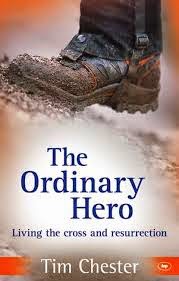
On a Friday morning, sitting under the oak trees outside my favourite cafe, I can't wait to open Tim Chester's The Ordinary Hero.

Here's a favourite quote-within-a-quote:
We should avoid, not a wounded life, says John Piper, but a wasted life ...

Too often, we can't quite lay hold of the treasure of Christ with both hands because we're still clinging to the baubles of this world ...

Piper again:
What a tragic waste when people turn away from the Calvary road of love and suffering. All the riches of the glory of God in Christ are on that road. All the sweetest fellowship with Jesus is there. All the treasures of assurance. All the ecstasies of joy. All the clearest sightings of eternity. All the noblest camaraderie. All the humblest affections. All the most tender acts of forgiving kindness. All the deepest discoveries of God’s Word. All the most earnest prayers. They are all on the Calvary road where Jesus walks with his people. Take up your cross and follow Jesus. On this road, and this road alone, life is Christ and death is gain. Life on every other road is wasted.

Tim Chester The Ordinary Hero 77, quoting John Piper Don't Waste Your Life 76.

Tuesday, June 17, 2014

what I'm reading: where else have I to go?

This is one of the saddest and most encouraging things I've read.

It's from Tim Chester's brilliant book (read it! do!) The Ordinary Hero.
In 2007 violence erupted after disputed elections in Kenya. Beth, a Kenyan studying in the UK, and part of The Crowded House, the family of church planting networks to which I belong, emailed me at the time:
This past week I’ve realized that I don’t truly know what God being good, wise, sovereign and faithful means.

I know what it doesn’t mean – it doesn’t mean no suffering in this life. I know that whatever he allows is for his glory and our good. But I also don’t want to be flippant or simply parrot phrases as though I’ve merely learned them by rote.

I talk to my aunt and uncle who are doctors and have hardly slept during the last three days because of the sheer number of people coming in. I want to know what it means to talk to them and then say “God is good”.

Surely any earthly parent would come running at the sound of their baby’s blood-curdling shriek. So I want to be sure I know what I mean by “God is good” when we have prayed and prayed to the soundtrack of the screams of children being burnt, knowing that the stench is getting to heaven and silence is the response.

When I watch on live television people being dragged out of cars and hacked to death, my mind spins – and not because I have wondered if God is sovereign, but because I know he is ...

Life as I’ve known it has changed and will never be the way it was. And a huge chunk of me grieves … I’m not losing faith, for where else have I to go? Whom else have I in heaven but him?

I read through Job today in one sitting and realized that Job had a lot of questions, but God didn’t answer any of them. He only revealed his character and that was enough. Job says, “I had heard of you but now I have seen you.”

And so that’s my prayer: that God would move me from having heard of him to seeing him, and that his comforting, sustaining and sanctifying grace would abound in the gap of hearing and seeing.

Tim Chester The Ordinary Hero 18-19, 22.

Tuesday, May 20, 2014

what I'm reading: the smile of God

How do you keep your eyes fixed on Jesus? (Col 3:1-4) Here's one way I do it.

Every year I read one or two books about God's character or the cross. I do this on my mornings off, sitting in a cafe, sipping my spiced chai.

I recently read Knowing God. Finishing the last page was bittersweet. I wondered what I could possibly replace it with.

Then I remembered Tim Chester's The ordinary hero. It's been on my shelf for a while, waiting for an opportunity. I'm 4 chapters in, and loving it.

Here's a bit that spoke to me. It's for anyone who trusts in Jesus:
God doesn't merely tolerate you. In Christ he smiles upon you as a Father ...
 
Why should we think that God would abandon us when he's already given us his Son? Why should we think there's any limit to his love when he's already given what was most precious to him? ...

You're not made right with God by what you do. You don't do it in the first place, so why suppose you could undo it! ... Perhaps this is the ultimate humiliation. Not only can we not contribute to our salvation; we can't even wreck our salvation. But who cares? ...

Our heavenly Father is not a stern father who needs to be placated by his Son. Maybe your human father was like that. Stern. Distant. Maybe you approached him hesitantly or reluctantly. But your divine Father isn't like that. The Son's actions are the outflow of the Father's love. ...

The Son didn't placate God to make him favourably disposed to us. No, it's the other way round. The work of the Son starts with the love of the Father. ...

God doesn't merely tolerate us. He delights in us. We make him sing for joy (Zeph 3:17) ...

When you look into the face of God, what do you see? Do you see a frown? Do you see a judge? A schoolmaster? Or do you see a smile?

In Christ, God smiles upon us. Who can resist that smile?


Tim Chester The ordinary hero 39-46.

Monday, April 28, 2014

what I'm reading: untameable love

It's all very well knowing that God is in control when you're going through a hard time. Well, actually, it's more than "very well" - it's hugely comforting, because he's our loving, wise Father. But at the same time, it's scary, because he's in control and we're not.

Tim Keller captures this tension perfectly as he reflects on the disciples' reaction to Jesus calming the storm:
Why were they more terrified in the calm than they were in the storm? Because Jesus was as unmanageable as the storm itself.

The storm had immense power - they couldn't control it. Jesus had infinitely more power, so they had even less control over him.

But there's a huge difference. A storm doesn't love you. ... Nature is violent and overwhelming - it's unmanageable power, and it's going to get you sooner or later.

You may say, that's true, but if I go to Jesus, he’s not under my control either. He lets things happen that I don’t understand. He doesn’t do things according to my plan, or in a way that makes sense to me.

But if Jesus is God, then he’s got to be great enough to have some reasons to let you go through things you can’t understand. His power is unbounded, but so are his wisdom and his love. ...

Jesus is filled with untameable love for you. ... He can love somebody and still let bad things happen to them, because He is God – because he knows better than they do. ...

If you have a God great enough and powerful enough to be mad at because he doesn't stop your suffering, you also have a God who's great enough and powerful enough to have reasons that you can't understand. ...

Is he safe? "Of course he's not safe. Who said anything about being safe? But he's good. He's the King."

Tim Keller's King's Cross, 54-55; quote at the end is by CS Lewis.

Monday, April 21, 2014

what I'm reading: women, work, and the home

I couldn't wait for The measure of success to come out. Carolyn McCulley is a thoughtful, entertaining writer, and in this book she tackles the controversial topic of women, work and the home.

The first few chapters - a potted history of work - kept me glued to the page. They made me ask the question: How are our views on women, work and the home shaped by our culture as well as by the Bible? 

What did Paul mean when he encouraged young married women to "manage their households" (1 Tim 5:14) and to "work at home" (Titus 2:5)? Did he mean women with children shouldn't do paid work? Or that our homes should be beautiful? I don't think so. The reason we sometimes conclude these things is because of a post-industrial view of work and the home.

Carolyn McCulley says,
With the dozens and dozens of magazines, cable shows, and Pinterest boards, it's no surprise if you think about your home as an expression of your identity. ...

That's not the concept of the home that most people have had throughout history. The home was a center of productivity. If we don't know that history, then we will read the biblical verses about the home only through the lens of our current experience - and potentially misunderstand the intent of these passages ...

Over the last several centuries, Christians have engaged in this debate about where women should be productive. When mainstream culture devalued marriage and motherhood, Christians (and those from some other faith traditions) rightly upheld these important roles. When mainstream culture overvalued the workplace, they also rightly upheld the value of the home.

The only problem is that our modern concept of the home is not the same as the biblical concept. ... For most of human history, the home was the original small business unit, the building block of a community's economic vitality. It was only after the upheaval of the Industrial Revolution that the home moved from being a place of productivity to a place of consumption.
Did you catch that? For most of history, the home was a "place of productivity". Work was done in and from the home. Farming and manufacture were home businesses, led by mums and dads, their kids underfoot and working alongside them. Like everyone else, women worked in and from the home, in roles that earned money and roles that didn't.

What does this mean for the verses about women and work in the Bible? I'll be honest: I'm not sure. For a start, I haven't finished the book yet. But also, I don't think the answers are simple. This is going to take some time to process.

I still believe it's ideal for young kids to be cared for by a parent as much as possible. I think women will generally be the ones who do this, not just because of cultural norms, but also because that's the way God made us (Gen 2-3; Prov. 31:10-31; 1 Tim. 5:14; Tit. 2:3-5). We only see this as a problem because our society teaches us to idolize "career". Managing a home and raising kids is work, and it's meaningful, hard, skillful work.

But I am coming to see that there is flexibility and freedom in the way this might happen. It won't look the same for everyone. I have friends I greatly respect who made the decision - one that I think was wise for them - to do paid work a few days a week early in their children's lives because it helped keep them sane.* And we don't all have the choice: I have a friend who's a single mum and has to work in a thankless job so she can support her family.

I also know women who stayed home full-time with their kids until they reached school age, then took on some work outside the home; and women who stayed home with their kids, pretty much full time, into the teen years (hey, wait a minute, that's me - and my son's chronic illness has made me very grateful I have this option). Not so they can devote themselves to the "home beautiful" (an idol just as potent as "career"), but so they can love and serve those around them, and those God has entrusted to them.

Jesus doesn't want us to store up treasure on earth: sanded floorboards, a successful career, or perfectly behaved children (Matt 6:19-24). He wants us to work hard at the tasks he's given us; and he want us to work, not for ourselves, but for him (Eph 2:10; Col 3:23). He wants us to live for our true home.

You might also enjoy:

* Two had depression; one is an extrovert, with outgoing kids who enjoyed childcare, who found she was much more cheerful and productive at home while working a few days a week.


Quote is from Carolyn McCulley's The measure of success, 46-47, italics mine.

Monday, March 24, 2014

what I'm reading: 'first world problems' - have we really suffered?

He had me at "Hello". Or, at least, at the first line:
There is a temptation in writing a book about suffering to romanticize one's struggles or, worse, to insensitively rank and compare trials, as if victimhood were a matter of one-upmanship.

Far too many people have suffered the sort of tragic reversals that I have been spared, and no one but God knows or understand the full extent of another person's pain.

At the same time, people who haven't experienced major setbacks sometimes feel that their hurts are somehow less legitimate or real.
Do you ever feel that? I do.

I sometimes wonder if I have a right to write about suffering. My son has had a chronic illness for 4 years now, and yes, it's hard, but I know there are many worse off than me: the man whose son has cancer, the woman who lost her daughter in an accident.

There's an unspoken agreement, especially among Christians, that we should minimize our pain. "First world problems", we say; or just, "I'm fine, thanks"; or even, "It's been hard, but I'm learning so much." Or others say it to us: "Well, it could be worse". But on the inside it feels pretty bad to us! And we don't always feel like we're moving forward - sometimes it feels like we're going backwards, deeper into pain and confusion. But we don't always admit that. It seems like a failure of faith.

If you've ever felt like that, you'll love this quote from Tullian Tchividjian:
We each have days that couldn't end quickly enough ... The individual factors may be trifling, but the suffering is all too real. Sure, there's not anything particularly dramatic or glamorous about such everyday misfortune, but that does not invalidate it.

When we resist classifying it as suffering, we embrace the misconception that God is interested only in the more tragic situations of our lives. Yet so often the little things are the big things.

I do not mean to trivialize suffering or suggest that broken fingernails are the same as broken hearts. In fact, the intent here is the opposite: to broaden our understanding of suffering in the hopes of being a bit more honest with God and ourselves. ...

Everyone is suffering in some way, today, right now. ... Mary Karr said ...
The most privileged, comfortable person ... from the best family, has already suffered the torments of the damned ... We are all heartbroken.
Religious people in particular have a tough time being honest about their suffering. Occasionally we can even foster an environment of denial ... You might say, "I'm having a bad day, but at least I don't have pancreatic cancer" ... Eventually we'll edit our prayers along these lines ...

The appropriate response to life in this world is grief and pain. In fact, nowhere in the Bible do we find God sanctioning a "suck it up and deal with it" posture toward pain ... Job's unravelling wasn't wrong or sinful; rather, it was emotionally realistic ...

The good news here is that Christianity is in no way a stoic faith. It fundamentally rejects the "stiff upper lip" school of thought ... We live amid devastating brokenness, and the cure for this is nothing less than Jesus dying on the cross for sinners like you and me.

Sean Norris ... describes a life-altering interaction with a professor:
He told us to stop comparing ourselves to others, stop comparing ourselves to people in the third world, to people who are "really suffering." He levelled the playing field and destroyed the categories and false hierarchies I had put myself in. Instead, he told us the truth ... I was pointed back to Jesus Christ and His cross, the one who knows our suffering and chose to suffer in once and for all ...
God is not interested in what you think you should be or feel. He is not interested in the narrative you construct for yourself or that others construct for you. He may even use suffering to deconstruct that narrative.

Rather, he is interested in you, the you who suffers, the you who inflicts suffering on others, the you who hides, the you who has bad days (and good ones). And He meets you where you are.


Quotes are from Tullian Tchividjian's Glorious Ruin, introduction and chapter 3.

Monday, March 17, 2014

what I'm reading: what are we holding back?

Have you been holding back?

Are you prepared to accept a lower standard of living so you can serve Jesus? Do you trust God to provide - to give you "all good things" as he promised?* Are you ready for a risky, costly life?

Those are the questions JI Packer asks in this uncomfortable quote from Knowing God:
We know what kind of life Christ calls us to ... But do we live it? Well, look at the churches. Observe the shortage of ministers and missionaries, especially men; the luxury goods in Christian homes; the fund-raising problems of Christian societies; the readiness of Christians in all walks of life to grumble about their salaries; the lack of concern for the old and lonely ...

We are unlike the Christians of New Testament times. Our approach to life is conventional and static; theirs was not. ... By being exuberant, unconventional and uninhibited in living by the gospel they turned their world upside down, but you could not accuse us twentieth-century Christians of doing anything like that.

Why are we so different? Why, compared with them, do we appear as no more than halfway Christians? Whence comes the nervous, dithery, take-no-risks mood that mars so much of our discipleship? Why are we not free enough from fear and anxiety to allow ourselves to go full stretch in following Christ?

One reason, it seems, is that in our heart of hearts we are afraid of the consequences of going the whole way into the Christian life:
  • We shrink from accepting burdens of responsibility for others because we fear we should not have strength to bear them.
  • We shrink from accepting a way of life in which we forfeit material security because we are afraid of being left stranded.
  • We shrink from being meek because we are afraid that if we do not stand up for ourselves we shall be trodden down and victimized, and end up among life's casualties and failures.
  • We shrink from breaking with social conventions in order to serve Christ because we fear that if we did, the established structure of our life would collapse all around us, leaving us without a footing anywhere.
It is these half-conscious fears, this dread of insecurity, rather than any deliberate refusal to face the cost of following Christ, which makes us hold back. We feel that the risks of out-and-out discipleship are too great for us to take ... We are not persuaded of the adequacy of God to provide ...

Let us call a spade a spade. The name of the game we are playing is unbelief, and Paul's 'He will give us all things' stands as an everlasting rebuke to us. ...

One day we shall see that nothing – literally nothing – which could have increased our eternal happiness has been denied us, and that nothing – literally nothing – that could have reduced that happiness has been left with us. What higher assurance do we want than that?  ...

Have you been holding back from a risky, costly course to which you know in your heart God has called you? Hold back no longer. Your God is faithful ... You will never need more than he can supply, and what he supplies ... will always be enough.

* in Romans 8:32.


Quote is from Knowing God 303-309.

Wednesday, March 12, 2014

what I'm reading: one reason why we suffer

I can't tell you much about Mike Leake's book Torn to Heal, as I've only read the first chapter. But I can tell you I loved that one.

Yup, I'm reading another book on suffering. Truth is, as well as being encouraged, I want to see what's out there, and what I can recommend to you.

I can tell you this much: Torn to Heal is very short. It's well-written. It came out last year (seems like every writing pastor puts out a book on suffering). That's about it.

Today I want to share a quote that rings true in my experience:
God's promises are seldom small enough to be even slightly believable. At least, until they happen ...Part of the reason God makes huge, outlandish promises is because he made us to crave huge and outlandish things. ...

God promises to satisfy us with the only thing that can - himself. This leaves no room for small promises. A god who makes promises smaller than the vastness of our ultimate desires would be a small god ... But God's promises fully match our best, highest, and innermost desires. ...

The premise of this book is that the Lord, in his goodness, will rip us to shreds if that's what it takes to replace our idols with lasting joy. He will stop at nothing to fully redeem us. He does this by changing our desires. And that is good.

I don't know about you, but I want to keep reading.

Monday, February 24, 2014

what I'm reading: does God really love me?

I often doubt that God loves me - at least, not with any enthusiasm.

I have a sneaking suspicion he only loves me reluctantly, because he has to (after all, his Son died for me! He's caught now!). I know - it's illogical, and it's a lie. But it's a powerful lie.

Am I alone in this? I doubt it. Am I alone?

Packer suggests my doubts are not uncommon for those of us who are (rightly) taught to view things in terms of justification (God is a judge, his justice satisfied by Jesus' death).

But if God is only a judge whose justice has been satisfied, that can be a pretty cold relationship. 

Packer suggests we've forgotten an equally important truth: that of adoption. He says, "It is a strange fact that the truth of adoption has been little regarded in Christian history." Yet the Bible makes much of it.

When we become Christians, God becomes our Father. He welcomes us into his family. He loves us with the same love he has for his Son!

These words changed my way of seeing:
When you realize that God has taken you from the gutter, so to speak, and made you a son in his own house, your sense of God's "love beyond degree" is more than words can express. ...

The prospect before the adopted children of God is an eternity of love ... We are all loved just as fully as Jesus is loved.

It is like a fairy story - the reigning monarch adopts waifs and strays to make princes of them - but, praise God, it is not a fairy story: it is hard and solid fact ...

Everything Jesus has will some day be shared with us, for it is our inheritance no less than his ...

Do I, as a Christian, understand myself? Do I know my own real identity? My own real destiny? I am a child of God. God is my Father; heaven is my home; every day is one day nearer ...

Say it over and over to yourself first thing in the morning, last thing at night, as you wait for the bus, any time when your mind is free, and ask that you may be enabled to live as one who knows it is all utterly and completely true.


From chapter 19 in Knowing God.

Monday, February 17, 2014

what I'm reading - Paul: a novel

Here's a melancholy little quote that I can relate to all too well - as can anyone, I guess, who has struggled long with suffering or sin:
When the church was young, I thought of your kingdom as a garden, rich and sweet and green, fruit for the eating, grasses for running swift as gazelles, a golden air for breathing and shouting and laughing. Now I think of the kingdom as a couch in the darkness, a bed to rest on, no more pain, no more sorrow, no more tears. It used to be I thought that things would start in heaven. Now I only hope that things will end.
These words are spoken by Barnabas, from Paul: a novel by Walter Wangerin Jr.

I just finished this lovely, lengthy read, a retelling of the life of - you guessed it! - Paul the apostle. Walter Wangerin is a skilled writer, and he gives the people, conflict and times of the early church life and colour.

Paul is written in the first person, as a range of individuals - Priscilla, Barnabas, James, Seneca - give their impressions of Paul and tell his story. It's not a perfect book - there are some theological oddities - but what a wonderful characterization of Paul!

A recommended read.


Quote is from Walter Wangerin, Paul, 296.

Tuesday, February 11, 2014

what I'm reading - a book for homemakers

So you're a homemaker. What book tops your homemaking list?

Or maybe you have a homemaker in your life. What book would you give them?

Until now, I didn't have a top pick. A book on biblical womanhood in the home? A book of household tips? A book on time management? They've all helped me, but more often they leave me feeling guilt-ridden and defeated.

What I really want is a book about the gospel. A book that shows the gospel peeping out of my overstocked pantry. A book that gives me grace when my kids won't stop arguing. A book that frees me to be hospitable, smudged walls and all.

Gloria Furman has written just that book: Glimpses of Grace. She says,
I used to believe that this journey of sancitification - the adventure of God working in me, both to will and to work for his good pleasure (Phil 2:13) - would only be accomplished when I am free from the "distractions" of my life.

If I set my alarm clock to attempt to wake up before one of my babies and had my plans foileed, then I would think, "Well, there goes my communion with God today!"

I had allowed my spiritual life to be relegated to an easy chair with a cup of hot coffee in a quiet house without any moise or clutter or life.

Your spiritual life is not restricted to early mornings before the noise makers in your life wake up. If you feel that God meets with you only when the house is empty or quiet, you’ll view every noise and every noise-maker as an annoying distraction to your communion with God. ...

God fellowships with us as we are in the midst of our mundane.

I'm really enjoying reading this book. It's not hard to read - it's a dip-in, dip-out kind of book, which suits us homemakers just fine!

My guess is you'll enjoy it too.


Quote is from Gloria Furmans's Glimpses of Grace, 19, 53, 55.

Thursday, February 6, 2014

my favourite Christian reads in 2013

What were my favourite reads in 2013? I'm sure you want to know!

Or, at least, Eternity Newspaper wanted to know. So I wrote this. (You can read the whole article - with some great recommendations by others - here.)

I've added one book to the end, because I've wanted to encourage you to read it for years.

Timothy Keller King's Cross
Every year, I read a book on the cross or God's character, slowly and prayerfully, week by week, on my mornings off. This year, I enjoyed Tim Keller's King's Cross (also called Jesus the King). It bears all the hallmarks of his style: it's richly written, profoundly wise, culturally engaging, and deals with familiar themes like idolatry and the trinity. Every chapter brought me face-to-face with Jesus, to be moved, challenged and changed by him. This book deserves to become a classic. It will make a great gift for both believers and unbelievers.

Joni Eareckson Tada and Steven Estes When God Weeps 
There's a point in suffering when you can read books on the topic again. My son has been chronically ill for several years now, and I reached that point about 6 months ago. In the pages of When God Weeps I found wisdom, solace, courage and hope. The writing is colorful and honest, with a blend of Joni's long experience and Steven's tight theology (though I didn't agree at all points). There are terrific reflections on God's character, avoiding bitterness, and hell. As I read the final chapter on heaven, I found myself in tears. This is the perfect book to give someone going through a time of trial.

David Helm One to One Bible Reading
Only 100 pages long, this is a top-of-the-list ministry resource. How does God change lives? Through his word. How can we be involved? By reading the Bible with a friend. Who could benefit? Anyone, Christian or non-Christian, mature or new to the faith. It's that simple; but it can sound intimidating. David Helm first inspires us, and then introduces tools like the Swedish method and COMA, easy-to-use methods that require only an open Bible. I've led one training seminar based on this book, and will continue to put it into the hands of those I teach and train.

Paul David Tripp Lost in the Middle
I'm tempted to review this book without the title. You don't have to be middle aged to struggle with issues like regret, disappointment, loss of identity, the collapse of dreams, and the transience of life. This book helped me at a time when I was questioning many things about myself and the direction I was going in. It's the best book I've read to come out of the biblical counselling movement; almost a handbook of the big issues we're likely to face in life. I'd like to put this book on my "top reads" for every Christian. Whatever your age, I invite you to read it: you're in for a treat.

Monday, December 2, 2013

what I'm reading: the ethics of elfland

The fairy tales rounded in me two convictions; first, that this world is a wild and startling place, which might have been quite different, but which is quite delightful; second, that before this wildness and delight one may well be modest and submit to the queerest limitations of so queer a kindness.
Fairy tales teach us amazement and gratitude. So said Chesterton. I think he's right.

The world should astound and delight us. It doesn't have to be the way it is. The sun's rising, the green of leaves: every day they should break upon us with with fresh astonishment.

That was the first lesson from fairytales. Here's the second:
The second great principle of the fairy philosophy is that the vision always hangs upon a veto. All the dizzy and colossal things conceded depend upon one small thing withheld. All the wild and whirling things that are let loose depend upon one thing that is forbidden.

In the fairy tale an incomprehensible happiness rests upon an incomprehensible condition. A box is opened, and all evils fly out. A word is forgotten, and cities perish. A lamp is lit, and love flies away. A flower is plucked, and human lives are forfeited.

An apple is eaten, and the hope of God is gone.

Such, it seemed, was the joy of man, either in elfland or on earth; the happiness depended on not doing something which you could at any moment do and which, very often, it was not obvious why you should not do. 
Here's how he applies this principle to sex:
I give one ethical instance to show my meaning. I could never mix in the common murmur of that rising generation against monogamy, because no restriction on sex seemed so odd and unexpected as sex itself.

Keeping to one woman is a small price for so much as seeing one woman.

To complain that I could only be married once was like complaining that I had only been born once. It was incommensurate with the terrible excitement of which one was talking. It showed, not an exaggerated sensibility to sex, but a curious insensibility to it.

Polygamy is a lack of the realization of sex; it is like a man plucking five pears in mere absence of mind.