Showing posts with label sacrifice. Show all posts

Thursday, June 26, 2014

what I'm reading: wounded but not wasted

I thought there could be no worthy successor to JI Packer's Knowing God to feed my soul this year. I was wrong.

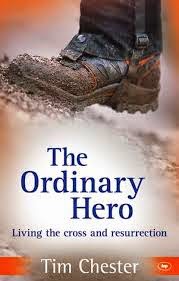
On a Friday morning, sitting under the oak trees outside my favourite cafe, I can't wait to open Tim Chester's The Ordinary Hero.

Here's a favourite quote-within-a-quote:
We should avoid, not a wounded life, says John Piper, but a wasted life ...

Too often, we can't quite lay hold of the treasure of Christ with both hands because we're still clinging to the baubles of this world ...

Piper again:
What a tragic waste when people turn away from the Calvary road of love and suffering. All the riches of the glory of God in Christ are on that road. All the sweetest fellowship with Jesus is there. All the treasures of assurance. All the ecstasies of joy. All the clearest sightings of eternity. All the noblest camaraderie. All the humblest affections. All the most tender acts of forgiving kindness. All the deepest discoveries of God’s Word. All the most earnest prayers. They are all on the Calvary road where Jesus walks with his people. Take up your cross and follow Jesus. On this road, and this road alone, life is Christ and death is gain. Life on every other road is wasted.

Tim Chester The Ordinary Hero 77, quoting John Piper Don't Waste Your Life 76.

Monday, March 17, 2014

what I'm reading: what are we holding back?

Have you been holding back?

Are you prepared to accept a lower standard of living so you can serve Jesus? Do you trust God to provide - to give you "all good things" as he promised?* Are you ready for a risky, costly life?

Those are the questions JI Packer asks in this uncomfortable quote from Knowing God:
We know what kind of life Christ calls us to ... But do we live it? Well, look at the churches. Observe the shortage of ministers and missionaries, especially men; the luxury goods in Christian homes; the fund-raising problems of Christian societies; the readiness of Christians in all walks of life to grumble about their salaries; the lack of concern for the old and lonely ...

We are unlike the Christians of New Testament times. Our approach to life is conventional and static; theirs was not. ... By being exuberant, unconventional and uninhibited in living by the gospel they turned their world upside down, but you could not accuse us twentieth-century Christians of doing anything like that.

Why are we so different? Why, compared with them, do we appear as no more than halfway Christians? Whence comes the nervous, dithery, take-no-risks mood that mars so much of our discipleship? Why are we not free enough from fear and anxiety to allow ourselves to go full stretch in following Christ?

One reason, it seems, is that in our heart of hearts we are afraid of the consequences of going the whole way into the Christian life:
  • We shrink from accepting burdens of responsibility for others because we fear we should not have strength to bear them.
  • We shrink from accepting a way of life in which we forfeit material security because we are afraid of being left stranded.
  • We shrink from being meek because we are afraid that if we do not stand up for ourselves we shall be trodden down and victimized, and end up among life's casualties and failures.
  • We shrink from breaking with social conventions in order to serve Christ because we fear that if we did, the established structure of our life would collapse all around us, leaving us without a footing anywhere.
It is these half-conscious fears, this dread of insecurity, rather than any deliberate refusal to face the cost of following Christ, which makes us hold back. We feel that the risks of out-and-out discipleship are too great for us to take ... We are not persuaded of the adequacy of God to provide ...

Let us call a spade a spade. The name of the game we are playing is unbelief, and Paul's 'He will give us all things' stands as an everlasting rebuke to us. ...

One day we shall see that nothing – literally nothing – which could have increased our eternal happiness has been denied us, and that nothing – literally nothing – that could have reduced that happiness has been left with us. What higher assurance do we want than that?  ...

Have you been holding back from a risky, costly course to which you know in your heart God has called you? Hold back no longer. Your God is faithful ... You will never need more than he can supply, and what he supplies ... will always be enough.

* in Romans 8:32.


Quote is from Knowing God 303-309.

Wednesday, February 13, 2013

reading Leviticus

I’m reading the Bible through, chronologically this time. I’ve just got to Leviticus: the shoal that’s wrecked a million Bible reading plans (at least, it did mine when I was a teenager). Once again, as I read this hard part of God’s word, it seeps into my skin and reshapes my insides.

There’s something beautiful about Leviticus. Sometimes, like those 3D pictures, you have to blur your eyes to see it. As you persevere through the bewildering details (split hooves? a sore with white hairs in it? two materials woven into one?) you begin to sense the outlines. Laws that protect life and relationships. Laws that forbid detestable practices and depraved worship. Laws that uphold justice and provide for the poor.1

There’s also something terrifying about Leviticus. It opens with sacrifice upon sacrifice, described in brain-numbing detail. (As I read, I feel my mind glaze over. I pull my attention back to the page.) Blood must be shed, atonement made. For in the midst of his wayward people God has put up his tent, his palace. Infinite in size, the universe his footstool, he rules from a hidden, golden throne.

To serve such a God comes at enormous cost. The disabled are excluded from the priesthood, those with discharges can’t enter God’s tent, and the diseased live outside the camp (Lev 13:1-15:33, 21:16-23). There is food that cannot be eaten, first-born and first-fruits set aside, the best of the herd given in offering (Lev 11:1-47, 22:17-25, 23:9-14, 27:26). Everything is affected: the shape of the year, mourning for the dead, a woman’s period (Lev 15:1-33, 19:28, 23:1-44). Every moment repeats,
You shall be holy, for I the LORD your God am holy. (Lev 19:2).
Who can live up to such a law? Who can live up to such a God? Who among us has never endangered or slandered his neighbour (Lev 19:16)? Who has never lied or stolen (Lev 19:11)? Who has never sinned unintentionally, habitually, without even noticing (Lev 4:1-6:7)? Who doesn’t put her own needs before others (Lev 19:18)? Who doesn’t allow what he loves to steal his heart from God (Lev 19:4)?

Repetitive, relentless, Leviticus drives the point home: God is holy, made of different stuff from us. To be his people, we must be holy, set apart, pure, clean, all the things we cannot and will never be.

It’s easy to forget the gospel. We’re told to be gospel-minded and gospel-hearted, but it slips away from me, time after time. I feel secure because I’m not doing a bad job of things today. I slide into despair because I can’t live up to the pathetic standards I set myself. I think of Jesus’ death, and it seems an irrelevance, a song once loved but now forgotten, wiped from my iTunes list.

Leviticus won’t let me forget. Like a dark sky that makes the morning shine more brightly, it reminds me that the gospel means something. That this holy God can’t be approached by someone like me. There’s no hope that I could waltz into his presence. What’s in store is not a welcome but a fire (Lev 10:1-20).

Leviticus helps me to see. It’s scattered with stars, small pictures of the dawn. When Jesus comes, he keeps every one of those pesky laws. He touches those who are unclean and – how this should surprise us! – they become clean (Matt 8:1-4 cf. Lev 5:2-3). He carries the sacrifice of himself and walks boldly into God’s heavenly tent, where he offers priestly prayers for our forgiveness (Heb 7:23-28, 9:11-10:25). He does what I can’t do, and I dare take it for granted, let my eyes glaze over, let it slip away.

I’m half-way through Leviticus when I take a walk along the beach. Waves pound the shore after a storm, reminding me that the Creator of all this is holy, different beyond knowing. To glance at him is to be incinerated by his glory. Even the smallest of sins keeps me from him, and sin runs through me like veins in a rock.

I taste the word “Father” on my tongue, and all at once it feels like a miracle. I barely dare say it, even as I know I must say it. For this – this passage into the throne room, this invitation to speak with God, this unchanging welcome – this is the privilege that Jesus won for me.


1. This became clear to me as I was reading Leviticus chapters 18-20. The other references are from chapters 11, 13 and 19:19.

This post first appeared at The Briefing.

image is by natematias at flickr

Thursday, December 20, 2012

a son for sacrifice

It’s nearly Christmas. My children read stories about lambs and donkeys visiting a baby, but the story I’m up to my Bible reading plan shows the season in a different light…

How strange Genesis 22 has always seemed to me. Why would God ask Abraham to sacrifice his son? What kind of Father asks another father to kill his child? Did Sarah know what was going to happen as her husband and son left that day? What psychological scars did Isaac carry into adulthood? (A very modern question, I know.)

What did it cost Abraham to take each step on that three-day journey? Did he stare at the knife as he cut branches for the fire, thinking about what else it would soon cut? What thoughts ran through his mind as he reassured Isaac that God would supply the sacrifice, knowing he had supplied it in the boy who walked by his side?

I picture them trudging up the mountain. They’re at the top, and the wind whines in their ears. Isaac watches his father lay stones for an altar, place branches on the top. Perhaps Abraham lays the last branches slowly, one by one, making time for a reprieve, a last-minute escape clause. It doesn’t come. The sky is steely, silent.

I don’t know how a father binds his son. I don’t know how he lays him on an altar. I don’t know how heavy the knife feels in his hand. I don’t know how faith brings itself to such a pass.

Does the boy close his eyes against the sight of the knife? Does he turn his head away? Does he fight the bonds? Does he cry, or moan, or whimper?

We’re told that Abraham reasoned that God could raise the dead (Heb 11:19). He’s no longer the man who lied about his wife, who slept with a maidservant, who laughed at the impossibility of a child (Gen 12:10-20; 16:1-4; 17:17). By this time he knows something of the God who keeps his promises against all odds.

I don’t know if knowing this makes it any easier.

The sky booms. Words echo. He knows this voice. He has heard it before:
“Abraham, Abraham!”

“Here I am.”

“Do not lay your hand on the boy or do anything to him, for now I know that you fear God, seeing you have not withheld your son, your only son, from me.” (Genesis 22:11-12)
There’s a rustling noise, a “Bleat!” from a bush. Startled, Abraham looks behind him. Was it there before? How did he miss it? A ram in a thicket, caught by the horns, struggling as if it already knows its role in this drama.

The knife cuts, but instead of flesh, it cuts through rope. Isaac rubs sore arms. Abraham seizes the ram, binds its legs, throws it on the altar, slices its throat. They watch blood run down the sides of the altar, smell flesh burning, and tremble to think of the blood that came so close to flowing. A father receives his son back from death (Heb 11:19).

No small family drama, this. No psychological tragedy. No theatre played out for the amusement of the gods.

What was lying there was a boy, yes. A man’s only son, his one hope for family and future. But what lay on the altar that day was also the son of the promise, the seed of a great nation, the hope of world-wide blessing. For from this boy would come a son, and from him a son, and from him a son, and yet more sons, until the One and Only Son came into the world. God made visible. Salvation clothed in flesh. Hope in human form.

What God asks of Abraham, he gives himself. Once again, a father offers up his only son. But this time there is no reprieve, no last-minute escape clause. The sky is unbroken by a voice. Instead, darkness gathers, and the full weight of a father’s anger descends. A cross instead of an altar. Nails instead of a knife. A Lamb instead of a ram. Blood thick on the ground. A voice whispering, “Father?”. A life given so that others may live.

Three days later, the Father receives his Son back from death.

And suddenly the story of Abraham and Isaac doesn’t seem so strange, but inevitable, a line drawing for the future to fill in.


1. Yes, he did have another son, Ishmael, but Isaac was his only legitimate son by marriage, the son of God's promise, his "only son" according to Genesis 22:12.

This post first appeared at The Briefing.

image is by Rembrandt: The sacrifice of Isaac (detail)
Monday, September 10, 2012

what I'm reading: Bonhoeffer

My calling is quite clear to me. What God will make of it I do not know...I must follow the path. Perhaps it will not be such a long one. (Phil 1:23). But it is a fine thing to have realized my calling...I believe its nobility will become plain to us in coming times and events. If only we can hold out. (123)
I've just read Bonhoeffer, a biography by Eric Metaxas. All I knew about Bonhoeffer before was that he wrote The cost of discipleship and was martyred under the Nazi regime. This book is a fascinating read. Not easy - I took a break to dip into a light novel - but good, like a hearty meal, filling and nourishing and life-giving.

I was inspired to read more biography by my friend Jenny after we both read Tony Reinke's Lit!. I started with Steve Jobs by Walter Isaacson, which I highly recommend, then moved on to Bonhoeffer; next, I want to read Eric Metaxas' biography of William Wilberforce, Amazing Grace. Mostly, I have to admit, I don't love reading Christian biographies - they leave me feeling inadequate - but this one informed and encouraged me.

Bonhoeffer is the kind of book that falls into your life like a (rather large) stone: I can picture ripples spreading out from it through my life for years to come. It challenged me to live more whole-heartedly for Jesus; to get more involved in the world, both in enjoying its blessings and engaging with those who suffer; and to face persecution and opposition with courage and purpose.

Above all, Bonhoeffer doesn't let us get away with playing with God's word. He said to a friend, "when you read the Bible, you must think that here and now God is speaking with me" (128). The Sermon on the Mount  gave him his "calling" and showed him what it might cost. Ultimately, it would lead him to his death. He said,
Do not try to make the Bible relevant. Its relevance is axiomatic. Do not defend God’s Word, but testify to it. Trust to the Word. (261)
It's a risky business opening the Bible. Who knows where reading God's word might take us?

Wednesday, August 8, 2012

In the footsteps of Ezekiel

When a man was called by God to be a prophet in Israel, he could be pretty sure he wasn’t in for an easy life. Jeremiah, marked out as a traitor by his own people, thrown into a cistern and waiting for his nose to slip beneath the mud (Jer 38:1-28). Ezekiel, his life a bizarre acted parable of Jerusalem’s fate, lying on one side for months on end and cooking his food over excrement (Ezek 4:1-17). Hosea, commanded by God to marry and be reconciled to an adulterous wife, to picture God’s relationship with his unfaithful people (Hos 1:2-11, 3:1-5).

All those words of judgement, all that rejection, all that sacrifice! I sometimes think how glad I am that God didn’t make me an Old Testament prophet.1 But as I read Ezekiel the other morning, for the first time I got it. This man wasn’t mentally disturbed, paranoid, socially challenged, or otherwise abnormal. He was just an ordinary person called by God to do whatever God asked, whatever it took. Even if it meant speaking words of judgement against the people he loved. Even if it meant being hated. Even if it meant giving up the ordinary comforts of life for strange acts and harsh words.

Does God ask any less of me? Whatever he asks, will I fail to give it? On the day I became a Christian, I turned my life over to him. He owns me, body and soul. He bought me with his Son’s precious blood. On that day, I exchanged a life of self-seeking – a cosy, insular, comfortable Western life – for a life of costly service. A life whose every moment and every possession isn’t mine to use as I will, but his to be poured out for others. A life in which I am to stand up for him publicly, without shame. A life of carrying my cross, of dying like a lamb on an altar, of slavery to Christ. This is the cost I agreed to and the cost I bear.2

There are Christians dying today because of that reality. Fifty Christians burned alive in Nigeria. An Iranian pastor, a father, imprisoned and repeatedly beaten. Grenades thrown into churches in Kenya. A Sri Lankan school boy beaten up by his teacher when he confessed his faith in the classroom. Brutal beheadings in Afghanistan, in Tunisia, in Egypt.3
32 And what more shall I say? For time would fail me to tell of Gideon, Barak, Samson, Jephthah, of David and Samuel and the prophets— 33 who through faith conquered kingdoms, enforced justice, obtained promises, stopped the mouths of lions, 34 quenched the power of fire, escaped the edge of the sword, were made strong out of weakness, became mighty in war, put foreign armies to flight. 35 Women received back their dead by resurrection. Some were tortured, refusing to accept release, so that they might rise again to a better life.36 Others suffered mocking and flogging, and even chains and imprisonment. 37 They were stoned, they were sawn in two, they were killed with the sword. They went about in skins of sheep and goats, destitute, afflicted, mistreated— 38 of whom the world was not worthy— wandering about in deserts and mountains, and in dens and caves of the earth. (Heb 11:32-38)
If my life at this point in time looks less dramatic – if I have not yet resisted to the point of shedding my blood (Heb 12:4) – it’s not because God asks any less of me. I, too, am to be utterly spent in his service. That might mean doing without so I can give to the relief of my suffering brothers and sisters. It might mean waking up to a baby ten times a night with all the cheerfulness and patience that God can give. It might mean struggling to cling to faith through dark days of suffering. It might mean speaking uncomfortable truths to my family and friends. It might mean risking ridicule from workmates or dismissal from a boss by standing up for my faith. It might mean giving up my precious lunchtime to lead a Bible study or my comfortable evening to counsel someone in need. It might mean taking our family into danger or discomfort so we can make Jesus known. It means this, and more than this, every moment of every day.

Like Ezekiel – like all the heroes of faith – I am a stranger in this world. I seek a better country, a heavenly one. I follow Jesus through suffering into glory. May God not be ashamed to be called my God. (Heb 11:13-16; 12:1-2)

Heavenly Father,
Rescue me from complacency. Rescue me from a comfortable Christian life where I think that, because I’ve given my ten percent, I’m free to spend the rest on myself. Rescue me from risking nothing in my conversations and relationships. Rescue me from resting in my Sunday church going and my Christian identity and my devotional practices. And if the day of persecution comes, help me to hold fast to Jesus, whatever the terrible cost. Have mercy on my suffering brothers and sisters across the world, and help them to stand firm in you today.
In the precious name of Jesus,
Amen.

1. Indeed, the prophets don’t always seem that keen on this idea themselves – see, for example, Jeremiah 1:1-19 cf. Exodus 3:1-4:17.
2. See Mark 8:34-38; Luke 14:25-33; Romans 12:1-2; 1 Corinthians 6:18-19, 7:22.
3. These stories were sourced from Barnabus Fund.

This post first appeared today at The Briefing.

Painting of Ezekiel is by Michelangelo.

Thursday, November 4, 2010

Romans 12:1-2 (2) a living sacrifice

Here's part 2 of Steve Chong's talk on Romans 12:1-2, a talk that God used to change my heart. You can read part 1 here.


Therefore, I urge you, brothers, in view of God's mercy, to offer your bodies as living sacrifices, holy and pleasing to God—this is your spiritual act of worship. Do not conform any longer to the pattern of this world, but be transformed by the renewing of your mind. Then you will be able to test and approve what God's will is—his good, pleasing and perfect will. Rom 12:1-2

We've seen that serving is our response to God's mercy.

Serving begins with getting my heart right before God. It begins with
1. getting my body ready ("offer your bodies as living sacrifices")
2. getting my mind ready ("be transformed by the renewing of your mind.")

Let's start with 1.

"offer your bodies as living sacrifices"

"Living sacrifice". We've heard the words so often we don't even hear them. We water down "sacrifice" until it means missing a favourite TV show to go to a Bible study. But sacrifice is about a bloody, dead lamb on an altar. We are the "living slaughtered", our lives used up for the pleasure of God.

The problem with a living sacrifice is that it keeps crawling off the altar.

We say to God, "Yes, Lord, take me, take all of me.........but not......... ______________."

What do you finish the sentence with? What's your disclaimer, your caveat? That's what's stopping you from serving God with all your heart.

We all signed up for this. Have we forgotten?

I went home and finished the sentence. It was ridiculously easy to come up with 5 things that keep me from serving God whole-heartedly, and I'm sure there's more:
1. comfort
2. good standing with non-Christians
3. my children's happiness
4. the good opinion of Christians
5. the right to complain (!).

What's holding you back from being a living sacrifice?

This is a summary of part of a talk given by Steve Chong at MTS Challenge Victoria.

images is from stock.xchng