I've just commented on a fascinating blog post by Taire about eating in a godly way - loving Jesus loving food - which I was directed to by Cathy (see also the discussion in this comment stream about health and pouring ourselves out in God's service).
Taire is going to be reflecting on this issue in the coming weeks, as, I think, is Cathy. Worth reading along if you're interested in issues to do with health, ministry and godly eating.
Showing posts with label dieting. Show all posts
Showing posts with label dieting. Show all posts
Friday, October 1, 2010


Saturday, November 8, 2008
online meanderings: self-control
Here's a quick guide to my posts, other people's posts, and some talks and books on self-control:
Some general posts on the subject:
Some general posts on the subject:
- 15 things I've learned about self-control
- John MacArthur with some excellent tips for self discipline
- how to fight for joy
- self-control: thoughts and feelings
- Nicole's discussion of Carolyn Mahaney's chapter on self-control in Feminine Appeal
- my opening post - the attack of the killer credit card
- a follow-up - the attack of the killer credit card continues
- reflections on hard-won self-control - the joy of Christmas (shopping)
- some recent reflections on self-control and spending - online meanderings: self-control and spending
- the day I went on a diet and decided to write about this topic - is dieting Christian
- some unhelpful approaches to dieting - the bizarre and the beautiful
- where I ask myself whether the Bible word "self-control" relates to food - in search of self-control
- where I learn what the Bible teaches about food, gluttony and moderation - what God says about food (a), (b) and (c) (and some musings on moderation)
- quotes on gluttony, dieting and self-control by Os Guiness, C.S.Lewis, Richard Gibson, Graham Tomlin, Henry Fairlie, Jerry Bridges, Carolyn Mahaney and John Piper
- where I talk about the effect this series has had on my own attitude to gluttony and dieting - my experience
- my review of Elyse Fitzpatrick's Love to Eat, Hate to Eat
- Heather on self-control, gluttony and dieting
- Sophie on choosing godliness over being thin
- Cathy on fighting desire disorder
- Noel Piper on bossiness
- Nicole on gossip
- Nicole on spiritual disciplines
- Carolyn Mahaney on self-control
- Crystal Muson on gluttony (I haven't heard this one, just going on Heather's recommendation)
- on gluttony and dieting - Elyse Fitzpatrick's Love to Eat, Hate to Eat
- chapters on gluttony and dieting - see excerpts from Os Guiness, C.S.Lewis, Richard Gibson, Graham Tomlin, Henry Fairlie
- chapters on self-control - see excerpts from Jerry Bridges, Carolyn Mahaney
- on how eating affects our ability to glorify and enjoy God - see excerpt from John Piper
Friday, November 7, 2008
dieting and gluttony (7) Love to Eat, Hate to Eat by Elyse Fitzpatrick
 If you came to me asking for advice about compulsive eating, obsessive dieting or exercising, food abuse, anorexia or bulimia, or simply lack of self-control around food, Elyse Fitzpatrick's Love to Eat, Hate to Eat is the book I would encourage you to read, or even better, read with you.
Elyse Fitzpatrick is an experienced Biblical counsellor, who fights her own daily battle against compulsive eating. Her book is so far beyond any other Christian book you're likely to find on this topic, which has probably produced more nonsense than just about any other issue, that it might be from another planet!
She quickly makes it clear that this is not another dieting book. While she does include food diaries and practical suggestions, her main goal is not to influence behaviour, but to change the heart.
She takes destructive eating back to its most basic level: enslavement to idolatry. Instead of seeking mere outward change, aiming for weight-loss or even healthy eating, or settling for a fad diet, she calls us to pursue inner rather than outer beauty, to change sinful thinking patterns, and to glorify and enjoy God in our eating, with the confidence that God, by his Spirit, can change even our most deeply ingrained habits.
She encourages us not to blame our poor eating habits on upbringing, illness, or low self-esteem, as if it's someone else's fault. Instead, we need to realise that our behaviour stems from the sinful desires of our heart (James 1:14). So, for example, we may eat in an ungodly way because we want to be in control, or because we love pleasure, or because we think satisfaction lies in earthly things.
Her solution is four-fold, and she emphasises that each of these can only be done with the help of God's Spirit:
- Become convinced that your present method of eating is (not just unhealthy or embarrassing but) sinful (enslaving, idolatrous, disobedient, gluttonous) and cease from it (repent and resist);
- Become convinced that God's methods for disciplined eating (self-control) are right and begin practising them (see the DISCIPLINED Eating acronym below);
- Seek diligently to change your mind and become conformed to God's thinking, especially in the area of your eating habits (she outlines the relationship between body, mind and emotions, and how to influence feelings through behaviour and thoughts, for example by putting off wrong thinking and putting on godly thinking); and
- Continue to practice these new thoughts and behaviours, even when the struggle gets hard (she calls us to the long haul, to slow, steady growth, to a daily, painful battle, to developing new habits, and gives some very practical guidelines).
I particularly liked her chapter on anorexia, bulemia and compulsive eating. She refuses to call these behaviours "diseases", although they are so powerful and seemingly so involuntary that they mimic diseases. Instead, she calls them "chosen, life-dominating behaviours" which can be changed with the help of God's Spirit.
She explores in detail the kinds of idolatrous, unbelieving, self-focussed thoughts which can lead to such self-destructive behaviours - perhaps "I must be thin so I can have worth", or "I need to be in control", or "I deserve comfort and love" - and shows how to replace these thoughts with God's truth.
I appreciated the way she exposed my own temptation to create an idol out of control, develop commandments to serve it, fail these false standards, give in to despair, and give up trying: the cycle of the dieter. Her answers aren't slick or superficial, but I'll leave you to read the chapter and see for yourself!
Let me share with you her very practical DISCIPLINED Eating acronym, which you can learn, and use to determine whether eating a certain food is godly or not:
Doubt - am I eating even though I'm not sure it's sinful (Rom. 14:23)?
Idolatry - am I serving control, pleasure, or comfort (Ex. 20:3)?
Stumble - will I cause someone to stumble (Rom. 14:21)?
Covet - am I eating because I'm discontent and wanting something someone else has (Ex. 20:17)?
Inroad - will eating or doing this lead to sinful behaviour (Rom. 13:14)?
Praise - can I eat this with thanksgiving (1 Tim. 4:4)?
Life - will eating this harm my health (Ex. 20:13)?
Illustrate - am I setting a good example for others, including my family (1 Tim. 4:12)?
No - can I say no? is my body under my control (1 Cor. 9:27)?
Emotions - am I eating out of anger, fear, frustration or depression (Gen. 4:7)?
Distract - will this distract me from something better e.g. time with guests or God (Lk. 10:41-2)?
Enslaved - will this lead to bondage to something I can't say no to (1 Cor. 6:12)?
If you struggle with destructive eating habits, I recommend Elyse Fitzpatrick's Love to Eat, Hate to Eat to you. It will encourage you to feast on God, not on mud-pies.
Thursday, November 6, 2008
dieting and gluttony (6) my experience
 I've written plenty about self-control in this blog, and I'm not sure much more needs to be said! So I thought I'd take this opportunity to wrap up a series I started many, many moons ago, on gluttony and dieting (remember that one?), and tell you how I'm going with this in my own life.
When I look back over my series, I find it interesting that it started with a diet, which I must admit was fairly short-lived, motivated mainly by vanity and/or discomfort (i.e. not fitting into certain pairs of jeans). But as I looked at the Bible more closely, I discovered some far more significant motivations for eating carefully.
I discovered that self-control does have something to do with food; that we are called to glorify God with our eating; that gluttony is idolatrous, unloving and unwise; and that moderation is a bad master, but a useful tool. And I was deeply challenged and encouraged by the wise words of Os Guiness, C.S.Lewis, Richard Gibson, Graham Tomlin, Henry Fairlie, Jerry Bridges, Carolyn Mahaney and John Piper.
Self-control in eating has always been an issue for me. I'm naturally a perfectionist, and I like to be in control, but my body takes revenge on my mind, so I'm also impulsive: I find it easy to spend too much, read too much, and eat too much.
 You wouldn't necessarily know it if you saw me. I'm not blessed with a great metabolism (unlike a dear friend of mine, who loves to eat anything sweet with coloured sprinkles, and who stays far thinner than I will ever be) but I weighed myself recently, and I'm (barely!) within the healthy weight-range.
Which was actually a little annoying, because I wanted an excuse to put myself on a diet and lose the spare tyre around my middle (product of 4 children), but health obviously wasn't going to do it for me, I don't want to be motivated by vanity, and I don't need to lose weight to please my husband (I asked).
But I fit Elyse Fitzpatrick's qualifications for "compulsive eating", which she puts right up there with "anorexia" and "bulimia" as dangerous and idolatrous "life-dominating behaviours":
- habitually overeating when not hungry
- feeling "out of control" around food
- eating large amounts of food without tasting or enjoying it
- habitually eating when emotionally upset or to nurture yourself
 You see, I know perfectly well that I eat even when I know it's unwise. I eat when I know I'll feel sick for the rest of the day. I eat because there's a open packet of chocolates on the shelf and I can't stop myself. I eat when it's unloving, when I know I'll be sluggish and irritable with my family for hours afterwards. I eat when I feel tired, anxious, or stressed, because it's easier than turning to God and dealing with my heart before him, and it makes me feel (very briefly) comforted.
Diets are not the solution. I've been on a few, and they don't last for long. I've never been a great fan of diets anyway, because I like to have my head and heart matching, and I've always thought diets are a bit of a distraction for Christians, more likely to be the product of vanity, and a source of obsession, rather than any great help to long-term godliness.
Strict rules aren't the solution either. Control-freak that I am, I've always been a great one for self-improvement programs: cleaning schedules to help me stay on top of the housework, quiet-time schedules to keep me praying, child-rearing schedules to make me a better mum. I know these programs tend to end in pride, then failure, then despair.
Instead, I'm choosing repentance. Because for me, over-eating is idolatrous, unloving, and unwise. I'm not going on a diet, although I've put a few flexible guidelines for self-discipline in place. I'm choosing moderation over stuffing myself, thoughtful eating over impulsive eating, loving eating over selfish indulgence. I suspect that if more of us ate like this, diets wouldn't be necessary for most of us anyway (and yes, I know this won't be true for everyone).
 I expect the struggle for self-control in eating to be a life-long battle, but one worth fighting. I know that self-control in a small area tends to spread to more important areas. I know from experience that the first 6 months are the hardest. I know it gets easier after that, but not necessarily a whole lot easier. I know that if you let indulgence back in the door, it has a way of taking over. So I'm not aiming for some arbitrary goal weight. I'm in for the long haul.
I know there'll be benefits along the way. Losing that spare tyre would be nice. I'll obviously stay healthier this way. I might have more energy. More importantly, I'll be able to make choices about what to eat with wisdom. I'll set a good example for my children. I'll love my family by avoiding food-induced irritability. I'll depend on God, not food, for comfort when I'm stressed or anxious.
I can't do any of this in my own power: I've failed far too many times to believe that! I'm depending on God, because I know his Spirit is producing self-control in me, and that he gives all his children "everything we need for life and godliness" through Christ (2 Cor. 1:3).
Saturday, May 31, 2008
dieting and gluttony (5h) John Piper on how eating affects our spiritual lives
Don't worry, I am planning to tie up the loose ends and conclude this series on gluttony, dieting, and honouring God with our eating!
Just a few more quotes to go, addressing an issue we haven't really looked at yet: how eating and physical health impact our spiritual life. Then I want to review a helpful book Hate to Eat, Love to Eat by Elyse Fitzpatrick on food addiction for those of you who struggle in this area, and conclude by giving you practical applications from my own experience.
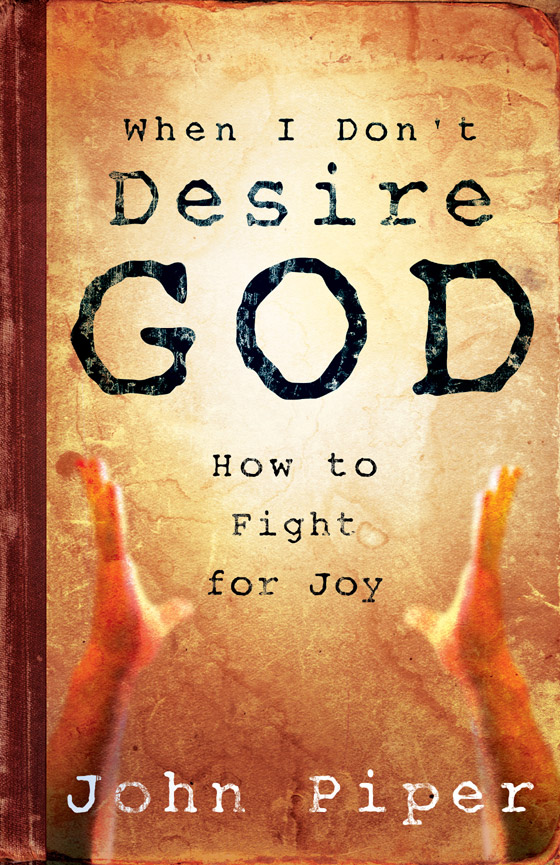
So here's some helpful comments by John Piper on how eating can help or hinder our joy in God, from his excellent book When I Don't Desire God. This quote is from a chapter on how things like sleep, food, exercise, music, relationships and beauty affect our physical bodies, and since we are embodied creatures, impact our joy in God. I commend this book and this chapter to you!
You can follow the thread on eating, gluttony and dieting here.
Just a few more quotes to go, addressing an issue we haven't really looked at yet: how eating and physical health impact our spiritual life. Then I want to review a helpful book Hate to Eat, Love to Eat by Elyse Fitzpatrick on food addiction for those of you who struggle in this area, and conclude by giving you practical applications from my own experience.
So here's some helpful comments by John Piper on how eating can help or hinder our joy in God, from his excellent book When I Don't Desire God. This quote is from a chapter on how things like sleep, food, exercise, music, relationships and beauty affect our physical bodies, and since we are embodied creatures, impact our joy in God. I commend this book and this chapter to you!
This quote is from the chapter "How to wield the world in the fight for joy" in John Piper's When I Don't Desire God, pp.201-2.
The proper or improper use of our bodies can have a huge effect on the way we experience spiritual reality. ... Proper eating and exercising and sleeping has a marked effect on the mind and its ability to process natural beauty and biblical truth.
So the question must be faced: How do we use the created world around us, including our own bodies, to help us fight for joy in God? ... We all make choices about how we sleep and exercise and eat. ... There is no way around the issue. ... Our physical lives will affect our spiritual lives whether we plan it or not. Better to think it through and be intentional. ... Take steps to keep our bodies and minds as fit as we can for spiritual use. ...
Please don't interpret this as a kind of chipper health and happiness regimen. The question is not whether God can reveal himself in precious ways to those who suffer. He can and does. ... The questions is what we should do during times when we can choose our own lifestyle of eating and exercising and resting. In what indirect ways can we improve the ability of our bodies and minds for their partnership in perceiving the glory of God? ...
Sereno Dwight tells us that Jonathan Edwards "carefully observed the effects of the different sorts of food, and selected those which best suited his constitution, and rendered him most fit for mental labour." Thus he abstained from every quantity and kind of food that made him sick or sleepy. Edwards had set this pattern when he was twenty-one years old when he wrote in his diary, "By a sparingness in diet, and eating as much as may be what is light and easy of digestion, I shall doubtless be able to think more clearly, and shall gain time." Hence he was "Resolved, to maintain the strictest temperance in eating and drinking."
The point here is not to commend the particulars of Edwards's eating habits. The point is that we be intentional about how our eating affects the ability of our body to be a helpful partner in seeing the glory of God. We live in an era of eating disorders. I am not eager to create another one. I commend balance. Put the following two texts beside each other. On the one hand, Paul made food and drink clearly secondary: "The kingdom of God is not a matter of eating and drinking but of righteousness and peace and joy in the Holy Spirit" (Rom. 14:17). But on the other hand, he said, in regard to food, "I will not be enslaved by anything" (1 Cor. 6:12). In the balance of these two truths we can find a way to eat that will provide both the denial and the delight that will fit us for seeing the glory of God in the Word and in the world. ...
Contemporary medical knowledge would include the fact that obesity kills and contributes to dozens of ailments. Not all obesity is self-inflicted. Some medical conditions make it virtually impossible to avoid it. But most of it is self-inflicted, and this kind of self-destruction does not enhance the ability of the body or the mind to see and savour the glory of God in this world, or the glory of Christ who endured the cross by postponing the feast till the age to come (Heb. 12:2).
You can follow the thread on eating, gluttony and dieting here.
Monday, April 28, 2008
dieting and gluttony (5g) Carolyn Mahaney on self-control
Let's eat to the glory of God, not our own glory!
Carolyn Mahaney encourages us to glorify God by enjoying food with thanksgiving, and by avoiding over-eating, comfort eating, and eating (or not eating) for vanity.
I enjoyed her story about the woman who always ordered a salad!
Carolyn Mahaney encourages us to glorify God by enjoying food with thanksgiving, and by avoiding over-eating, comfort eating, and eating (or not eating) for vanity.
I enjoyed her story about the woman who always ordered a salad!
My highlights; this quote is from Carolyn Mahaney, Feminine Appeal, pp.69-71.I usually don't stop to contemplate why I am eating. ... Most of the time we eat because we are hungry or simply because we desire food ... Scripture, however, tells us that we are to eat and drink to the glory of God (1 Cor. 10:31). How then are we to fulfill this command?
We are to receive food with gratitude and enjoyment; however, we must not be given to overeating. ... Eating too much food is sin. [Prov. 23:2, 20-21] ...
Eating to calm our fears, alleviate stress, or overcome feelings of depression are other habits that do not glorify God. Food is not our source of help and comfort. God is. ...
Our society promotes the pursuit of physical beauty, but God's Word exposes this quest as vanity and calls us to pursue the fear of the Lord instead: "Charm is deceitful, and beauty is vain, but a woman who fears the LORD is to be praised" (Prov. 31:20) ...
Being thin is one of our culture's requirements for physical beauty. ... We must not chase after the ideal our culture worships, but instead pursue what God esteems.
A disciplined approach to eating does not automatically indicate the presence of self-control ... I know a woman who always ordered a salad at restaurants because she desired a figure that would attract the attention of others. Although she appeared disciplined to those around her, this woman realised that her motives were actually sinful. She was pursuing self-glorification - not godliness. This sin of vanity is no less serious than the sin of gluttony. When this woman repented of her vanity, she was then able to pursue self-control in a manner that brought glory to God.
We need to ask ourselves: Am I seeking my own glory or God's glory with my eating habits?

Monday, April 21, 2008
dieting and gluttony (5f) Jerry Bridges on self-control
Wondering what self-control around food looks like in practice?
Here's some helpful guidelines about how to be self-controlled in our eating from Jerry Bridges' Respectable Sins (an insightful look at "forgotten" sins like pride and selfishness).
I found his definition of self-control particularly helpful, and I couldn't agree more that lack of self-control in one area can lessen self-control in more important areas. Again, the real issue is not "How much ice-cream do I eat?" but "Does my eating control me?"
Here's some helpful guidelines about how to be self-controlled in our eating from Jerry Bridges' Respectable Sins (an insightful look at "forgotten" sins like pride and selfishness).
I found his definition of self-control particularly helpful, and I couldn't agree more that lack of self-control in one area can lessen self-control in more important areas. Again, the real issue is not "How much ice-cream do I eat?" but "Does my eating control me?"
My highlights; this quote is from Jerry Bridges, Respectable Sins, pp.109-114."A man without self-control is like a city broken into and left without walls" (Proverbs 25:28). ... [A] person without self-control is vulnerable to all kinds of temptations. ...
What is self-control? It is a governance or prudent control of one's desires, cravings, impulses, emotions, and passions. It is saying no when we should say no. It is moderation in legitimate desires and activities, and absolute restraint in areas that are clearly sinful. ...
[S]elf-control needs to be exercised in ... eating and drinking. Let me say right away that I am not singling out those who have a so-called "weight problem." That may or may not be due to a lack of self-control. One of the most self-controlled men I have ever known struggled with his weight all his adult life. On the other hand, some who can eat what they please without gaining weight may, because of that fact, fail to exercise self-control in their eating and drinking.
What I am addressing is the tendency to continually give in to our desires for certain foods or drinks. ... I think of my own craving for ice cream years ago when I would have a dish of it at dinner and another at bed-time. ... A seemingly benign practice greatly weakened my self-control in other more critical areas. I learned that we cannot pick and choose the areas of life in which we will exercise self-control.
One of the ways we can exercise self-control is by removing or getting away from whatever tempts us to indulge our desires. In the case of the ice cream, I asked my wife to no longer keep it regularly in the freezer. Instead, we now buy it for specific occasions. Even though I made that decision more than thirty years ago, I still have to exercise self-control. Recently I was on my way to mail a package at a contract post office that is located in an ice cream shop. As I drove, I began to think about having a dish of ice cream. As I wrestled with that strong desire, I concluded that it was a time when I needed to say "no" to myself just for the purpose of keeping that desire under control.
I'm not trying to lay a guilt trip on those who enjoy ice cream or soda pop, or even those who go to Starbucks every day for their favourite coffee drink. What I am addressing is our lack of self-control - a tendency to indulge our desires so that they control us, instead of our controlling those desires.

Monday, April 14, 2008
dieting and gluttony (5e) Henry Fairlie on gluttony
Here's a scathing, witty attack by Henry Fairlie on the modern obsession with fine dining, dieting, and health food:
THE GLUTTONY OF OUR AGEHighlights mine; this quote is from Henry Fairlie, The seven deadly sins today, cited in Os Guiness, Steering through chaos pp.222-5.
An invitation to dinner has ... become a hazard. What used to be a sociable occasion has been turned into a form of solitude. The hostess or host - for when they take up cooking as a fine art, men are the worst offenders - will hardly be with their guests. They will be in the kitchen. But that is not all. The guests in turn are hardly permitted to be with each other. As each course is brought to the table, it must be tasted, discussed, each ingredient told ... This is no less a form of solitude than that of the glutton at his trough. All companionship is destroyed. The guests might as well have stayed at home and read The Art of French Cooking, or watched Julia Child whip up a souffle on television. At least they would not have had to applaud her ...
[W]e usually think of gluttony as so unsightly and bloated that few of us today may seem guilty of it. On the one hand, there are the dieters and calorie counters; on the other, the addicts of health food. ... These may seem to reflect a self-denying abstemiousness, but there is Gluttony in all of them. (Fastidiousness in eating is regarded in theology as just as much a fault of the sin as excess in it.) ... They are just as obsessed with their food, even if their attention is fixed only on a raw carrot and a prune ...
It is worth watching the obsessive dieters. They are constantly going to their refrigerators ... They gaze on the morsels, fondle them, even rearrange them ... From hour to hour they return to ... count the spinach leaves. But at last the bell rings. It is mealtime. Salivating like Pavlov's dogs, they scurry to the kitchen table with a stick of celery, a radish, a spoonful of cottage cheese, and a dried apricot for dessert. Watch them as they eat. They devour their delicacies just as the conventional glutton sucks up his bouillabaisse. Their eyes also are fixed on their plates.
They occupy the rest of their days by reading and thinking about food. There must be some new regimen they should be following, one more impurity that has been discovered in the endive. Whether they are eating or not, their minds are on their food and what their food is doing to their bodies. ... There is neither time nor need to talk of anything else. The interest is gluttonous and, as with all forms of Gluttony, the end is solitude. For none of the activities needs a companion. The driving motive of the dieter is again an inordinate self-love.
This is no less true of the addicts of health foods, as they exclaim at the wholesomeness of a sassafras nut or hymn ecstatically the savour of a sunflower seed. They also may not seem to be gluttons in the common sense, yet their interest in their eating is again a form of Gluttony. It is disproportionate and unnatural. There is a great deal of the fastidiousness of self-love in it. A creaturely thing is magnified beyond its actual significance and made some kind of expression of oneself.
One of the pleasures of food ... is that it offers occasions for social intercourse. But it is precisely this that is refused by the dieters and addicts of health foods. Eating is their one staple of interest and conversation. By giving to food a false value, they also rob it of its real value. ...
The Gluttony of our own age ... has at least a part of its cause ... in the boredom of our societies. When there is so much to do, when so much is spread before us for our titillation, surely we should not be bored. Yet it is all so dissatisfying, with neither purpose nor deep reward. ... We are left with a hollow at our core, a sinking feeling in our spirits from day to day, and we resort to the device of the glutton ... We will fill and stuff our emptiness, even if it is only by chewing ravenously on a raw carrot. ... If our societies are founded on Avarice, the state to which they reduce us is Gluttony.
Thursday, April 3, 2008
dieting and gluttony (5d) Graham Tomlin on gluttony
Graham Tomlin defines gluttony as getting food out of proportion, using food to do what it was never intended to do: fill the spiritual emptiness in our lives.
This may take the form of eating for comfort, or fastidious eating and obsessive dieting. At its most extreme, it may become compulsive over-eating (loss of control) or food refusal (holding on to control).
This may take the form of eating for comfort, or fastidious eating and obsessive dieting. At its most extreme, it may become compulsive over-eating (loss of control) or food refusal (holding on to control).
Graham Tomlin The seven deadly sins pp.101-120.
Why on earth is gluttony a sin? ... surely just eating a little too much is as harmless an activity as you can get? ...
Strange though it may seem, in the earliest fourth-century lists of the deadly sins, gluttony used to head the list as the worst of them all. Pope Gregory wrote: "Unless we first tame the enemy dwelling within us, namely our gluttonous appetite, we have not even stood up to engage in the spiritual combat." ...
[There are] reasons that ... might make us question why gluttony is considered a sin at all. ... Jesus, it seems, was rather fond of a party ... A fine claret, a tasty slice of rich, creamy Camembert, a pint of dark beer, a sweet-tasting pear are all good, God-given pleasures. ...
When we think of gluttony we normally think of very large people stuffing food into their mouths with no thought of tomorrow; over-indulgence to a large degree. Yet the sin of gluttony has always been seen as covering a wider area than that, including that fastidiousness about food that obsesses over what we can and cannot eat. ... Obsessive dieting can be just as much a sign of gluttony as overeating.
Gluttony then is an inordinate obsession with food, drink or plain consumption. It is getting food out of proportion, just as lust is getting sex out of proportion. ... [W]hen food become a god, it becomes dangerous. ...
The evidence of that is all around. Obesity is one of the biggest ... problems in the developed world ... [F]irst-world gluttony is scandalous when related to third-world poverty and hunger.
But overeating is not the only way of abusing food. Obsessing about quantities is also a sign of bad inner health. ... Suffering from anorexia, bulimia or a compulsive eating disorder are not sins as such, but they are an indicator that something is deeply wrong. ...
Why do people overeat themselves into obesity, or starve themselves into anorexia? All the studies suggest that these disorders often emerge from a sense of lack of worth. We all know the pattern of comfort eating. When we feel a bit low, a slice of chocolate cake or apple pie can make us feel a whole lot better. ... Similarly, anorexia or bulimia often emerge out of patterns of unhappiness or self-dislike. ...
Now these of course are extreme cases. Yet they point to the ease with which we use food and drink to replace something that's missing from our lives, to comfort us when we feel lonely and to satisfy us when we are not just physically, but also spiritually hungry.
Peter Kreeft, an American philosopher and writer, puts it well: "The motivation for gluttony is the unconscious self-image of emptiness: I must fill myself because I am empty, ghostlike, worthless." Gluttony is trying to fill a spiritual vacuum with a physical remedy. ...
So how do we know when we are in danger of gluttony? The guilt feelings that come when we know we have eaten too much once in a while ... are most probably not true, healthy signs of guilt ... [They] may be caused more by vanity than gluttony.
Gluttony happens when the connection between food and its proper purpose is broken. Food is given to sustain the body, to enrich our communal life and to give pleasure to the taste. It is not there to comfort the isolated and lonely, to bolster a fragile self-image or to be a substitute for prayer. ...
Gluttony begins to rear its head when someone begins to get food out of proportion. The key issue here is control. The overeater loses control over how much he eats. He is unable to stop himself ... He believes the lie that it is impossible for him to control his eating. For the anorexic or bulemic person, the issue is the other way round: it is a matter of giving up control. ... Here, the remedy is to learn to give up control and re-form their identity around something other than eating habits, so that food can take its normal place as something to be enjoyed. ...
Gluttony is disordered desire. It is thinking that food can satisfy our deepest needs. And no created thing can do that. We were made to find our deepest satisfaction when we are connected with our creator; when we learn to desire him above everything else. ...
The Christian answer to gluttony is not self-denial for the sake of it, nor is it the boring routine of endless moderation, a meagre diet of lettuce leaves and dry bread. It is the rhythm of feasting and fasting, the ability to take time to enjoy the delicious flaviour of a Belgian chocolate ... when the time is right, yet to say no to any of these at other times, because our deepest needs are not met by food, but by fellowship with God.

Sunday, March 23, 2008
dieting and gluttony (5c) Richard Gibson on gluttony
Richard Gibson gives helpful suggestions about how to speak against gluttony in an age obsessed equally with food and weight-loss (apologies to those who read this before I rearranged my blog).
Make sure you check out the italicised quote from Anthony Compollo below: it's a fantastic reminder not to demonise obesity when we speak against gluttony.
Make sure you check out the italicised quote from Anthony Compollo below: it's a fantastic reminder not to demonise obesity when we speak against gluttony.
Highlights mine; Richard Gibson "Clement on Gluttony" in Still deadly: ancient cures for the seven sins pp.67-73.Food is the new sex ... Just a case of dressing up glutton as glam ...? Or are we in the midst of a culinary revolution ...? Just think, with the eroticisation of the humble meal, we can look forward to a new era of food-abuse, people eating but never being satisfied, families shattered by addictions, and more lonely men, eating alone in front of flickering computers. An era where gluttony will come into its own. ...
Intriguingly, in a culture that increasingly refuses to disapprove of people's sexual preferences and behaviour, diet and body-shape has become a moral issue. Barkow observes: 'Food is a class marker because being overweight shows that you are immoral, you're overindulging, you lack willpower, you lack self-control.'
It could be that our culture already regards, at least implicitly, gluttony as the most sinful and deadliest of the traditional seven. ... Reality programs with chillingly ironic titles, like Biggest Loser, thrive. In our culture, there are few bigger losers than the obese, those who lack the will-power to change. ...
Ordinarily, this would be too good an opportunity for Christian commentators to pass up. Rarely do traditional categories of sin and such widely recognised social epidemics pass so closely to each other in their orbits. ... Here, surely, is the opportunity to dust off traditional discussions of gluttony ... in order to offer a searching critique of a sin, a sin finally being recognised as deadly and sinful.
This would represent a revolution for 'gluttony'; a significant tarting up of what is, traditionally, the dowdiest and least convincing of the moral failures. ...
[But there] continue to be a number of biblical and practical reasons that should discourage Christian commentators from rushing to eagerly to join the rising contemporary chorus against overeating and obesity. ...[Jesus enjoyed food; food can't render us unclean; the created order is good; the feast is a biblical image for the kingdom.]Too often in the past, attacks on the glutton have glibly assumed that the corollary of gluttony is excessive weight. In this sense, the glutton has been the most visible of the seven deadly sinners. Sadly, Christian speakers and writers, who should be more aware of the consequences of the fallen world for such neat correlation, have fallen into this trap. To his credit, Anthony Campolo records his shame after preaching against gluttony:
Of the sermons I wish I had never preached, none elicits more regret than a sermon on gluttony ... The cruelty was not apparent to me at the time. When I preached the sermon, I was convinced that the obesity of those in the congregation was due to a lack of willpower on their part and a decision to let themselves go physically ... I had no understanding of the complex factors contributing to a problem which afflicts so many.
Conversely, Christians must guard against conspiring with one of the false gods of our age, and inflicting harm on another group: ... [those with] eating disorders such as anorexia and bulimia. Tragically, Christian preachers and authors ... unwittingly feed these terrible disorders with titles like Pray Your Weight Away, More of Jesus Less of Me, Help Lord - the Devil Wants Me Fat! and Thin, Trim and Triumphant. No-one can afford to write on the dangers of gluttony without taking into account the horrors of anorexia and bulimia, lest careless comments add to the difficulty of dealing with them. If it seems to be irresponsible not to target overeating in a culture that is eating itself to death, it needs to be remembered that many are also dieting themselves to death.

Wednesday, March 19, 2008
dieting and gluttony (5b) C.S.Lewis on gluttony
Our next quote on food and gluttony is taken from C.S.Lewis' The screwtape letters, in which the senior devil Screwtape advises the junior devil Wormwood on how to tempt humans (sorry to those who read this the other day before I rearranged my blog!).
C.S.Lewis shows how the gluttony of excess has been replaced by the more subtle gluttony of delicacy, and how this often takes different forms among men and women:
C.S.Lewis shows how the gluttony of excess has been replaced by the more subtle gluttony of delicacy, and how this often takes different forms among men and women:
Highlight mine; this quote is taken from chapter 17 of C.S.Lewis' The screwtape letters.
MY DEAR WORMWOOD,
The contemptuous way in which you spoke of gluttony as a means of catching souls, in your last letter, only shows your ignorance. One of the great achievements of the last hundred years has been to deaden the human conscience on that subject, so that by now you will hardly find a sermon preached or a conscience troubled about it in the whole length and breadth of Europe. This has largely been effected by concentrating all our efforts on gluttony of Delicacy, not gluttony of Excess. Your patient's mother, as I learn from the dossier and you might have learned from Glubose, is a good example. She would be astonished - one day, I hope, will be - to learn that her whole life is enslaved to this kind of sensuality, which is quite concealed from her by the fact that the quantities involved are small.
But what do quantities matter, provided we can use a human belly and palate to produce querulousness, impatience, uncharitableness, and self-concern? Glubose has this old woman well in hand. ... She is always turning from what has been offered her to say with a demure little sigh and a smile "Oh, please, please ... all I want is a cup of tea, weak but not too weak, and the teeniest weeniest bit of really crisp toast."
You see? Because what she wants is smaller and less costly than what has been set before he, she never recognizes as gluttony her determination to get what she wants, however troublesome it may be to others. At the very moment of indulging her appetite she believes that she is practising temperance ...; in reality ... the particular shade of delicacy to which we have enslaved her is offended by the sight of more food than she happens to want.
The real value of the quiet, unobtrusive work which Glubose has been doing for years on this old woman can be guaged by the way in which her belly now dominates her whole life. ... Meanwhile, the daily disappointment produces daily ill temper: cooks give notice and friendships are cooled. ...
Now your patient is his mother's son. ... Being a male, he is not so likely to be caught by the "All I want" camouflage. Men are best turned into gluttons with the help of their vanity. They ought to be made to think themselves very knowing about food, to pique themselves on having found the only restaurant in the town where steaks are really "properly" cooked. What begins as vanity can then be gradually turned into habit. But, however you approach it, the great thing is to bring him into the state in which the denial of any one indulgence - it matters not which, champagne or tea, sole colbert or cigarettes - "puts him out," for them his charity, justice, and obedience are all at your mercy.
Mere excess in food is much less valuable than delicacy. Its chief use is as a kind of artillery preparation for attacks on chastity [and I would add other areas of godliness, but that's a topic for another day] ...
Your affectionate uncle
SCREWTAPE

Thursday, March 13, 2008
dieting and gluttony (5a) Os Guiness on gluttony
Here, as promised, is one of the things I've read about food, gluttony, dieting and self-control recently.
This one's by Os Guiness, insightful and challenging as always. He argues that the modern obsession with food and dieting is actually gluttony, a gluttony of delicacy rather than a gluttony of excess.
Have a read and tell me what you think:
This one's by Os Guiness, insightful and challenging as always. He argues that the modern obsession with food and dieting is actually gluttony, a gluttony of delicacy rather than a gluttony of excess.
Have a read and tell me what you think:
Since this book is hard to find, I've given you a good long quote. The highlights are mine. It's from Steering through chaos pp. 211-215.
Gluttony ... is often treated as the least serious of the seven sins. Just as avarice idolizes possessions and lust sex, so gluttony idolizes food. It lifts it out of its place and distorts both food and eating. Thus, unlike a gourmet who enjoys and appreciates food, a traditional glutton enjoys eating, almost regardless of its taste, beauty, or the company shared. Whereas the gourmet savours, the traditional glutton devours. Gluttons "make pigs of themselves" by reducing all food to the level of slop. ...
Yet [we don't take] ... traditional gluttony seriously ... [because of] our modern self-congratulation on our disapproval of obesity and our newfound dedication to health, fitness, and dieting. Our gods, it seems, are not our bellies but our flat abdominal muscles ...
[G]luttony is often treated as a relatively harmless overindulgence in whatever we long for. Ironically, the word "sinful" is playfully applied to eating dessert more readily than to any other behaviour or attitude in contemporary English. ...
But both the origins and consequences of gluttony are more serious than that. Dedicated to the gratification of appetite, gluttony grows from and leads to a terrible emptiness that--no matter how much we stuff ourselves--is never satisfied. People overeat to compensate for emotional emptiness, but the overeating never compensates. The belly is stuffed, but the heart is hollow. Like all addictions, gluttony deceives. ...
In the medieval view, there were five ways of sinning by gluttony--eating and drinking too soon, too expensively, too much too eagerly, and with too much fuss. ... Thus ... modern gluttony ... can also be traced in the fanatical modern devotion to dieting, health foods, and drug taking. In a society in which cookbooks outsell the Bible by something like ten to one, food and diets have been given a time and place that are gluttonous. ...
The gluttony of excess is tied to a culture of scarcity just as the gluttony of delicacy is tied to a culture of abundance ... The reason is that in a culture of scarcity food was for most people the only accessible luxury ... For most of the West, the shift from scarcity to abundance happened in the nineteenth century. It was paralleled by an accompanying shift from the gluttony of excess to the gluttony of delicacy. As modern people, we may not admire indulgence and obesity, but we have a thousand polite words to cover our fussing over food. ...
Where food was once simply a matter of human sustenance, enjoyment, and sharing, it is now laden with myriad forms of "food guilt." How was it produced (on pesticide-ridden factory farms by exploited factory farmhands)? How is it marketed (in non-biodegradable garbage-creating containers)? What will be its consequences (depleted resources/increased heart attacks/thickened midriffs and hips)? ...
One writer notes, "It's not unusual at all to hear a woman wail, 'I was so bad today,' only to follow this dramatic statement with a seemingly tame admission like 'I ate two doughnuts and a bag of Cheetos." The traditional moral categories of "good" and "bad" are applied less often to "what comes out of" a person, as in words or deeds, than to "what goes in." ...
Though the modern tragedy of eating disorders is utterly distinct from the gluttony of delicacy, there is a link. The myth of the "perfectly thin female" that feeds the gluttony of delicacy is one factor ... in eating disorders, which are today nearly epidemic on college campuses. ... The approximate recovery time for anorexia sufferers is seven years, and the death rate twenty percent--the highest of any mental disorder. ...
The tragedy of such illnesses is perhaps the predictable outcome of a culture preoccupied with external image--and food as a means of controlling it. ... Obsession with various forms of non-eating is trendy, but just as gluttonous as obsession with eating--especially to Christian believers whose anticipated joy in a heavenly banquet will surely be oblivious to whether the bread has butter or margarine on it and the milk is 98 percent fat-free.

Sunday, March 9, 2008
dieting and gluttony (4c) God's words on food: moderation, idolatry, and self-control
...continued from yesterday...
When we eat, we should avoid the two extremes of strict self-denial and self-indulgence. So perhaps we're to seek a middle path: the way of moderation.
But moderation is not an end in itself, as if once you've found the perfect balance between over- and under-eating you've found true holiness. The ideal of the "golden mean" is more Greek than Christian. We are meant to love God immoderately! Our passion for God may lead to feasting (for example, to celebrate God's salvation, or the joy of a wedding) or fasting (practised by God's people during times of repentance, mourning, and fervent prayer).*
Yet moderation can be a useful practical aid as we seek to serve God and others in our eating.
The practice of moderation may help you escape the perils of gluttony - ill health, lethargy, poverty - none of which aid loving service. It may lessen the hold of food if you frequently turn to it for comfort. It may help you not to be enslaved by food. It may enable you to sit loose to the pleasure of food, so that you can do without it cheerfully. In other words, it may stop food becoming an idol.
So how can you tell if food has become an idol for you? Here are some useful questions to ask yourself (I have adapted these from the excellent chapter on pleasure in Packer's Laid-Back Religion, and you could replace "eating" with just about anything which may be an idol for you):
As we control our eating rather than allowing it to control us, we will learn to turn to God for comfort instead of food. We will be freed from the constant drive to eat, so we can make better decisions about how our eating affects those around us. We may have more energy for loving service. We may even have more money or food to give to those who are truly hungry.
Food will become what it is meant to be: fuel for the enthusiastic service of God and others, an opportunity for generosity and hospitality, and the gracious gift of God to enjoy with thanksgiving, as we hunger for the far greater things of eternity.
Let's serve not the gift, but the Giver.
In the next couple of posts on this topic, we'll discover what some writers, far wiser than me, have to say about food and gluttony. Then we'll explore the implications of the Bible's teaching on food for the practice of dieting.
You can follow the thread on dieting here.
When we eat, we should avoid the two extremes of strict self-denial and self-indulgence. So perhaps we're to seek a middle path: the way of moderation.
But moderation is not an end in itself, as if once you've found the perfect balance between over- and under-eating you've found true holiness. The ideal of the "golden mean" is more Greek than Christian. We are meant to love God immoderately! Our passion for God may lead to feasting (for example, to celebrate God's salvation, or the joy of a wedding) or fasting (practised by God's people during times of repentance, mourning, and fervent prayer).*
Yet moderation can be a useful practical aid as we seek to serve God and others in our eating.
The practice of moderation may help you escape the perils of gluttony - ill health, lethargy, poverty - none of which aid loving service. It may lessen the hold of food if you frequently turn to it for comfort. It may help you not to be enslaved by food. It may enable you to sit loose to the pleasure of food, so that you can do without it cheerfully. In other words, it may stop food becoming an idol.
So how can you tell if food has become an idol for you? Here are some useful questions to ask yourself (I have adapted these from the excellent chapter on pleasure in Packer's Laid-Back Religion, and you could replace "eating" with just about anything which may be an idol for you):
- - what is the motivation of my eating? Do I depend on it regularly for emotional comfort?
- what is the outcome of my eating? Is it wasteful or harmful to me or others?
- how hard do I chase after food? Can I do without it cheerfully? Do I know when to stop?
- what kind of behaviour does my eating produce?
- how much of my thoughts, energy, money and conversation does food (or dieting) absorb?
- does eating prompt me to heedless self-indulgence, or to praise and thanksgiving?
As we control our eating rather than allowing it to control us, we will learn to turn to God for comfort instead of food. We will be freed from the constant drive to eat, so we can make better decisions about how our eating affects those around us. We may have more energy for loving service. We may even have more money or food to give to those who are truly hungry.
Food will become what it is meant to be: fuel for the enthusiastic service of God and others, an opportunity for generosity and hospitality, and the gracious gift of God to enjoy with thanksgiving, as we hunger for the far greater things of eternity.
Let's serve not the gift, but the Giver.
In the next couple of posts on this topic, we'll discover what some writers, far wiser than me, have to say about food and gluttony. Then we'll explore the implications of the Bible's teaching on food for the practice of dieting.
You can follow the thread on dieting here.
* The small print: feasting and fasting
For examples of feasting see Deut. 16, Neh. 8:10, Est. 9:20-22, Jn. 2:1-11, Rev. 19:9; and fasting see 1 Sam. 7:6, 2 Sam. 1:12, 12:16, Is. 58, Matt.6:16-18, 9:14-17, Acts 13:2-3, 14:23.
I don't feel qualified to say a lot about feasting and fasting. But I noticed that the last references to fasting in the Bible are in Acts (13:2-3, 14:23), making me wonder if this is more a Jewish/Jewish-Christian practice than a Christian one, but I need to explore this issue further.
And on feasting I was intrigued that when the Israelites were encouraged to celebrate the reading of God's law with "choice food and sweet drinks", they were told to share food with those who had none (Neh. 8:10, cf. feasting and gifts to the poor in Est. 9:20-22). Which is exactly what was not happening at the Lord's Supper in Corinth (1 Cor. 11:17-33).
So there may be appropriate times for what we might call "godly indulgence", though even then we should observe sensible limits - but we must avoid selfish indulgence with no thought for the needs of others.
Saturday, March 8, 2008
dieting and gluttony (4b) God's words on food: self-denial and self-indulgence
...continued from yesterday...
In our eating, as with all our pleasures, there are two equal and opposite pit-falls to avoid.
The first pit-fall is asceticism - extreme self-denial of bodily pleasures as an aid to spiritual purity. Paul makes it clear that this is the doctrine of demons (1 Tim. 4:1-5) and is worse than useless for overcoming sensual indulgence.
Self-control is not the refusal of the pleasures of the body, but the refusal of the sins of the body (Rom. 6:11-13, 8:13, 12:1, 1 Thess. 4:3-8). We shouldn't refuse pleasures because they are pleasurable, but because they are unloving, self-indulgent or idolatrous.
Does this have implications for dieting? I'm not sure, except to say that legalistic guidelines, or periods of strict self-denial, may be a poor way to achieve long-term godly self-control.
The second and opposite pit-fall in enjoying God's good gifts is hedonism - the pursuit of pleasure for pleasure's sake. This is self-indulgent idolatry, a worship of something else besides God. It's love of the world rather than love of God. It puts ourselves and our pleasures firmly at the centre of the universe.
Food makes a particularly pointless idol: in the mouth, through the body, out the other end, and into the toilet (sorry about that, but Jesus said it first - Matt. 6:17). How foolish and shameful to live to serve our stomach, which is headed for death (Deut. 32:15, 1 Cor. 6:13, Phil. 3:19). Better to hunger and thirst for things that last into eternity: for God's Word, for righteousness, for peace and joy (Is. 55, Matt. 4:4, 6:6, Jn. 4:23, 6:27, Rom. 14:17).
Luxurious or excessive eating is not only idolatrous, but unloving, for it ignores the needs of the hungry. It's short-sighted, for like pigs, we are only fattening ourselves for the day of slaughter, when God will judge us for our selfish indulgence (Jam. 5:5).
Gluttony is also unwise. Proverbs pulls no punches here: gluttony produces poverty and drowsiness (23:20-21), vomit (25:16), disgrace (28:7) and, oddly, gullibility (eat with someone, be influenced by someone? - 23:2). Eating sensibly is a wise way to stay healthy (1 sTim. 4:8, 5:23).
Over-eating can make us ill and lethargic (trust me, I know) and perhaps even poor. We may have less energy for loving and serving others. If you find it hard to concentrate when you listen to sermons, read the Bible or pray, have a close look at what and when you eat.
In our eating, as with all our pleasures, there are two opposite pit-falls to avoid: self-denying refusal of pleasure, which may look like godliness but doesn't really help us overcome the sins of the body; and selfish indulgence, which is idolatrous, unloving, short-sighted, and unwise.
...to be continued tomorrow...
You can follow the thread on dieting here.
In our eating, as with all our pleasures, there are two equal and opposite pit-falls to avoid.
The first pit-fall is asceticism - extreme self-denial of bodily pleasures as an aid to spiritual purity. Paul makes it clear that this is the doctrine of demons (1 Tim. 4:1-5) and is worse than useless for overcoming sensual indulgence.
Since you died with Christ to the basic principles of this world, why, as though you still belonged to it, do you submit to its rules: "Do not handle! Do not taste! Do not touch!"? These are all destined to perish with use, because they are based on human commands and teachings. Such regulations indeed have an appearance of wisdom, with their self-imposed worship, their false humility and their harsh treatment of theSelf-control isn't an end in itself, as if every time you refuse a piece of chocolate cake you're being godly. If self-control helps you to achieve a proud indifference to food, it isn't godly.
body, but they lack any value in restraining sensual indulgence. Colossians 2:20-23
Self-control is not the refusal of the pleasures of the body, but the refusal of the sins of the body (Rom. 6:11-13, 8:13, 12:1, 1 Thess. 4:3-8). We shouldn't refuse pleasures because they are pleasurable, but because they are unloving, self-indulgent or idolatrous.
Does this have implications for dieting? I'm not sure, except to say that legalistic guidelines, or periods of strict self-denial, may be a poor way to achieve long-term godly self-control.
The second and opposite pit-fall in enjoying God's good gifts is hedonism - the pursuit of pleasure for pleasure's sake. This is self-indulgent idolatry, a worship of something else besides God. It's love of the world rather than love of God. It puts ourselves and our pleasures firmly at the centre of the universe.
Do not love the world or anything in the world. If anyone loves the world, the love of the Father is not in him. For everything in the world—the cravings of sinful man, the lust of his eyes and the boasting of what he has and does—comes ot from the Father but from the world. The world and its desires pass away, but the man who does the will of God lives forever. (1 John 2:15-17, and see Lk. 8:14, 1 Cor. 7:29-31)There are many ways of turning food into an idol. Gluttony, delicacy or fussiness, and a devotion to fine dining, may all be signs of food idolatry. Obsessive dieting can also become an idol.
Food makes a particularly pointless idol: in the mouth, through the body, out the other end, and into the toilet (sorry about that, but Jesus said it first - Matt. 6:17). How foolish and shameful to live to serve our stomach, which is headed for death (Deut. 32:15, 1 Cor. 6:13, Phil. 3:19). Better to hunger and thirst for things that last into eternity: for God's Word, for righteousness, for peace and joy (Is. 55, Matt. 4:4, 6:6, Jn. 4:23, 6:27, Rom. 14:17).
Luxurious or excessive eating is not only idolatrous, but unloving, for it ignores the needs of the hungry. It's short-sighted, for like pigs, we are only fattening ourselves for the day of slaughter, when God will judge us for our selfish indulgence (Jam. 5:5).
Gluttony is also unwise. Proverbs pulls no punches here: gluttony produces poverty and drowsiness (23:20-21), vomit (25:16), disgrace (28:7) and, oddly, gullibility (eat with someone, be influenced by someone? - 23:2). Eating sensibly is a wise way to stay healthy (1 sTim. 4:8, 5:23).
Over-eating can make us ill and lethargic (trust me, I know) and perhaps even poor. We may have less energy for loving and serving others. If you find it hard to concentrate when you listen to sermons, read the Bible or pray, have a close look at what and when you eat.
In our eating, as with all our pleasures, there are two opposite pit-falls to avoid: self-denying refusal of pleasure, which may look like godliness but doesn't really help us overcome the sins of the body; and selfish indulgence, which is idolatrous, unloving, short-sighted, and unwise.
...to be continued tomorrow...
You can follow the thread on dieting here.
Friday, March 7, 2008
dieting and gluttony (4a) God's words on food: grace and giving
The very first thing God tells us about food is that it's his wonderful gift to us (Gen. 1:29, 9:3). It's right to enjoy food with enthusiastic thanksgiving to God. Like every pleasure, eating is meant to move us to praise.
So when we eat, we should ask ourselves these questions: does my eating glorify God? Does it benefit those around me?
The Bible has so many great things to say about food and eating, it will take us a few days to cover them (don't worry, I've written all the posts, you won't have to wait 3 weeks like last time!). See you soon!
You can follow the thread on dieting here.
For everything God created is good, and nothing is to be rejected if it is received with thanksgiving, because it is consecrated by the word of God and prayer. 1 Timothy 4:1-5
Jesus was known for his cheerful eating and drinking, and was accused of being a glutton and drunkard (Matt. 11:16-19, John 2:1-11). It's good to "eat, drink and be glad" as long as we don't forget God (Ecc. 8:15 c.f. 12:13, and see Ps. 104:15; Prov. 18:19-21, Acts 14:17).
That's all very well, I hear you say. But what should we eat? When should we eat? How much should we eat?
Sorry to disillusion you, but unless you want to give up your faith right now, and live under the Old Testament law with its restrictions and regulations, you won't find specific answers to these questions in the Bible (despite what some Christian dieting books will tell you).
As Christians we live under grace, not law. We're made right with God on the basis of faith in Christ, not on the basis of what we do. We are free to eat what we like - clean and unclean food (Matt. 15:1-20, Mk. 7:1-22, Acts 20:9-23, Heb. 9:10) or, to use modern categories, "good" and "bad" food.
But this is not freedom without responsibilities:
You, my brothers, were called to be free. But do not use your freedom to indulge the sinful nature; rather, serve one another in love. The entire law is summed up in a single command: "Love your neighbour as yourself." Galatians 5:13-14We mustn't use our freedom to indulge ourselves, to pursue pleasure without restriction. Free to eat, we shouldn't to be controlled by food. We are to use our freedom to serve one another in love (1 Cor. 6:12-13, 10:23-11:1, 11:17-34, and see Rom. 14).
So when we eat, we should ask ourselves these questions: does my eating glorify God? Does it benefit those around me?
The Bible has so many great things to say about food and eating, it will take us a few days to cover them (don't worry, I've written all the posts, you won't have to wait 3 weeks like last time!). See you soon!
You can follow the thread on dieting here.
Thursday, February 14, 2008
dieting and gluttony (3) in search of self-control
Mention "self-control" in a seminar for women, and someone will share their struggles to be more self-controlled in their eating.
I have always wondered whether this is Christian-speak for "I feel a bit over-weight, and wish I had more control around chocolate." A statement I thoroughly identify with, and could echo with complete honesty.
But I was never sure whether "self-control" in the Bible really had anything to do with eating, let alone dieting. Partly because I knew that some argue "self-control" in the New Testament has more to do with sexuality than anything else. So I decided to find out for myself.
Little did I know this would involve coming face-to-face with New Testament Greek, which I have no familiarity with except for the α, δ and θ of high school mathematics (how I wish I studied Greek instead of New Testament during the year I deferred uni!).
But I summoned up my courage and dived into the strangely compelling world of New Testament Greek, armed only with a lexicon (quite hard to navigate if you don't know the order of the Greek alphabet - yes, laugh, all you Greek scholars), a Greek-English concordance, and a pile of commentaries.
What I found was that when you read the word "self-control" in the New Testament, it could be one of several Greek words. Some would be better translated "right-minded, sensible, level-headed", and don't have a lot to do with controlling one's body in the use of food. But some are definitely about controlling bodily desires, for example:
But the fruit of the Spirit is love, joy, peace, patience, kindness, goodness, faithfulness, gentleness and self-control. Galatians 5:22-23
[M]ake every effort to add to your faith goodness; and to goodness, knowledge; and to knowledge, self-control; and to self-control, perseverance; and to perseverance, godliness; and to godliness, brotherly kindness; and to brotherly kindness, love. 2 Peter 1:5-7
These lists of virtues are similar to the lists found in Greek literature of the time. While "love" was pretty unique to Christian writings, "self-control" was a typical Greek virtue. Plato and Aristotle defined it as avoiding excess indulgence of physical desires, like sexual incontinence and gluttony. So it's likely that the Bible's call to "self-control" includes food as well as sex.
There you have it! The Bible definitely teaches that, with the Spirit's help, we should control our bodily desires. This includes exercising control over the food we put in our mouths.
Of course, we can't assume "self-control" in eating means the same for Christians as it did for pagans. The New Testament rejects Greek philosophies which taught asceticism (extreme self-denial) and hedonism (devotion to pleasure). To work out what "self-control" in eating looks like in practice, and whether it has anything to do with dieting, we'll need to look at the Bible's teaching on issues like the body, pleasure, self-indulgence and gluttony.
But we'll leave that for next time.
You can follow the thread on dieting here.
The small print:
There are three main word groups often translated as "self-control" in the New Testament.
The first is sophron (n) and its derivatives, often translated as "self-controlled" but probably generally better translated "level-headed, sober, sensible, thoughtful, in one's right mind, prudent" (the various forms are sophron [n.] - "self-controlled" NIV, ESV perhaps better "sober-minded, reasonable" - Tit 1:8, 2:2, 2:5, 1 Tim 3:2; sophroneo [v.] - translated variously including "self-controlled" NIV and ESV, better "right-minded, of sound mind" - Mk 5:15, Lk 8:35, Rom 12:3, Tit2:6, 2 Cor 5:13, 1 Pet 4:7; sophronizo [v.] - "train" NIV, ESV literally "bring to one's senses" - Tit 2:4; sophronismos [n.] - "self-discipline" NIV, "self-control" ESV, better "prudence" - 2 Tim 1:7; sophronos [adv.] - "self-controlled" NIV, ESV, better "sensible" - Tit 2:12; sophrosyne [n] - "propriety" NIV, "self-control" ESV, should be "good judgement" or "propriety", and has application mainly to women- 1 Tim 2:9, 2:15; in Acts 26:25 means "reasonable").
The second is nepho, often translated "self-controlled" in the NIV but better translated "sober-minded" (1 Thess 5:5, 5:8, 1 Pet 1:13, 4:7, 5:8; 2 Tim 4:5). The related word nephalios means temperate, mainly in the use of wine, 1 Tim 3:2, 3:11; Tit 2:2).
So these two word-groups have more to do with being level-headed, sober-minded and prudent than with controlling one's body in the use of food.
The third, enkrateia (n.), is found in Acts 24:25 (where it might be a sly dig at the sexual irregularies of Felix and his wife) and in the lists of virtues in Galatians 5:22-23 and 2 Peter 1:6. Enkrateuomai (vb.) appears in 1 Corinthians 7:9 ("if they cannot control themselves" NIV, "exercise self-control" ESV) where it clearly relates to sexuality, and 1 Corinthians 9:25 ("goes into strict training" NIV, "excercises self-control in all thing" ESV) where it refers to the athlete's strict training. Enkatres (adj.) is found in Titus 1:8, where it's the "disciplined" not the "self-controlled" in the list! You also get its opposite, akrasia (n.) translated as "lack of [sexual] self-control" in 1 Corinthians 7:5 and "self-indulgence" in Matthew 23:25; and akrates (adj.) in 2 Timothy 3:3 ("without self-control"). Some of these clearly refer to sexuality, but others include various forms of control over one's body, including eating - see the discussion of Greek lists of virtues in the main text above.
I used lots of references for this post, including W.F.Arndt and F.W.Gingrich's A Greek-English Lexicon of the New Testament; The NIV Exhaustive Concordance; L.T.Johnson's The Acts of the Apostles; D.Williams' NIBC on Acts; C.K.Barrett's A Commentary on the First Epistle to the Corinthians; R.N.Longenecker's World Biblical Commentary on Galatians; A.Cole's Tyndale commentary on Galatians; F.F.Bruce's Commentary on Galatians; B.Witherington's Grace in Galatia; R.A.Ward's Commentary on 1 and 2 Timothy and Titus; and R.J.Bauckman's World Biblical Commentary on 2 Peter and Jude.
I have always wondered whether this is Christian-speak for "I feel a bit over-weight, and wish I had more control around chocolate." A statement I thoroughly identify with, and could echo with complete honesty.
But I was never sure whether "self-control" in the Bible really had anything to do with eating, let alone dieting. Partly because I knew that some argue "self-control" in the New Testament has more to do with sexuality than anything else. So I decided to find out for myself.
Little did I know this would involve coming face-to-face with New Testament Greek, which I have no familiarity with except for the α, δ and θ of high school mathematics (how I wish I studied Greek instead of New Testament during the year I deferred uni!).
But I summoned up my courage and dived into the strangely compelling world of New Testament Greek, armed only with a lexicon (quite hard to navigate if you don't know the order of the Greek alphabet - yes, laugh, all you Greek scholars), a Greek-English concordance, and a pile of commentaries.
What I found was that when you read the word "self-control" in the New Testament, it could be one of several Greek words. Some would be better translated "right-minded, sensible, level-headed", and don't have a lot to do with controlling one's body in the use of food. But some are definitely about controlling bodily desires, for example:
But the fruit of the Spirit is love, joy, peace, patience, kindness, goodness, faithfulness, gentleness and self-control. Galatians 5:22-23
[M]ake every effort to add to your faith goodness; and to goodness, knowledge; and to knowledge, self-control; and to self-control, perseverance; and to perseverance, godliness; and to godliness, brotherly kindness; and to brotherly kindness, love. 2 Peter 1:5-7
These lists of virtues are similar to the lists found in Greek literature of the time. While "love" was pretty unique to Christian writings, "self-control" was a typical Greek virtue. Plato and Aristotle defined it as avoiding excess indulgence of physical desires, like sexual incontinence and gluttony. So it's likely that the Bible's call to "self-control" includes food as well as sex.
There you have it! The Bible definitely teaches that, with the Spirit's help, we should control our bodily desires. This includes exercising control over the food we put in our mouths.
Of course, we can't assume "self-control" in eating means the same for Christians as it did for pagans. The New Testament rejects Greek philosophies which taught asceticism (extreme self-denial) and hedonism (devotion to pleasure). To work out what "self-control" in eating looks like in practice, and whether it has anything to do with dieting, we'll need to look at the Bible's teaching on issues like the body, pleasure, self-indulgence and gluttony.
But we'll leave that for next time.
You can follow the thread on dieting here.
The small print:
There are three main word groups often translated as "self-control" in the New Testament.
The first is sophron (n) and its derivatives, often translated as "self-controlled" but probably generally better translated "level-headed, sober, sensible, thoughtful, in one's right mind, prudent" (the various forms are sophron [n.] - "self-controlled" NIV, ESV perhaps better "sober-minded, reasonable" - Tit 1:8, 2:2, 2:5, 1 Tim 3:2; sophroneo [v.] - translated variously including "self-controlled" NIV and ESV, better "right-minded, of sound mind" - Mk 5:15, Lk 8:35, Rom 12:3, Tit2:6, 2 Cor 5:13, 1 Pet 4:7; sophronizo [v.] - "train" NIV, ESV literally "bring to one's senses" - Tit 2:4; sophronismos [n.] - "self-discipline" NIV, "self-control" ESV, better "prudence" - 2 Tim 1:7; sophronos [adv.] - "self-controlled" NIV, ESV, better "sensible" - Tit 2:12; sophrosyne [n] - "propriety" NIV, "self-control" ESV, should be "good judgement" or "propriety", and has application mainly to women- 1 Tim 2:9, 2:15; in Acts 26:25 means "reasonable").
The second is nepho, often translated "self-controlled" in the NIV but better translated "sober-minded" (1 Thess 5:5, 5:8, 1 Pet 1:13, 4:7, 5:8; 2 Tim 4:5). The related word nephalios means temperate, mainly in the use of wine, 1 Tim 3:2, 3:11; Tit 2:2).
So these two word-groups have more to do with being level-headed, sober-minded and prudent than with controlling one's body in the use of food.
The third, enkrateia (n.), is found in Acts 24:25 (where it might be a sly dig at the sexual irregularies of Felix and his wife) and in the lists of virtues in Galatians 5:22-23 and 2 Peter 1:6. Enkrateuomai (vb.) appears in 1 Corinthians 7:9 ("if they cannot control themselves" NIV, "exercise self-control" ESV) where it clearly relates to sexuality, and 1 Corinthians 9:25 ("goes into strict training" NIV, "excercises self-control in all thing" ESV) where it refers to the athlete's strict training. Enkatres (adj.) is found in Titus 1:8, where it's the "disciplined" not the "self-controlled" in the list! You also get its opposite, akrasia (n.) translated as "lack of [sexual] self-control" in 1 Corinthians 7:5 and "self-indulgence" in Matthew 23:25; and akrates (adj.) in 2 Timothy 3:3 ("without self-control"). Some of these clearly refer to sexuality, but others include various forms of control over one's body, including eating - see the discussion of Greek lists of virtues in the main text above.
I used lots of references for this post, including W.F.Arndt and F.W.Gingrich's A Greek-English Lexicon of the New Testament; The NIV Exhaustive Concordance; L.T.Johnson's The Acts of the Apostles; D.Williams' NIBC on Acts; C.K.Barrett's A Commentary on the First Epistle to the Corinthians; R.N.Longenecker's World Biblical Commentary on Galatians; A.Cole's Tyndale commentary on Galatians; F.F.Bruce's Commentary on Galatians; B.Witherington's Grace in Galatia; R.A.Ward's Commentary on 1 and 2 Timothy and Titus; and R.J.Bauckman's World Biblical Commentary on 2 Peter and Jude.
Wednesday, February 6, 2008
dieting and gluttony (2) the bizarre and the beautiful
Welcome to the bizarre world of popular Christian diets. Look no further than your nearest online Christian bookshop.
I typed the search "diet" into the Koorong Books website, and the 5 top search results were books about these diet plans (chosen for their popularity not their bizarre-ness, believe it or not):
So what's wrong with these Christian approaches to dieting? Here's some suggestions (no doubt you can think of more):
- they apply verses completely out of context (e.g. God's provision of plants for food becomes a dietary recommendation);
- they encourage legalism, even in its most blatant form (Old Testament law, anyone?);
- they move the focus from Christ's death to weight-loss (attend our church! see how much weight we have lost!);
- their "biblically based" recommendations are uncannily similar to modern health regulations (some of the most extreme kind);
- they have a disturbing tendency to be linked to multi-million dollar enterprises spruiking over-priced diet products. Anyone fancy a spot of Hallelujah Acres BarleyMax or Maker's Multi?
Is dieting Christian? Well, these books certainly haven't convinced me.
We'll have a look at the Bible's teaching on self-control next time, and see if it has anything to do with food.
You can follow the thread on dieting here.
I typed the search "diet" into the Koorong Books website, and the 5 top search results were books about these diet plans (chosen for their popularity not their bizarre-ness, believe it or not):
- 1. Daniel's Diet, a "safe and effective detox plan" by an Australian author. "In Daniel, chapter 1, Daniel himself takes on a challenge to show the value of a natural diet (v12) and goes on to prove its success (v15)... 'Daniel's Diet' ... teaches God’s principles of natural health and healing." (I thought Daniel's aim was to avoid defilement (v 8), but there you go, perhaps he was trying to prove the success of a natural diet.)
2. The Maker's Diet, which follows God's "dietary laws. Eat any fish with fins and scales but avoid fish or water creatures without them (Lev. 11:9-10). Those to avoid include smooth-skinned species such as catfish or eel and hard-shelled crustaceans such as crab, lobster, or clams. The meat of animals with a cloven or split hoof that also chew the cud (Lev. 11:3) can be eaten. This includes cows, goats, sheep, oxen, deer, buffalo, and so forth. Do not eat swine (pigs). They have divided hooves, but they do not chew the cud. These are unclean animals (Lev. 11:7-8)." On the 7th day of the 40-day detox, like God, you can stop and rest. (I think this author may need to read Acts 11.)
3. The Diet Alternative, which includes this unique interpretation of Romans 8:1-4 (see p.11) - "So now there is no condemnation awaiting those who belong to Christ Jesus. For the power of the life-giving Spirit - and this power is mine through Christ Jesus - has freed me from the vicious cycle of sin and death [overeating and guilt]. We aren't saved from sin's grasp by knowing the commandments of God [how to diet], because we can't and don't keep them, but God put into effect a different plan to save us. He sent his own Son in a human body like ours - except that ours are sinful - and destroyed sin's [overeating's] control over us by giving himself as a sacrifice for our sins [overeating]. So now we can obey God's laws [overcome overeating] if we follow after the Holy Spirit and no longer obey the old evil nature within us. Romans 8:1-4 TLB." (Redemption through overcoming overeating. Note to self: is overeating sin?)
4. The Hallelujah Diet, a "biblically based", "scientifically validated" and "personally evidenced" vegan diet based on Genesis 1:29 - “And God said, Behold, I have given you every herb bearing seed, which is upon the face of all the earth, and every tree, in the which is the fruit of a tree yielding seed; to you it shall be for meat (food).” (I wonder what the author makes of God's provision of meat for food, for example in the Passover - a suspect health decision?)
5. The Weigh-down diet. "Why have diets not worked so far? The reason is that you ... have tried using man-made rules (diets) instead of God's rules. ... God is too smart to let a local weight-loss group or fat gram counting be your Savior and thereby get all the credit. ... Now, welcome to the Weigh Down Workshop, a place that teaches you God's rules for eating ... Welcome to the Weigh Down Workshop, a place that shows you how to use God's strength rather than your willpower! Welcome to the Weigh Down Workshop, a place where thousands of people are now thin after years of trying..." On their old website you can even click HERE to see a church that has lost 10,000 pounds (who could resist?) Weight loss is divinely prescribed because "the body is His temple" (1 Corinthians 6:19).
So what's wrong with these Christian approaches to dieting? Here's some suggestions (no doubt you can think of more):
- they apply verses completely out of context (e.g. God's provision of plants for food becomes a dietary recommendation);
- they encourage legalism, even in its most blatant form (Old Testament law, anyone?);
- they move the focus from Christ's death to weight-loss (attend our church! see how much weight we have lost!);
- their "biblically based" recommendations are uncannily similar to modern health regulations (some of the most extreme kind);
- they have a disturbing tendency to be linked to multi-million dollar enterprises spruiking over-priced diet products. Anyone fancy a spot of Hallelujah Acres BarleyMax or Maker's Multi?
Is dieting Christian? Well, these books certainly haven't convinced me.
We'll have a look at the Bible's teaching on self-control next time, and see if it has anything to do with food.
You can follow the thread on dieting here.
Monday, January 28, 2008
dieting and gluttony (1)
 diet
dietadj.
1. Of or relating to a food regimen designed to promote weight loss in a person or an animal: the diet industry
I have put myself on a diet.
Which is an embarrassing admission, since I am deeply suspicious of diets (and the diet industry, inextricably and somewhat disturbingly linked in the definition above). I've always thought that diets often promote idolatry (an unhealthy obsession with food) and vanity (an ungodly preoccupation with outer beauty) rather than godliness.
Although this is less a diet (a short-term and generally unsuccessful solution to weight gain) and I won't be following any fancy weight-loss plans (ditto, although such plans have their place, and I can count points as well as the next girl).
I'm simply eating less, and less unhealthily, in an attempt to develop a new long-term relationship with food i.e. one where I can stop after 1 piece of chocolate, where I don't eat whenever I feel bored or depressed, and (let's be honest) where I can fit into the jeans of yesteryear (and not that many years ago, either).
Self-control has never been my strong suit, but I have learned, during my continuing battle with over-spending, that it only (only!) takes 6 months to develop a (hopefully lasting) habit of self-control, with God's help. New attitude to food, here I come! One week down, only 5 3/4 months to go.
I would love to say that I am motivated by godliness (choosing to depend on God rather than food for comfort) or love (so that I might have more energy for my husband and children) or even by health (and yes, I do find scary articles about the risk of diabetes highly motivating) but let's be honest, it really comes down to comfort (oh, to be without that sagging spare tyre which is the inevitable product of 4 children) and vanity (ditto).
The reason I tell you this is not to embarrass myself in public (although I find I am doing this quite successfully) or to share my secrets of weight-loss with you, or to invite you to accompany me on my "journey to a healthier you". There will be no before- or after-photos, no handy hints, no "9 steps to slimness".
I am writing about this because I think dieting is a major issue for our society, and for Christians today. Epicureanism, dieting, and gluttony are all common forms of food-idolatry in our society. We are confused about the Bible's teaching on food, and we have forgotten the Christian wisdom of the past.
But what does the Bible teach about food? What should our attitude to food - and dieting - be? Why are there so many weight-loss books on the shelves of Christian bookshops? Does God really want my body, his "temple", to be skinnier as well as more godly? What is gluttony, and is it really one of the seven deadly sins? Is "moderation" godly? And is the Bible's call to "self-control" a call to diet?
Stay tuned, because I'm incapable of going on a diet without doing a lot of reading and thinking about what the Bible has to say.
You can follow the thread on dieting here.
Subscribe to:
Posts (Atom)