Showing posts with label cross of Christ. Show all posts

Thursday, June 26, 2014

what I'm reading: wounded but not wasted

I thought there could be no worthy successor to JI Packer's Knowing God to feed my soul this year. I was wrong.

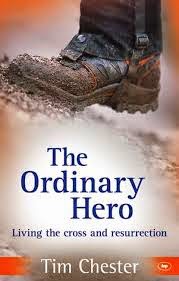
On a Friday morning, sitting under the oak trees outside my favourite cafe, I can't wait to open Tim Chester's The Ordinary Hero.

Here's a favourite quote-within-a-quote:
We should avoid, not a wounded life, says John Piper, but a wasted life ...

Too often, we can't quite lay hold of the treasure of Christ with both hands because we're still clinging to the baubles of this world ...

Piper again:
What a tragic waste when people turn away from the Calvary road of love and suffering. All the riches of the glory of God in Christ are on that road. All the sweetest fellowship with Jesus is there. All the treasures of assurance. All the ecstasies of joy. All the clearest sightings of eternity. All the noblest camaraderie. All the humblest affections. All the most tender acts of forgiving kindness. All the deepest discoveries of God’s Word. All the most earnest prayers. They are all on the Calvary road where Jesus walks with his people. Take up your cross and follow Jesus. On this road, and this road alone, life is Christ and death is gain. Life on every other road is wasted.

Tim Chester The Ordinary Hero 77, quoting John Piper Don't Waste Your Life 76.

Tuesday, May 20, 2014

what I'm reading: the smile of God

How do you keep your eyes fixed on Jesus? (Col 3:1-4) Here's one way I do it.

Every year I read one or two books about God's character or the cross. I do this on my mornings off, sitting in a cafe, sipping my spiced chai.

I recently read Knowing God. Finishing the last page was bittersweet. I wondered what I could possibly replace it with.

Then I remembered Tim Chester's The ordinary hero. It's been on my shelf for a while, waiting for an opportunity. I'm 4 chapters in, and loving it.

Here's a bit that spoke to me. It's for anyone who trusts in Jesus:
God doesn't merely tolerate you. In Christ he smiles upon you as a Father ...
 
Why should we think that God would abandon us when he's already given us his Son? Why should we think there's any limit to his love when he's already given what was most precious to him? ...

You're not made right with God by what you do. You don't do it in the first place, so why suppose you could undo it! ... Perhaps this is the ultimate humiliation. Not only can we not contribute to our salvation; we can't even wreck our salvation. But who cares? ...

Our heavenly Father is not a stern father who needs to be placated by his Son. Maybe your human father was like that. Stern. Distant. Maybe you approached him hesitantly or reluctantly. But your divine Father isn't like that. The Son's actions are the outflow of the Father's love. ...

The Son didn't placate God to make him favourably disposed to us. No, it's the other way round. The work of the Son starts with the love of the Father. ...

God doesn't merely tolerate us. He delights in us. We make him sing for joy (Zeph 3:17) ...

When you look into the face of God, what do you see? Do you see a frown? Do you see a judge? A schoolmaster? Or do you see a smile?

In Christ, God smiles upon us. Who can resist that smile?


Tim Chester The ordinary hero 39-46.

Tuesday, April 1, 2014

what I'm reading: "If condemnation and fears of judgement haunt you ..."

"If condemnation and fears of judgement haunt you ..." Do those words describe you? They describe me.

I often feel like I'm being judged by God, other people, or myself. But who is really accusing me? Ed Welch writes,
How can you discern the difference between the Devil's condemnation and the Spirit's conviction? How can you determine if you are in the bogus courtroom or the real one?

In the real courtroom:
  • you know your good deeds are not enough
  • your hope is in Christ alone for your deliverance
  • when convicted of sins, you are pointed past your sins and on to Christ
  • the last word is always hope.

In the Devil's counterfeit:
  • the attention is all on your sins
  • you stand and fall on your own behaviour
  • you are alone without an advocate
  • questions are raised about the extent of God's forgiveness...

Keep the basic rhythm of Scripture in mind: for every one look at your own sins, take ten looks at Christ.

Ed Welch Running Scared 220-223, bold type mine.

Tuesday, June 11, 2013

what I'm reading: when you love something more than God

I was sitting in my favourite cafe, reading Tim Keller's King's Cross, when I came across one of those passages that picks you apart at the very core:
When you are in spiritual darkness, although you may feel your life is headed in the right direction, you are actually profoundly disoriented.
If anything but God is more important to you, you have a problem with direction. It's impossible to discern where you're going, let alone where you ought to be going. Money, career, love - for a period of time you may feel you have something to live for. But if you actually get the thing you have been seeking, you suddenly realize that it's not big enough for your soul. It doesn't produce its own light.
Also, if you centre on anything but God, you suffer a loss of identity. Your identity will be fragile and insecure, because it's based on the things you centre your life on. It's based on human approval. It's based on how well you perform. You don't really know who you are. In the darkness you can't see yourself.
Moreover, in spiritual darkness you are isolated. You are wrapped up in the things that you're living for, so you're always scared or angry or proud or driven or full of self-pity. As a result, you become isolated from other people. ...
Let me illustrate this personally .... If my preaching and ministry are my ultimate centre and I get criticism, then I'm overcome with insecurity. Or when I fail to perform up to my expectations, I'm devastated. Inordinate guilt churns inside me. In the end I begin to disintegrate. ...
Spiritual darkness - turning away from God, the true light, and making anything more important than him - leads invariably from disorientation to disintegration ... But that trajectory won't stop at the end of our lives ... Being out of the presence of God, who is all light and all truth, means utter darkness and eternal disintegration ...
Jesus' death happened in the dark ... Jesus, the Maker of the world, was being unmade. Jesus was experiencing our judgement day.

Tim Keller, King's Cross, pp. 200-205, bold print mine.

Friday, May 3, 2013

keeping the gospel in your sights in pastoral ministry (or just in life, really)

flickr: Prayer by Chris Yarzab
Late last year, our ministry team looked at 1 Timothy 3 and 4.  We noticed how, smack bang in the middle of these chapters on Christian leadership, is “the mystery of godliness”: that is, Christ our Saviour (1 Tim 3:16 cf. 4:10). In other words, to be faithful in pastoral ministry, you have to keep your eyes on Jesus. You have to fight to keep your eyes on Jesus.

And what a fight you will have on your hands.

I start the year with good intentions. This year I won’t get so swallowed up by everything that needs to be done that I’ll forget the gospel. But by the end of the year I’m in coping mode, and when I’m in coping mode, the gospel is that last thing to come to mind. In this desperate race to the finish line, surely it’s my own efforts that will get me there. If I just knuckle down and get these Bible studies written. If I stay in control. If I keep on top of things. If I wake up earlier, go to bed later. If I…

And in all that busyness, the gospel slips from view, and I’m on a treadmill, endlessly running to keep up.

So how do you keep your eyes on the gospel? Our leadership group brainstormed and came up with some ideas. Here are eleven of them (I've included a few of my own).
  • Read the Bible for the sake of your own soul. I try to read something every day that has nothing to do with preparing anything. Or when I must read to prepare – and let’s face it, there are times like this – then I try to turn what I read into reflection, repentance, praise and prayer. At the moment I’m preparing Colossians, and I’ve found it helpful to add a psalm to my Bible reading each morning. 
  • Do evangelism. There is nothing, absolutely nothing, that reminds me of the wonder of the gospel like seeing it light up someone else’s eyes for the first time. As I read a gospel with a friend, the very passages that seem odd or embarrassing to me are the ones that impact her most deeply, and I’m convicted afresh of the beauty and power of the gospel. 
  • Pray. Prayerlessness is a vicious cycle: I don’t pray because I’m trying to do things in my own strength; then I have to do things in my own strength because I’m not praying; and, before long, I’m running to keep up, God is out of the picture, and it’s all about my own efforts to stay in control. Prayer reminds me that it’s God’s grace that changes people, not me. 
  • Invite others to teach and admonish you (Col 3:16; Heb 10:24-25; James 5:16). It’s good to confess our struggles to wise, mature believers who hold us to account. Over the years, I’ve prayed with a couple of friends who know me well, comfort and challenge me, and keep my eyes on the goal. I meet with another group of women to pray for our non-Christian friends; this keeps us sharp and gospel-focussed. 
  • Meditate on the gospel. Some ways to bring the gospel to mind include reading, memorizing, meditating on and praying through Bible passages about Jesus;1 listening to gospel-centred music;2 and deliberately making the cross and resurrection part of our daily thanksgiving and prayer. 
  • Let life and leadership be cross-shaped. Like our Lord, instead of lording it over others, we serve (Mk 10:42-45). We choose humility over pride and ambition (Phil 2:3-11). We work hard and endure patiently (2 Tim 2:1-6; 1 Pet 2:20-25). We lay down our lives in love (1 Jn 3:16; 4:7-12). Our leadership becomes a living mnemonic, a reminder to us and others of the cross. And it’s a wonderful, non-vicious spiral: we live this way because of the cross, and living this way, are driven back to the cross; for who can live like this apart from the strengthening grace of God? (2 Cor 4:7-12; Phil 4:11-13; 2 Tim 2:1-6
  • Rest. Every night my head hits the pillow, I’m reminded that I am not God, who alone ‘neither slumbers nor sleeps’ (Ps 121:3-4). A regular day’s rest, enjoying God’s good world and his gift of family and friends, reminds us that God sustains our life and provides all good things. Over-busyness, of course, has the opposite affect: it’s a symptom of I’m-running-the-universe disease, and leads to burn-out and loss of energy and purpose. 
  • Read books about the gospel. I aim to read about one a year. At the moment, I’m slowly working my way through Tim Keller's King’s Cross. Others that have helped me are John Stott’s The Cross of Christ, CJ Mahney's The Cross-Centred Life, and Nancy Guthrie's Jesus Keep Me Near the Cross.3 
  • Set aside a few regular hours for deeper reflection and prayer. Once a week or once a month, I sit in a cafe with an open Bible, a Christian book that I reserve just for this time, and a journal to write down thoughts and prayers; then I go for a long walk and pray. It keeps me refreshed and ready to serve, and the act of writing orders my thoughts and re-orients them to the gospel. 
  • Make teaching gospel-centred. Not in a forced “every Bible study has to end with Jesus” kind of way. But the gospel should be where God’s word drives us. I don’t think I’ve really understood a Bible passage until it brings me back to the gospel naturally, of its own accord, by its own route. 
  • Keep training and leadership gospel-centred. My husband, who heads a ministry team, makes sure that every staff meeting includes time, not just for administration, but also for encouraging each other from the Bible, praying, and discussing big issues from God’s word. It’s a great model for keeping the gospel on the agenda.
Christian ministry is hard, hard labour. It’s a marathon, not a sprint; but sometimes we can feel like we are sprinting! In the constant busyness and exhaustion, it’s tempting to turn to other things besides the gospel for comfort, like alcohol or inappropriate intimacy. It’s tempting to think we can do it all ourselves, until we crash and join the long list of those who’ve left pastoral ministry. I pray that we can remember God’s words to us:
Therefore, since we are surrounded by so great a cloud of witnesses, let us also lay aside every weight, and sin which clings so closely, and let us run with endurance the race that is set before us, looking to Jesus, the founder and perfecter of our faith, who for the joy that was set before him endured the cross, despising the shame, and is seated at the right hand of the throne of God. Consider him who endured from sinners such hostility against himself, so that you may not grow weary or fainthearted. (Heb 12:1-3)

How do you keep your eyes on the gospel?


1. You’ll find some suggested passages and methods for memorization in my posts a three-course banquet of Bible memorization and A smorgasbord of Bible memorization methods.
2. For example, Sovereign Grace’s Songs for the Cross Centred Life.
3. Others I’d like to read include Don Carson’s The Cross and Christian Ministry; Steve Jeffery, Michael Ovey and Andrew Sach’s Pierced for our Transgressions; and JI Packer and Mark Dever’s In My Place Condemned He Stood. ↩

Monday, April 1, 2013

words from my friend

What Jesus did on the cross is simply so amazing. With all that was coming down on him in that final week and those final hours he could have said 'enough!' and got down from the cross and walked away, but He didn't. He stayed. For us. And if He did that then He fully loves us and He is fully in control. Of these truths I know you are convinced, and I am so thankful that He has you all in His precious loving hands.

From my friend Natalie.

Friday, March 29, 2013

because of Easter, suffering isn't senseless

Milky Way / Via Láctea My mum sent me this quote from King's Cross - I've turned her into a Tim Keller fan! - and I read it myself and shared it with my son.

It's for all of you, especially those who suffer, on this Good Friday.
Christianity is the only religious faith that says that God himself actually suffered, actually cried out in suffering.
Now what good is that?… God came into the world and suffered and died on the cross in order to save us. It is the ultimate proof of his love for us.

When you suffer, you may be completely in the dark about the reason for your own suffering. It may seem as senseless to you as Jesus’s suffering seemed to the disciples. But the cross tells you what the reason isn’t.

It can’t be that God doesn’t love you; it can’t be that he has no plan for you. It can’t be that he has abandoned you.

Jesus was abandoned, and paid for our sins, so that God the Father would never abandon you. The cross proves that he loves you and understands what it means to suffer. It also demonstrates that God can be working in your life even when it seems like there is no rhyme or reason to what is happening…
If you look at the cross you can no longer go through suffering in the same way….

[This] passage from The Lord of the Rings...comes near the end of the third book, when evil and darkness seem overwhelming. Here is what Tolkien tells us about the thoughts of Sam:
Sam saw a white star twinkle for a while. The beauty of it smote his heart, as he looked up out of the forsaken land, and hope returned to him. For like a shaft, clear and cold, the though pierced him that in the end the Shadow was only a small and passing thing: there was light and high beauty for ever beyond its reach…Now, for a moment, his own fate…ceased to trouble him…Putting away all fear, he cast himself into a deep, untroubled sleep.
Because of Jesus’ death, evil is a passing thing – a shadow. There is light and high beauty forever beyond its reach because evil feel into the heart of Jesus. The only darkness that could have destroyed us forever fell into his heart…
It is going to be all right.


From King's Cross 170-171.

Thursday, December 20, 2012

a son for sacrifice

It’s nearly Christmas. My children read stories about lambs and donkeys visiting a baby, but the story I’m up to my Bible reading plan shows the season in a different light…

How strange Genesis 22 has always seemed to me. Why would God ask Abraham to sacrifice his son? What kind of Father asks another father to kill his child? Did Sarah know what was going to happen as her husband and son left that day? What psychological scars did Isaac carry into adulthood? (A very modern question, I know.)

What did it cost Abraham to take each step on that three-day journey? Did he stare at the knife as he cut branches for the fire, thinking about what else it would soon cut? What thoughts ran through his mind as he reassured Isaac that God would supply the sacrifice, knowing he had supplied it in the boy who walked by his side?

I picture them trudging up the mountain. They’re at the top, and the wind whines in their ears. Isaac watches his father lay stones for an altar, place branches on the top. Perhaps Abraham lays the last branches slowly, one by one, making time for a reprieve, a last-minute escape clause. It doesn’t come. The sky is steely, silent.

I don’t know how a father binds his son. I don’t know how he lays him on an altar. I don’t know how heavy the knife feels in his hand. I don’t know how faith brings itself to such a pass.

Does the boy close his eyes against the sight of the knife? Does he turn his head away? Does he fight the bonds? Does he cry, or moan, or whimper?

We’re told that Abraham reasoned that God could raise the dead (Heb 11:19). He’s no longer the man who lied about his wife, who slept with a maidservant, who laughed at the impossibility of a child (Gen 12:10-20; 16:1-4; 17:17). By this time he knows something of the God who keeps his promises against all odds.

I don’t know if knowing this makes it any easier.

The sky booms. Words echo. He knows this voice. He has heard it before:
“Abraham, Abraham!”

“Here I am.”

“Do not lay your hand on the boy or do anything to him, for now I know that you fear God, seeing you have not withheld your son, your only son, from me.” (Genesis 22:11-12)
There’s a rustling noise, a “Bleat!” from a bush. Startled, Abraham looks behind him. Was it there before? How did he miss it? A ram in a thicket, caught by the horns, struggling as if it already knows its role in this drama.

The knife cuts, but instead of flesh, it cuts through rope. Isaac rubs sore arms. Abraham seizes the ram, binds its legs, throws it on the altar, slices its throat. They watch blood run down the sides of the altar, smell flesh burning, and tremble to think of the blood that came so close to flowing. A father receives his son back from death (Heb 11:19).

No small family drama, this. No psychological tragedy. No theatre played out for the amusement of the gods.

What was lying there was a boy, yes. A man’s only son, his one hope for family and future. But what lay on the altar that day was also the son of the promise, the seed of a great nation, the hope of world-wide blessing. For from this boy would come a son, and from him a son, and from him a son, and yet more sons, until the One and Only Son came into the world. God made visible. Salvation clothed in flesh. Hope in human form.

What God asks of Abraham, he gives himself. Once again, a father offers up his only son. But this time there is no reprieve, no last-minute escape clause. The sky is unbroken by a voice. Instead, darkness gathers, and the full weight of a father’s anger descends. A cross instead of an altar. Nails instead of a knife. A Lamb instead of a ram. Blood thick on the ground. A voice whispering, “Father?”. A life given so that others may live.

Three days later, the Father receives his Son back from death.

And suddenly the story of Abraham and Isaac doesn’t seem so strange, but inevitable, a line drawing for the future to fill in.


1. Yes, he did have another son, Ishmael, but Isaac was his only legitimate son by marriage, the son of God's promise, his "only son" according to Genesis 22:12.

This post first appeared at The Briefing.

image is by Rembrandt: The sacrifice of Isaac (detail)
Monday, March 26, 2012

why women should read more theology (what I'm reading: Tony Reinke's Lit!)

Do you find it easy, or hard, to read books? Either way, this one's for you.

Top of the list of books I've read recently is Tony Reinke's Lit! A Christian Guide to Reading Books. I'm an avid reader, and I learned heaps about what and how to read. If you struggle to read, I suspect you'll find this book even more helpful.

Maybe you want to read more, but don't know where to start. Maybe you love books, but your reading feels a little aimless. Reinke covers it all, first with a great theology of books, then with a whole heap of practical tips about how to choose and read books.

This week I've chosen a quote that encourages women to read theological books about Jesus. Next week, I'll go for the other end of the scale, and share something about why we should read novels. Just so you can't say I've left anything - or anyone - out!

Theologically weighty books about Christ are essential for the soul—for men and women. And although women purchase the majority of books released by Christian publishers, women are far less likely to read theological books, writes counselor and author Elyse Fitzpatrick. In her 2003 evaluation of the Christian publishing industry, she writes, “Many women are intimidated by the thought of studying something that is ‘theological’ in nature. They are afraid of being bored, looking foolish, becoming unattractive to men, or becoming divisive.”...

She confronts women who would rather read only novels as a way to escape personal disappointments, and who read these books to “build fantasy castles filled with knights on white steeds who will come to rescue her from her mundane, stressful, empty, or disappointing life.” Rather, she offers this challenge: “Let’s become known as a generation of women who delight in, tremble before, receive counsel from, drink, devour, digest, muse upon, and absolutely cherish God and the truth that He’s revealed about Himself and about ourselves. Let’s not worry about whether we look dumb or too smart.”...

If women commit to reading books of solid theology, their knowledge of Christ will grow..."This is the most delightful pursuit any woman could ever know."
(And who should you read? Reinke suggests, among others, John Calvin, Martin Luther, Jonathon Edwards, John Owen, JI Packer, Don Carson, John Stott, John Piper and CH Mahaney. On the topic of Christ, I'd add Tim Chester and Tim Keller. A good place to start is John Stott's The Cross of Christ and Tim Keller's King's Cross - or how about this one, which I haven't read, but it's by The Don, and that's all the recommendation I need: Don Carson's Scandalous: The cross and resurrection of Jesus.)

Quote is from Tony Reinke Lit! A Christian Guide to Reading Books pages 96-97.

Monday, May 23, 2011

what I'm listening to: last night's sermon

Last night our pastor John spoke on Exodus 12. I was so struck by something he said that I opened my journal and wrote it down:

To be free from Jesus' rule is to be a slave to sin.
To be a slave to Jesus is to be free.
If you want the longer version - it's beautiful! - here it is (from John's notes):
We who follow Jesus owe him our very lives
he bought us out of the death we deserved at the cost of his life
so that we are owned by him, body and soul.

Freedom is being your own boss, we want to think,
running life your own way -
but wait a minute, that's what sin is -
and when we seek to be independent from God, we become a slave to sin.

True freedom only comes in Christ
by being a slave to him
by being owned by him
because that's what we were made for,
and living the life you were designed and made for is what freedom is -
just as the fish only has freedom in the water,
the tram only has freedom on the tracks,
so we are only truly free being owned by Jesus -

and being owned by Jesus means we no longer have the right to live as we please
but rather we live to please our owner and master.
Amen.

Monday, November 29, 2010

what I'm reading: one moment with the cross from Octavius Winslow

Here's a quote that sums up everything I've learnt about change during the last two years - and a personal favourite.

One moment’s believing, close contact with the cross will do more to break the heart for sin, deepen the conviction of its exceeding sinfulness, and disenthrall the soul from all its bondage and its fears, bringing it into a sense of pardon and acceptance and assured hope, than a lifetime of the most rigid legal duties that ever riveted their iron chain upon the soul.


Quote is from Octavius Winslow The Foot of the Cross HT Of First Importance.

image is from Jules.K at flickr

Tuesday, November 23, 2010

how we change (14) conclusion: my story

Many months ago - on July 13th, 2009 - I started this series with a post on God's grace. It seems appropriate to finish it in the same way: with some reflections on grace I wrote last year soon after reading Tim Chester's You Can Change.

I lie there and soak myself in God’s love.

It’s starting to dawn on me – after 30 years of being a Christian! – that nothing I do can change his love for me. No quiet times faithfully or unfaithfully performed. No backsliding into over-spending or over-eating. No failures to fulfil my responsibilities to husband or children or neighbours.

As a teenager, I’d write vows in my diary - “I promise to pray every day. I promise to read the Bible every day. I promise never to complain again.” – then wonder if God would strike me down when I broke them.

As a young woman, I’d wake in the night with a sick feeling in my stomach and write yet another midnight list of rules to control my spending, agonizing over whether I could possibly be a real Christian and give in to sin so often.

As a mother, I’d create elaborate plans for every aspect of marriage, homemaking, child-rearing and ministry, only to burn out after a month of trying to do everything and swear never to write a plan again.

None of it worked. Not for long, anyway. Until I realized that at the deepest level I’m a legalist, a perfectionist, a fulfiller of expectations, constantly trying to prove myself to God, myself, and others.

I believe the lie that I have to earn God’s love. My idol, my deepest desire, is to be worthy, complete, respected. It’s time to start believing God when he says I’m forgiven. It’s time to start resting in God’s grace.

It doesn’t matter how other people see me. It doesn’t even matter how I see me. What matters is how God sees me, and he sees me through the lens of his grace, clothed in the perfect righteousness of his Son. He see me, and he forgives me and changes me into everything he wants me to be.

As I realize this, it’s like opening a door into a new world, glowing with grace and freedom. In this world, I don’t obey because I have to. I don’t obey because my self-concept will fall apart if I fail. I don’t obey because I’ll let people down if I don’t meet their expectations.

I obey because all I can see is Jesus dying on a cross for me.

images are from stock.xchng and from David Gunter at flickr

Friday, October 15, 2010

happy blog-day, and a break from blogging

It's that time again: my bloggy birthday (well, it's tomorrow, but I don't post on weekends, and I doubt you read then either). Three years into blogging, and I enjoy it as much as ever: putting my thoughts into words, writing about what God has taught me, and being encouraged and challenged by you.

It has its downside. The pressure (self-imposed) to produce something, the times I realise (whoops!) I forgot to write tomorrow's post, the time taken from other things, the vulnerability and uncertainty, the temptation to compare my blog with others: it's a cost worth paying, but only if this is worth doing.

Where am I at, 3 years into blogging? I heard a talk on Romans 12:1-2 recently (I'll tell you about it soon) which laid it on the line for me. I want to respond to God's mercy by giving myself to him as a living sacrifice, to bring him glory and make his Son known.

I'd like to make wise plans for the next 5 or 10 years so that I use my time, energy and gifts to glorify Jesus. Will this include blogging? I don't know. But I do know I need some time away from blogging to pray and find out.

After 12 years of raising young kids and 3 years of new ministries, I'm exhausted. So next year I'll share my husband's long service leave (which has been 12 years coming). I'll settle my oldest child into high school and my youngest into preschool, take a long family holiday, and build strong relationships for the teen years. I'll regroup, reflect and renew (the 3 Rs, as my friend puts it).

I'm planning to blog until the end of this year, God willing, then stop for a while - maybe 3 months, maybe 6 months. I'll pray about whether this is the best use of my time and energy, or if there's something else I should do. I have so many dreams and ideas, but who knows what God has in mind?

Taking time off is scary for a doer like me, and slowing down is already making me feel a little empty - which just shows how deeply I take my worth from what I do! But I'm not a doer, I'm a receiver of God's love and grace.

I'm praying that during my months of not-doing, God will teach me I don't need to achieve, get things right or prove myself, because Jesus has done it all for me. Only then will I be able to serve, not so I can feel worthwhile, but "in view of God's mercy" - his astounding, undeserved, unchanging grace to me in Jesus.

In the meantime, until the end of the year, I'll still be here, blogging. Happy blog-day!

images are from soapylovedeb and hyku from flickr

Thursday, September 16, 2010

brought low and raised high at the Belgrave Heights Women's Convention

I didn't expect much from the Belgrave Heights Women's Convention. This, by the way, is a confession. It's good to be discerning, but arrogant to think I have nothing to learn from Christians who may be from a different background to me. Not having heard of Jenny Salt or Lisa Watson, I wasn't sure what to expect.

I spent the first song repenting. Singing of God's greatness, and repenting of my pride. For God is so much bigger than me and my small patch of the world. Creator, Ruler, Saviour, he works in places I've never heard of, through people I don't know, in ways unfamiliar to me. Pride, of all sins, is the most abhorrent to him, and I felt dirty, ugly and ashamed.

The rest of the day I sat at Jesus' feet. Jenny and Lisa spoke on the gospels of Matthew and John, inviting us to join the crowds around Jesus as he touched and healed a leper, forgave a paraplegic, cast out demons, raised the dead, and preached the good news of the kingdom, as the blessings of the cross worked backwards and forwards to a day when there will be no more mourning, sickness or death.

Reading the gospels is a perilous undertaking. Jesus doesn't fit into our comfortable categories. He offers forgiveness when we want healing; he welcomes cheats and confidence tricksters; he demands that we give up even our families to follow him. To spend a day with Jesus is terrifying and wonderful, overwhelming and captivating, confronting and comforting.

By the end of the day Jesus had taken me apart and put me back together again. A little less sure of myself, a little more sure of him. A little less overwhelmed by my sin, a little more overcome by his grace. A little less secure in myself, a little more secure in him. A little less fearful of losing myself, a little more willing to pay any cost as long as he is glorified.

It was great spending a day getting to know new friends and catching up with old friends. It was good, as always, to hear from some of you how my writing encourages you. But it was best to hear God's word taught by women who humbled me with their wisdom, faithfulness and love for their Saviour. At the end of the day, I found myself lining up to buy their talks so I could listen to them again.

I have - oh! - so very, very much to learn.

You can get hold of Jenny and Lisa's talks here.

Monday, June 21, 2010

a favourite quote: Joni Eareckson Tada on the cross

Here is the most astonishing, moving description of the cross I have ever read. You might want to print it out and read it slowly.

The face that Moses had begged to see—was forbidden to see—was slapped bloody (Exodus 33:19—20). The thorns that God had sent to curse the earth's rebellion now twisted around his own brow...

"On your back with you!" One raises a mallet to sink in the spike. But the soldier's heart must continue pumping as he readies the prisoner's wrist. Someone must sustain the soldier's life minute by minute, for no man has this power on his own. Who supplies breath to his lungs? Who gives energy to his cells? Who holds his molecules together? Only the Son do "all things hold together" (Colossians 1:17). The victim wills that the soldier lives on—he grants the warriors continued existence. The man swings.

As the man swings, the Son recalls how he and the Father first designed the medial nerve of the human forearm—the sensations it would be capable of. The design proves flawless—the nerve performs exquisitely. “Up you go!” They lifted the cross. God is on display in his underwear and can scarcely breathe.

But these pains are a mere warm-up to his other and growing dread. He begins to feels a foreign sensation. Somewhere during this day an unearthly foul odor began to waft, not around his nose, but his heart. He feels dirty. Human wickedness starts to crawl upon his spotless being—the living excrement from our souls. The apple of his Father’s eye turns brown with rot.

His Father! He must face his Father like this!

From heaven the Father now rouses himself like a lion disturbed, shakes his mane, and roars against the shriveling remnant of a man hanging on a cross. Never has the Son seen the Father look at him so, never felt even the least of his hot breath. But the roar shakes the unseen world and darkens the visible sky. The Son does not recognize these eyes.

“Son of Man! Why have you behaved so? You have cheated, lusted, stolen, gossiped—murdered, envied, hated, lied. You have cursed, robbed, overspent, overeaten—fornicated, disobeyed, embezzled, and blasphemed. Oh, the duties you have shirked, the children you have abandoned! Who has ever so ignored the poor, so played the coward, so belittled my name? Have you ever held your razor tongue? What a self-righteous, pitiful drunk—you, who molested young boys, peddle killer drugs, travel in cliques, and mock your parents. Who gave you the boldness to rig elections, foment revolutions, torture animals, and worship demons? Does the list never end! Splitting families, raping virgins, acting smugly, playing the pimp—buying politicians, practicing extortion, filming pornography, accepting bribes. You have burned down buildings, perfected terrorist tactics, founded false religions, traded in slaves—relishing each morsel and bragging about it all. I hate, loathe these things in you! Disgust for everything about you consumes me! Can you not feel my wrath?”

Of course the Son is innocent. He is blamelessness itself. The Father knows this. But the divine pair have an agreement, and the unthinkable must now take place. Jesus will be treated as if personally responsible for every sin ever committed.
The Father watches as his hearts treasure, the mirror-image of himself, sinks drowning into raw, liquid sin. Jehovah’s stored rage against humankind from every century explodes in a single direction.

"Father! Father! Why have you forsaken me?!"

But heaven stops its ears. The Son stares up at the One who cannot, who will not, reach down or reply.

The Trinity had planned it. The Son endured it. The Spirit enabled him. The Father rejected the Son whom he loved. Jesus, the God-man from Nazareth, perished. The Father accepted his sacrifice for sin and was satisfied. The Rescue was accomplished.

Joni Eareckson Tada When God Weeps

image is from stock.xchng

Monday, June 7, 2010

what I'm reading: success and identity from Counterfeit Gods

Every day I get a quote about the cross in my inbox from Of First Importance. It's a great way to keep my eyes fixed on Jesus.

Here's some words I found particularly helpful as I reflected on how we get our identity from what we do.

How can we break our heart’s fixation on doing 'some great thing' in order to heal ourselves of our sense of inadequacy, in order to give our lives meaning? Only when we see what Jesus, our great Suffering Servant, has done for us will we finally understand why God’s salvation does not require us to do 'some great thing.' We don’t have to do it, because Jesus . . . did it all for us ... When we believe in what he accomplished for us with our minds, and when we are moved by what he did for us in our hearts, it begins to kill off the addiction, the need for success at all costs.

Timothy Keller, Counterfeit Gods (New York, NY: Dutton, 2009), 93-94, HT Of First Importance

image is from OnlyByGrace at flickr

Tuesday, May 18, 2010

busyness, burnout and the grace of God (4) identity

January 2008. It's our summer holidays. I'm writing in my journal, reflecting on the year ahead. A kind friend has told me I should develop my "gift for writing". I ask myself, "Do I want to be a writer?" I tell myself that it's not worth pursuing if it's not my passion, my calling. Gift. Passion. Calling. Writer. I'm starting to think of myself with capital letters.

I get too busy when ... I get my identity from what I do.

What I was thinking. "I need to develop the gifts God has given me. I need to follow my passions. I need to realize my potential. I want to be ..."

What I'm learning.
I'm not a _____er, I'm a child of God who _____s.
You could fill the gaps with anything (writer, doctor, teacher, mother ...) and it would still be true. The world tells me that I am what I do, and I believe the lie. But Jesus says "do not rejoice that the spirits submit to you, but rejoice that your names are written in heaven" (Lk 10:20). My significance doesn't come from what I do, or even what God does through me. My significance comes from the fact that I'm a child of God.

My life is not about me and my glory: it's about God and his glory.
I have a dream. At times it seems selfless: it's about encouraging women, teaching them from God's word, helping them to grow. At times, the spotlight slips sideways onto me: there I am, respected, admired and beloved. I can take a good dream and twist it so easily. If I seek glory or respect through work or ministry, I'll be driven to over-work to achieve it. But life isn't about my renown: it's about making God's name known.

My passions are not the same as God's purposes.*
My friends will tell you that I love the word "passion". Often, the things I'm passionate about are good things. But when the focus is on me, my gifts, my passions, I've got a problem! What if I can't use my gifts because of a season of life, an illness, or because my they're not needed? I don't have to discover my gifts. I don't have to realise my dreams. Life isn't about me pursuing my passions: it's about glorifying God, and I can do that whatever I do.

Work is about serving others not finding myself.
If you're a stay-at-home mum, you know what it's like to be asked, "What do you do?" If you're like me, your heart sinks into the ground and you wonder what on earth you can say! The world tells me that work defines my identity. It tells me that I'm nothing if I'm not using my degree, using my skills, and pursuing a career, preferably one which fulfils and energises me. But God tells me to use all my energies to love and serve others. I find myself in him, not in my work.

God wants faithfulness, not success.
It's right to work hard to build God's kingdom, but success isn't in my hands. What matters is my faithfulness to the work God has given me to do. I plant and water, but it's God who makes things grow (1 Cor 3:5-15). I don't need to race around, working harder and harder, to build a successful ministry or massage my career. I can be faithful to God in the situation he's put me in, serve the people he's given me to love, and trust him to help them grow in his own timing and his own way.

I can rest, because Jesus has finished his work.
I don't need to do some great thing to give my life meaning: Jesus has done it all. I don't need to prove myself through what I do: I am justified in God's eyes because Jesus died for me. I can rest, because Jesus finished the work that God gave him to do: the work of making us right with God (Matt 11:28-30, Heb 4:9-10). It's right to work hard in response to God's salvation, but I don't have to work harder than I can in order to prove myself or give my life meaning. Jesus has done it all.

* I was struck by this while listening to Allison Street's talk God's Princesses.

images are from Kat.B.Photography, ninavizz and Search Engine People Blog at flickr

Friday, April 2, 2010

It is not death to die

Just in time for Easter, a post about death and resurrection, and more encouragement from the CD Come Weary Saints.

I was driving the kids home from school when I saw something you don't expect on an arterial road in a major city. It was a horse-drawn carriage, taking up the left-hand lane, slowing the traffic to a crawl.

As we stopped at the traffic lights, I looked more closely, and realized it was a hearse pulled by two grey horses with black plumes nodding on their heads, incongruous against the bare concrete wall of our local shopping centre. On the seat behind the horses perched two cheerfully chatting black-suited men—one bare-headed and balding, the other in a top hat. The hearse was topped with a plain wooden cross worthy of Buffy the Vampire Slayer, and its glass sides displayed a glossy mahogany coffin, boasting a huge floral arrangement and brass fittings.

Behind the hearse drove three cars in tasteful green. The first car was packed with flowers. The second and third cars—stretch limousines with darkened windows—were, no doubt, packed with well-dressed mourners.

It all seemed a little excessive, this ostentatious panoply of death. But perhaps that's what is left when you die without Jesus. Like a glamorous wedding, a funeral becomes an opportunity for extravagant theatre, for it's the closing scene in the all-important story of ‘me’. Such a funeral displays the forlorn hope that death, in all its horror and finality, can be placated with pomp and held off with ceremony.

For Christians, death still brings sorrow. But we don't grieve “as others do who have no hope” (1 Thess 4:13). We weep, but we also rejoice. When Jesus died and rose again, he defeated death and overcame its power (Acts 2:24; 1 Cor 15:54-57; Heb 2:14). In a Christian funeral, instead of despairing ceremony and exaggerated eulogy, there is comforting simplicity and praise for the one who has freed us from the fear of death.

As the lights changed and we drove past the hearse, I flicked over to the song ‘It is not death to die’* on Come Weary Saints, the CD that was playing on my car stereo. It's a song that sums up the Christian attitude to death: there is no despair in leaving this weary life and exchanging it for heaven, for Jesus has conquered the grave.

I've always sworn that I'll never say, “I want such-and-such at my funeral”. But I've broken my promise to myself. When I got home, I told my husband (and now you!) that while I certainly don't want an elaborate funeral cortege, I do want this song sung at my funeral. I want people to remember that it is not death to die.

* From a 1832 hymn written by Henri Malan and translated by George Bethune, adapted and arranged by Bob Kauflin for the Sovereign Grace album Come Weary Saints.

This post first appeared on Sola Panel yesterday.

images are from wolfmanmoike at flickr and stock.xchng

Monday, March 1, 2010

another quote about condemnation and the cross

Violet capped yesterday's quote (which I posted on Sunday instead of Monday by accident!) with a wonderful quote of her own.

She says, "Milton Vincent in 'A Gospel Primer for Christians' addressed this issue in a way that really helped me. He writes,

'As long as I am stricken with the guilt of my sins, I will be captive to them, and will often find myself re-committing the very sins about which I feel most guilty. The Devil is well aware of this fact; he knows that if he can keep me tormented by sin's guilt, he can dominate me with sin's power.

'The gospel, however, slays sin at this root point and thereby nullifies sin's power over me. The forgiveness of God, made known to me through the gospel, liberates me from sin's power because it liberates me first from its guilt; and preaching such forgiveness to myself is a practical way of putting the gospel into operation as a nullifier of sin's power in my life.'"

Thanks, Violet! That's so true. When I keep wallowing in the guilt of my sin, I don't change. I'm so overwhelmed by my sin that I give up before I even start. But when I truly realise that I'm forgiven, it changes everything. It gives me motivation and hope to overcome my sin.

I'm reminded me of a similar quote from Tim Chester's You Can Change:

You will cleanse no sin from your life that you have not first recognized as being pardoned through the cross. ... If you don't see your sin as completely pardoned, then your affections, desires and motives will be wrong. You will aim to prove yourself. Your focus will be the consequences of your sin rather than hating the sin itself and desiring God in its place. (p.33)

As I preach the gospel to myself, and come to know in every fibre of my being that I'm forgiven, I stop wallowing in my guilt, and start obeying in the freedom and hope of God's grace.

Sunday, February 28, 2010

what I'm reading: condemnation and the cross from CJ Mahaney's The Cross Centred Life

I'm a guilt-wallower. I'm often weighed down by all the things I haven or haven't done. I carry around a big burden of guilt, regrets and failures.

So I was encouraged to read these words in CJ Mahaney's The Cross Centred Life the other day. Balm for a tender conscience.

Condemnation appears in innumerable forms. It's the weight on the heart of the businessman who was rarely home when his kids were growing up. It's the undercurrent of grief and mental self-torture in the woman who had an abortion twelve years ago. It's the nagging conscience of the Cristian man who muttered a crude insult at a reckless driver twelve minutes ago. It's the lingering sense of regret over a lack of prayer; it's kind words unsaid and promises broken.

Some of us have been carrying so much, for so long, that we think it's normal to go through life weighted down. ... But in Romans 8:1 the Bible tells us, "There is now no condemnation for those who are in Christ Jesus." ...

The enemy of our soul with his lies will always be swift to whisper accusations. When these challenges come, don't try to fight condemnation by promising to pray more, or to fast more often, or to memorize more Scripture. ... It's impossible to resolve issues of yesterday by doing better tomorrow. ...

You can't do it. That's why Jesus did it for you. ...

Lay down the luggage of condemnation and kneel down in worship at the feet of Him who bore your sins.
CJ Mahaney The Cross Centred Life 37-43

image is from stock.xchng