David Powlison:
I find myself weary of dramatic hyperbole in descriptions of the ideal Christian life. Extreme! Radical! Passionate! Awesome! Edgy! On fire! Dramatic!
I can understand the emotional appeal of such hyperbole. After all, who wants to live half-baked, mediocre, listless, dull, bland, and boring?! But the opposite of listless is not necessarily all fired up. Our faith contains a wonderfully curious surprise.
For starters, I don’t think many of us are capable of sustaining the adrenaline level. If you did manage to sustain your passion for a week, a year, a decade, it bears pondering whether the wider culture’s obsession with extreme adventure and radically awesome hyperbole might have infiltrated your operating system with a virus. If the passion ebbs, is what really matters lost and gone?
Or does it mean that it’s time to grow up?
Consider the graces that God steadily works to produce in us. They are certainly different from what we naturally gravitate to. In that sense, his purposes are Extreme! Radical! On fire! Exceedingly beyond all you can ask or even imagine! Glory, glory, hallelujah!
But then again, the Holy Spirit seems on fire to produce a life afire with rather unfiery things. His view of what is significant cuts Awesome! down to size (while being the farthest thing from dull). He is forming in you things that are good for the long haul. Good for times when your feelings are marked with pain or loneliness. Good for days or months or years of perplexity and struggle. Good for the small deaths of old age and then for dying. Good for helping others going through the same troubles...We long for dramatic action...But right now we need the good graces to carry us through all that happens until the Day when dramatic finally happens once and for all.
Consider a baker’s dozen of graces that are set on fire with the odd fire of God’s purposes. Ponder each one for a moment.
Mercy
Patience
Gratitude
Goodness
Commitment
Constructive candour
Bearing one another’s burdens
Sense of need and weakness
Reliance on another
Peacemaking
Endurance
Humility
Love
Not one of these sets off conspicuous fireworks. But these are worth more than anything else you could ever desire. Jesus lived this baker’s dozen of good graces. He is making you into this image.
Read the rest here.
Showing posts with label godliness. Show all posts
Showing posts with label godliness. Show all posts
Thursday, October 11, 2012


Wednesday, January 18, 2012
A statement of purpose for the new year
 I'm no great fan of New Year's resolutions: quite the reverse. For a perfectionist like me, resolutions often come unstuck, resulting in legalism, guilt and (once I fail to live up to them) a spectacular throwing-off of the reins. Change becomes about meeting my standards rather than responding to the God who forgives and transforms me.1
Once I realised this, I stopped making resolutions. But this year, I tentatively stuck my foot in the waters of the New Year's resolution once again. My resolutions aren't vows. They're not promises. In fact, they're not really resolutions (I don't have enough confidence in myself for that!). They're prayerful commitments, shaped by the Bible: a description of the life I want to live as a woman who's received God's grace (Titus 2:3-5, 11-14; 1 Tim 5:10).
Here are my eight resolutions - my statements of purpose for the new year.
- To keep Jesus at the centre. To seek his glory instead of my own, to receive his grace instead of wallowing in my guilt, to trust in his greatness instead of being overcome by anxiety, and to rejoice in his goodness instead of giving in to self-pity.2 To keep my eyes fixed on Jesus so I don't grow weary in doing good (Hebrews 12:1-3 NIV).
- To invest time in keeping my eyes fixed on Jesus. To give the first part of my day to God's word and prayer, even when I really need to get something else done. To read more faith-encouraging books than faith-destroying books. To have a go at memorizing a book of the Bible.3
- To put my primary responsibilities first. To love, help and care for my husband. To love, teach and train my children, especially my daughter, showing her what it means to be a woman of God. To be faithful and purposeful in caring for our parents. To care for our home, not giving in to laziness or neglect.
- To serve my brothers and sisters in Christ. To love and encourage younger women without worrying about what they think of me. To think less about whether our church serves my needs and more about how I can serve others and help them grow. To give time to the Christian friends and prayer partners that God has given me.
- To do good in our community. To chat about Jesus every chance I get, with gentleness, honesty and courage, trusting God to work in people's hearts. To love, not counting the cost. To engage in people's lives, not retreat. To keep an open home.
- To be prayerful, loving and brave in my writing and speaking, using them to glorify Jesus and encourage others. To make sure that online life - blogs, Facebook, Twitter, emails - don't steal time that belongs to face-to-face relationships. To treat these things as a useful servant, not a master.
- To care for my body and health so I can serve Jesus more energetically. To trust God in times when my health, or my family's health, gives way.
- To look to God's grace, because I know that all of these things are beyond me.
1. For a helpful perspective, see David Powlison on New Year's Resolutions.
2. See chapter 5 of Tim Chester's You Can Change.
3. Colossians, if you're curious! A great book for keeping your eyes fixed on Jesus.
This post first appeared at The Briefing.
image is by danielmoyle from flickr
Friday, October 7, 2011
two love stories - or three
It's an intriguing idea, and one that has stuck in my head like a burr since I read it in a magazine article earlier this year. Because it's true, isn't it?'Every adult life is defined by two great love stories,' writes author and philosopher Alain de Botton. On the one hand, there is our well-charted quest for romantic love, and on the other, our quest for love from the world ('a more secret and shameful tale'). In his book Status Anxiety, de Botton argues this second love story 'is no less intense than the first...and its setbacks are no less painful.'

Our first quest is to be loved by someone, to be chosen by them above all others, and to choose them in return. With this love, we hope, will come all the trappings: family, security, home. In this small circle it matters supremely what others think of us.
Our second quest is to be loved or respected by others: by the whole crowd of anonymous strangers. We pass them in the street and wonder what impression we're making. We sit next to them on the train and hope they admire our choice of reading material. We push our trolley past them in the supermarket and stage a happy-family-performance just for them.
Perhaps we want fame, success, a name that's recognized. Perhaps we'd settle for the admiration of a smaller group: our co-workers at the office, the wider Christian community, the people in our church. If we win their respect, we've succeeded. If we fail in their eyes, we've failed indeed.
There is a third quest: another love story. It's not mentioned in the article I read, for when it comes to this love we are blind (2 Corinthians 4:4). In this story, we're not the ones who seek: we're the ones who are sought, pursued from heaven to earth by a lover who laid down his life to win his bride. Paradoxically, although we haven't sought this love, it alone can satisfy (Psalm 16:11).
When I devote my life to the first two love stories - to the quest for romantic love and the love of the world - I'm left empty, for human love is fallible and fading, and the world's opinion shifts and changes. Worse, I'm an adulterer, turning to other lovers to give me what only God can give, giving them the devotion and service that belong to him. (Jeremiah 2:12-13; James 4:4-5)
To people-pleasers like me, so quick to seek the glory of the world rather than the glory that comes from God (John 12:43), Jesus says,
I tell you, my friends, do not fear those who kill the body, and after that have nothing more that they can do. But I will warn you whom to fear: fear him who, after he has killed, has authority to cast into hell. Yes, I tell you, fear him! (Luke 12:4-5)There's only one whose opinion matters, and that's the God whose Son died in my place. It's before his judgement seat that I stand or fall. And he is able to make me stand, for Jesus rose from the dead, speaks for me before his throne, and will one day gather me - and all who live for him - to himself (Romans 14:4; 1 John 2:1; Rev 19:6-9).
Who cares what others think of me? It's God I seek to please. It's his praise I long for, not the praise of men (Romans 2:29). It's from him I want to hear the words, 'Well done, good and faithful servant' (Matthew 25:23).
I have to remind myself of this a dozen times a day, people-pleaser that I am.
1. From Candice Chung's article Finding success later in life in Sunday Life magazine, July 10th, 2011.
This article first appeared in The Briefing today.
image is by kelsey_lovefusionphoto
from flickr
Monday, October 3, 2011
5 books that changed who I am (5) late 30s
As I continue with this meme about books that have changed me, it seems appropriate to mention a book about change...
(5) late 30s - change and grace
Thirty-five, still battling perfectionism, and still struggling to obey God from a legalistic heart. Increasingly, I felt fearful and on edge; I was battling mild depression; I was struggling with people-pleasing and ambition; and my anxious busyness had driven me to the edge of burnout. So many books helped me through this time; but one (besides the Bible) stands head and shoulders above the rest. Yep, you guessed it...
 Tim Chester's You Can Change brought me to the foot of the cross, giving me a new joy in God's grace and a new motivation to change. He showed me my heart - the idols of people-pleasing and perfection, and the false beliefs that caused my anxiety and discouragement - and helped me to turn to God's glory and grace. So much heart-change in one book! You may remember that I blogged through it here.
Runners up: Martyn Lloyd Jones Spiritual Depression, Tim Chester The Busy Christian's Guide to Busyness (which I blogged through here), John Piper When I Don't Desire God, Elyse Fitzpatrick Overcoming Fear, Worry and Anxiety, Paul Tripp Lost in the Middle, and anything and everything by Ed Welch, particularly Lost in the Middle: Midlife and the Grace of God, which I'd recommend to anyone of any age.
Which books have helped you to change? Tell us here.
(5) late 30s - change and grace
Thirty-five, still battling perfectionism, and still struggling to obey God from a legalistic heart. Increasingly, I felt fearful and on edge; I was battling mild depression; I was struggling with people-pleasing and ambition; and my anxious busyness had driven me to the edge of burnout. So many books helped me through this time; but one (besides the Bible) stands head and shoulders above the rest. Yep, you guessed it...
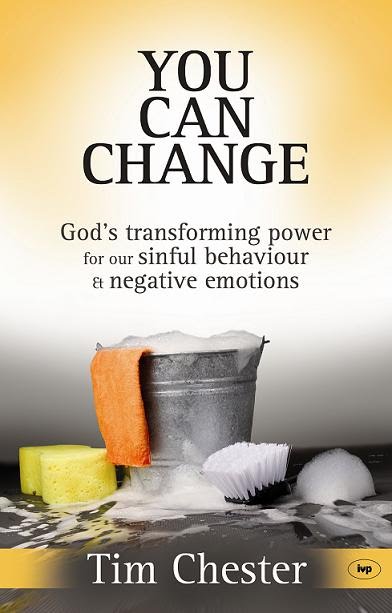 Tim Chester's You Can Change brought me to the foot of the cross, giving me a new joy in God's grace and a new motivation to change. He showed me my heart - the idols of people-pleasing and perfection, and the false beliefs that caused my anxiety and discouragement - and helped me to turn to God's glory and grace. So much heart-change in one book! You may remember that I blogged through it here.
Runners up: Martyn Lloyd Jones Spiritual Depression, Tim Chester The Busy Christian's Guide to Busyness (which I blogged through here), John Piper When I Don't Desire God, Elyse Fitzpatrick Overcoming Fear, Worry and Anxiety, Paul Tripp Lost in the Middle, and anything and everything by Ed Welch, particularly Lost in the Middle: Midlife and the Grace of God, which I'd recommend to anyone of any age.
Which books have helped you to change? Tell us here.
Tuesday, November 9, 2010
how we change (13) a lifetime of change
 What do you expect when you pick up a book like You Can Change? Two years ago, when I started reading, I hoped that certain sinful patterns would be broken.
I chose a "change project" I'd been avoiding for years: perfectionism. As I read and worked through the exercises, I thought about self-improvement and proving myself, changing from the heart, grace and legalism, false beliefs and idols, choices and obstacles to change, disciplines and accountability. By the end of the book I'd made some breakthroughs.
It's over a year later, and where am I at? Still fighting perfectionism, that's where! Like all temptations, it's powerful, and it hasn't lessened with time. I have a better understanding of why I struggle and how to fight. Best of all, I've learned to flee to the cross. But I haven't found victory. Every day, I take up my weapons and fight again.
 Which is why the final chapter of You Can Change is a great way to finish the book. In it, Chester reminds us that, like a puppy at Christmas, change isn't for a day - it's for a lifetime. "It's a marathon, not a sprint." My sinful nature won't die until the day I die. Until then, every day, every moment, I'll be fighting. There are no days off in this war.
Once, when I found change this hard, I would have despaired. I would have tried a thousand sets of rules and resolutions, and despaired as I watched each one fail. I would have given up, because if I'm not going to change, then why bother? I needed a new motivation for change (grace, not proving myself); a new way to change (grace, not rules); and a new hope for change (grace, not willpower).
 Which brings me to the other reason I love the last chapter of You Can Change. It doesn't just remind us that change takes a lifetime; it reminds us that we can change, for we have God's grace. There are two images of God's grace that stay with me from my time reading this book:
- An image of God's grace surrounding and upholding me like an over-soft mattress (like our rather old mattress, in fact). I'll never forget the night I lay in bed and realised, more deeply than ever before, that I can't do anything to earn or change God's grace: I can only rest in it.
- An image of a stone rolling downhill. Chester pointed out, back in chapter 3, that change is less like pushing a boulder uphill and more like a boulder rolling downhill. It's harder to stop change than to keep in step with how God is changing me! Change is irrevocable and inevitable, for God's purposes don't fail.
 Change is slow, it's up-and-down, and sometimes I can't see it; but it's happening, because God's grace forgives and transforms me. I'll never stop sinning during this life. Every day, I fight for faith and repentance all over again. But God has given me everything I need to change. However often and terribly I fail, I needn't despair. I can change, because God is changing me.
We needn't and shouldn't despair...Sin is never the last word for the children of God. Grace is always the last word...There is hope for change. That hope is not in counsellors or methods or rules. That hope is a great and gracious Saviour who has broken the power of sin and placed his lifegiving Spirit in our hearts.Amen.
images are from stock.xchng
Tuesday, November 2, 2010
woman to woman (4d) a Titus 2 curriculum: godly character
Here's another change that occurred to me about a week after the deadline for my article on Titus 2. I realised I'd missed an important topic in my curriculum for older women to teach young women: godly character. (By the way, if I was numbering these posts correctly, today's topic should have come in at number 3!)
 4. Godly character.
What qualifications do you need to be a teacher of younger women? You need to be soaked in the gospel; you need to have a good grasp of the Bible and sound doctrine and be able to teach it; and you need godly character. As always, the main qualification for a teacher isn't the ability to sway a crowd: it's proven character, shown in our reputation and relationships (Tit 1:5-9, 1 Tim 3:1-13).
It's no surprise, then, that before Paul talks about the content of what older women are to teach younger women, he addresses the character of older women: they are to be "reverent in behavior, not slanderers or slaves to much wine" (Tit 2:3). You can't teach something you're not living! The older woman's life must adorn her message.
And what is the older woman's message? It centres on godliness: she encourages younger women to grow in qualities like love, self-control, purity and goodness (Tit 2:4-5). In fact, all of Titus 2 is about how various groups adorn the gospel with "self-controlled, upright and godly lives" (Tit 2:12). Women are no different: we respond to God's grace and bring honour to the gospel through our godly character, taught by and passed down from older to younger woman.
What aspects of your character do you need to work on to be a better example to younger women? In what ways are you adorning, or failing to adorn, the gospel? Do you take time to teach and encourage younger women in godly character? How might you do this?
You can read the rest of my article at The Briefing.
image is by henna lion at flickr
 4. Godly character.
What qualifications do you need to be a teacher of younger women? You need to be soaked in the gospel; you need to have a good grasp of the Bible and sound doctrine and be able to teach it; and you need godly character. As always, the main qualification for a teacher isn't the ability to sway a crowd: it's proven character, shown in our reputation and relationships (Tit 1:5-9, 1 Tim 3:1-13).
It's no surprise, then, that before Paul talks about the content of what older women are to teach younger women, he addresses the character of older women: they are to be "reverent in behavior, not slanderers or slaves to much wine" (Tit 2:3). You can't teach something you're not living! The older woman's life must adorn her message.
And what is the older woman's message? It centres on godliness: she encourages younger women to grow in qualities like love, self-control, purity and goodness (Tit 2:4-5). In fact, all of Titus 2 is about how various groups adorn the gospel with "self-controlled, upright and godly lives" (Tit 2:12). Women are no different: we respond to God's grace and bring honour to the gospel through our godly character, taught by and passed down from older to younger woman.
What aspects of your character do you need to work on to be a better example to younger women? In what ways are you adorning, or failing to adorn, the gospel? Do you take time to teach and encourage younger women in godly character? How might you do this?
You can read the rest of my article at The Briefing.
image is by henna lion at flickr
Monday, October 4, 2010
what I'm reading: John Stott on sowing to the flesh
I love this quote from John Stott. It sums up everything I said in my post on change the other day (at least about not sowing to sin) and says it much better than I could!

quoted in chapter 8 of Tim Chester's You Can Change
image is by IRRI Images 2 from flickr

To ‘sow to the flesh’ is to pander to it, to cosset, cuddle and stroke it, instead of crucifying it … Every time we allow our mind to harbour a grudge, nurse a grievance, entertain an impure fantasy, or wallow in self-pity, we are sowing to the flesh. Every time we linger in bad company whose insidious influence we know we cannot resist, every time we lie in bed when we ought to be up and praying, every time we read pornographic literature, every time we take a risk which strains our self-control, we are sowing, sowing, sowing to the flesh. Some Christians sow to the flesh every day and wonder why they do not reap holiness.
quoted in chapter 8 of Tim Chester's You Can Change
image is by IRRI Images 2 from flickr
Wednesday, September 29, 2010
further thoughts on patience
 Thank you Simone for your thoughts on godliness at home with kids, which I found to be a wonderful follow-up (intentional or not!) to my post growing in patience.
It's good to be reminded (and very timely given yesterday's post on change) that there are things we can do to make patience easier, like
- change our expectations of home (it's not just a place to put our feet up, but a place to serve)
- avoid temptation when we can (some simple organisational changes certainly would have made my impatient week easier!)
- aim for godliness in all of life (like joy) and godliness in one small area will follow (like patience)
- inject fun and freshness into life when possible
- enjoy God's good gift of home.
And I love this poem too. :)
Thanks, Simone.
image is from Mrs. W. at flickr
Tuesday, September 28, 2010
how we change (11) strategies that support change
Remember that long-lost series on change? No, I haven't forgotten it! We were working through Tim Chester's You Can Change. Now we come to chapter 8: strategies that reinforce faith and repentance (and yes, I'll try to finish the series by the end of the year if you want to read along!).
 A few years ago, I planted a lemon tree. By now, it should have produced its first fruit. But it's a stunted, sad excuse for a tree. It's rarely watered and never fed, and it's shoulder-deep in weeds.
Change is like my tree. It grows in the soil of the Spirit-changed heart, from the roots of faith and repentance. But it only thrives when you water it and pluck the weeds. Temptation and harmful influences are two weeds that stunt change; God's word, prayer, Christian community, service, and (surprisingly) suffering, all feed change and help it grow.
Tim Chester says,
But wait a minute. Isn't change about grace, not rules? To grow, do we have to forbid pubs, parties, and popular movies? Do we have to practice certain disciplines: 30 minutes' prayer and Bible reading every day? Of course not! Dos and don'ts can't change our hearts. So how do these things fit into change?
 Sowing to the Spirit (watering change).
The longer I'm a Christian, the more I realise that things like prayer and Bible reading aren't a matter of rules, but a natural response to God's grace. It's hard to imagine a relationship with God that doesn't include listening to his voice (the Bible), seeking his help (prayer), encouraging his people (Christian community), and reaching out to others (service and evangelism).
I think of these things not as "spiritual disciplines" (as if there's a set of disciplines I do to gain God's blessing) but as outworkings of faith that grow my faith. Yes, doing them requires discipline; but I don't do them to get close to God, or to get God's grace - I have these already! I do them because I love Jesus, and long to grow deeper into his grace.
 Not sowing to the sinful nature (weeding change).
It's the same with things that provoke or strengthen sinful desires. What matters is not whether a certain practice is "forbidden", but the impact it has on me. I'd be crazy to do anything that jeopardises my growth. If a book fills my mind with impure images, why read it? If a certain place leads me into sin, why go there? Am I trying to be wiser than Jesus, who said to cut temptation out of my life? (Matt 5:29-30 cf 1 Tim 6:11; 2 Tim 2:22)
As Chester says, we'll want to be aware of two things: places, people or things that provoke sinful desires by exposing us to temptation, perhaps because they appeal to our particular weaknesses; and places, people or things that strengthen sinful desires by influencing us, perhaps by subtly shaping how we think.
 Some practical steps to take.
How do I make these guidelines personal? Here are two suggestions. (When I'm struggling, I do this as well as the kind of heart-work we've already talked about).
1. Take a close look at when you're tempted. What mood are you in? Where are you? What are you doing? What have you been viewing or reading? Write a list of situations, people,* places and things that it may be helpful for you to avoid.
2. Think about how to support change. Are there some Bible passages you could memorise? Would it help if you got more sleep and exercise? Is there someone you can call or text when you're tempted? Write a list of positive steps to take to support godly attitudes and actions.
Here are some examples from my own life:
- impatience and irritability: I try to get enough sleep
- gluttony: I don't buy food that is a weakness for me
- introspection: I find ways to serve others
- poor time management: I pray about my day before it begins
- perfectionism: I keep accountable to good friends
- shopaholism: I stay away from shops when I can
- anxiety: I've memorised verses about God's loving sovereignty.
Of course, none of these things replaces dealing with the deep-seated unbelief and idols of my heart. Only God's grace, working through faith and repentance, changes me on the inside. But doing these things feeds my faith, buys me time, starves sin, and supports my repentance.
If I want the tree of change to grow, it may be time to pull out some weeds and do some watering.
*I'm not saying we should avoid all the people that rub us up the wrong way, or we'd have to live on a desert island! People help us grow as we learn to love them. But we may need to stop spending time with a friend who consistently leads us into sin.
Today's post is based on chapter 8 of Tim Chester's You Can Change.
images are by GasBombGirl, Kit Keat, ashley.adcox and Flying House Studios at flickr
 A few years ago, I planted a lemon tree. By now, it should have produced its first fruit. But it's a stunted, sad excuse for a tree. It's rarely watered and never fed, and it's shoulder-deep in weeds.
The one who sows to please his sinful nature, from that nature will reap destruction; the one who sows to please the Spirit, from the Spirit will reap eternal life. (Gal 6:8)
Change is like my tree. It grows in the soil of the Spirit-changed heart, from the roots of faith and repentance. But it only thrives when you water it and pluck the weeds. Temptation and harmful influences are two weeds that stunt change; God's word, prayer, Christian community, service, and (surprisingly) suffering, all feed change and help it grow.
Tim Chester says,
Not sowing to sin = saying "no" to whatever strengthens my sinful desires = reinforcing repentance.
Sowing to the Spirit = saying "yes" to whatever strengthens my Spirit-inspired desires = reinforcing faith.
But wait a minute. Isn't change about grace, not rules? To grow, do we have to forbid pubs, parties, and popular movies? Do we have to practice certain disciplines: 30 minutes' prayer and Bible reading every day? Of course not! Dos and don'ts can't change our hearts. So how do these things fit into change?
Sowing to the Spirit (watering change).The longer I'm a Christian, the more I realise that things like prayer and Bible reading aren't a matter of rules, but a natural response to God's grace. It's hard to imagine a relationship with God that doesn't include listening to his voice (the Bible), seeking his help (prayer), encouraging his people (Christian community), and reaching out to others (service and evangelism).
I think of these things not as "spiritual disciplines" (as if there's a set of disciplines I do to gain God's blessing) but as outworkings of faith that grow my faith. Yes, doing them requires discipline; but I don't do them to get close to God, or to get God's grace - I have these already! I do them because I love Jesus, and long to grow deeper into his grace.
 Not sowing to the sinful nature (weeding change).
It's the same with things that provoke or strengthen sinful desires. What matters is not whether a certain practice is "forbidden", but the impact it has on me. I'd be crazy to do anything that jeopardises my growth. If a book fills my mind with impure images, why read it? If a certain place leads me into sin, why go there? Am I trying to be wiser than Jesus, who said to cut temptation out of my life? (Matt 5:29-30 cf 1 Tim 6:11; 2 Tim 2:22)
As Chester says, we'll want to be aware of two things: places, people or things that provoke sinful desires by exposing us to temptation, perhaps because they appeal to our particular weaknesses; and places, people or things that strengthen sinful desires by influencing us, perhaps by subtly shaping how we think.
 Some practical steps to take.
How do I make these guidelines personal? Here are two suggestions. (When I'm struggling, I do this as well as the kind of heart-work we've already talked about).
1. Take a close look at when you're tempted. What mood are you in? Where are you? What are you doing? What have you been viewing or reading? Write a list of situations, people,* places and things that it may be helpful for you to avoid.
2. Think about how to support change. Are there some Bible passages you could memorise? Would it help if you got more sleep and exercise? Is there someone you can call or text when you're tempted? Write a list of positive steps to take to support godly attitudes and actions.
Here are some examples from my own life:
- impatience and irritability: I try to get enough sleep
- gluttony: I don't buy food that is a weakness for me
- introspection: I find ways to serve others
- poor time management: I pray about my day before it begins
- perfectionism: I keep accountable to good friends
- shopaholism: I stay away from shops when I can
- anxiety: I've memorised verses about God's loving sovereignty.
Of course, none of these things replaces dealing with the deep-seated unbelief and idols of my heart. Only God's grace, working through faith and repentance, changes me on the inside. But doing these things feeds my faith, buys me time, starves sin, and supports my repentance.
If I want the tree of change to grow, it may be time to pull out some weeds and do some watering.
*I'm not saying we should avoid all the people that rub us up the wrong way, or we'd have to live on a desert island! People help us grow as we learn to love them. But we may need to stop spending time with a friend who consistently leads us into sin.
Today's post is based on chapter 8 of Tim Chester's You Can Change.
images are by GasBombGirl, Kit Keat, ashley.adcox and Flying House Studios at flickr
Wednesday, September 22, 2010
Respectable Sins
I have been very much encouraged and challenged by these blessedly short, clear blog posts by Nicole over at in tandem on the book Respectable Sins by Jerry Bridges.
I encourage you to click on the following links if you struggle with:
ungodliness
anxiety and frustration
discontentment
unthankfulness
pride
selfishness
lack of self-control
impatience and irritability
anger, resentment, bitterness, holding a grudge, hostility and strife
judgmentalism
envy, jealousy, competitiveness and control
sins of the tongue - gossip, slander, critical speech
worldiness
Have I missed anyone?!
I encourage you to click on the following links if you struggle with:
ungodliness
anxiety and frustration
discontentment
unthankfulness
pride
selfishness
lack of self-control
impatience and irritability
anger, resentment, bitterness, holding a grudge, hostility and strife
judgmentalism
envy, jealousy, competitiveness and control
sins of the tongue - gossip, slander, critical speech
worldiness
Have I missed anyone?!
Subscribe to:
Posts (Atom)