It all gets swept away. Or perhaps it’s that we are swept away, like pieces of bark on a river, unable to turn back, pressed against snags and stones. The banks slide by; one glimpse, and the things we pass are gone. And finally, the inevitable: worn down by time and decay, we fragment, break apart, particles mixing into the water like dust.
Fragile. Troubled. Uncertain. That is life. A wild flower scorched by the sun, blown by the wind, its blossom fallen and its beauty forgotten (Ps 103:15-16; Job 14:2; Jas 1:10-11). Grass that springs up new in the morning but by evening is dry and withered (Ps 90:5; Isa 40:6-7). A fleeting breath, an evening shadow that fades away (Ps 102:11, 109:23, 144:4; Job 7:7, 8:9, 14:1-2).
It’s not a comfortable thought. But it’s not one that I can avoid. We live with the possibility that my husband’s cancer may return. My son’s chronic ill health continues. There are changes in work and ministry. My mentor, the woman who helps me navigate these things, is moving away.
Have you ever experienced an earthquake? I have. Though perhaps it was a meteorite that shook the ground—I don’t remember now. What I do remember is the nightmarish sensation of the earth moving underfoot, as if it had turned from solid to liquid; the sense that something you took for granted, didn’t even notice, firm under your feet, could no longer be counted on.
I am standing on shifting ground. Loss and grief and change threaten, and there is nothing I can do to control them. I want to cling to the things and people I depend on, hold tight and not let go. But I am helpless to stop the inevitable, protect those I love, prevent them from leaving, keep them whole, preserve their lives, my life, even for a day.
So I open Psalm 90. I walk with Moses, this “man of God” who knew such great salvation and such deep sorrow. If anyone was familiar with the fragility of life, it was Moses, who watched a whole generation die in the desert. His words are bleak: our days, even the best of them, are full of trouble and sorrow; they quickly pass and we fly away, swept up in the sleep of death, turned back to dust; our years, seventy or eighty if we have the strength, finish with a moan.
Yet there is something that will never change, and it is there in the opening verse of the Psalm: God himself. He is “our dwelling place in all generations”. “From everlasting to everlasting” he is Lord. “A thousand years” in his sight “are but as yesterday when it is past”. Like Moses, we cry to him for mercy, help and salvation, for his love does not fail. He alone can establish the work of our hands.
Life is brief, full of loss and change. The people and things we depend on are fragile and fleeting. We can’t hold onto them. We can’t even direct our own path. But there is one thing that never alters, one thing we can count on, and that is God himself. He is from everlasting to everlasting. He is our strong and secure dwelling place. We take refuge in him.
Father, “teach us to number our days, that we may get a heart of wisdom” (Ps 90:12).
This post first appeared at GoThereFor.com.
Showing posts with label change. Show all posts
Showing posts with label change. Show all posts
Monday, February 29, 2016


Wednesday, August 28, 2013
sometimes I love the internet
Sometimes I love the internet.
Sometimes I feel swamped by all the posts that come my way. I go away wondering, "Why do I do this to myself?". But sometimes I go away encouraged and uplifted. There are times I'm very grateful for this extended family.
I came to my computer with a thirsty heart this morning. And yes, I have read my Bible. And no, I haven't yet prayed (let's be honest here) - haven't had much of a chance, really, what with waking late after a restless night, and getting 4 kids to school at 3 different times. But I did manage 10 minutes in front of a screen while the boys (ready! amazing!) played.
God spoke to me through a few different posts today, written mostly by people I've never met. Here are three of them.
When I'm not perfect...
Sometimes I feel swamped by all the posts that come my way. I go away wondering, "Why do I do this to myself?". But sometimes I go away encouraged and uplifted. There are times I'm very grateful for this extended family.
I came to my computer with a thirsty heart this morning. And yes, I have read my Bible. And no, I haven't yet prayed (let's be honest here) - haven't had much of a chance, really, what with waking late after a restless night, and getting 4 kids to school at 3 different times. But I did manage 10 minutes in front of a screen while the boys (ready! amazing!) played.
God spoke to me through a few different posts today, written mostly by people I've never met. Here are three of them.
When I'm not perfect...
I wanted to be the perfect wife, the perfect mum, the perfect woman because I wanted everyone to like me and no one to be able to find fault with me. I was trying to create glory for myself by being "Super Woman". But what is worse is that I was trying to steal God's place and erase His picture of grace in my life. Because with the perfect image of self as my god, there was no room for grace. My definition of failure equaled "not perfect." The mantra of failure, failure, failure rather than grace, grace, grace washed over my heart daily. Hannah LanniganWhen I wonder if my kids will turn out okay with my very imperfect parenting...
God is sovereign and he alone writes the story of our lives. He does not give parents the ability to write their children’s days for them. You plant, you sow, and you commit them to God. And you rejoice in his mercy if they come to faith and you pray till you reach glory if they haven’t. DebWhen I'm going through a time of difficulty and change...
We go through seasons within ourselves. There are times of spring, full of creativity and intense production and newness, summers where our souls feel full, warm, relaxed and relishing. Autumns bring their contemplative reflection, and then there are winters, when we burrow into either a sweet or a menacing darkness to prepare for the newness ahead or to recover, to die down, strip back, withdraw. It never feels like winter is a productive time; by all appearances it is dead. These winters of the soul are the hardest to endure, particularly when, unlike nature's seasons, we don't know when they will end or what will be the fruit of their barrenness. We can only ask for strength to look for beauty in the icy winds, grey skies and pervading bleakness. ...Thank you, friends, for writing.
I love Psalm 90. Within a picture of an eternal, changeless God who 'has been our dwelling place for all generations' comes a prayer to God, to 'teach us to number our days that we may gain hearts of wisdom'. Life's seasons are held in an eternal hand, and even in a temporal sense this life so quickly passes away. Through Jesus the future is secure, there is light in darkness. These truths are rich, ready fuel for warmth through the wintering of our souls. Cath
Thursday, November 29, 2012
how to grapple with issues in our lives
An excellent model:
1. observe our circumstances
2. analyse and consider what we’re going through
3. reflect on Scripture
4. change our attitudes and actions
5. talk to God about it.
Macca. Read the rest here.
1. observe our circumstances
2. analyse and consider what we’re going through
3. reflect on Scripture
4. change our attitudes and actions
5. talk to God about it.
Macca. Read the rest here.
Monday, May 7, 2012
the danger and delights of books about personal change (what I'm reading: Tony Reinke's Lit!)

In his wonderful book Lit!, Tony Reinke gives us six categories for reading. So far, we've looked at three of them: theology, reading for pleasure, and reading to kindle spiritual reflection.
His fourth category - the one we'll look at today - is reading to initiate personal change. He says,
In this category I slide down into the muddy trenches of life. These are the books for battle, the sharp weapons for putting off sin and putting on righteousness. These books help me confront and defeat personal sin and unbelief. They help me to honor God in my role as a husband and as a parent...This reading category forces me to think proactively about personal growth and to determine where in my life I need to focus my attention. Carefully selected books will set the pace for focused and long-term change.If you go to a Christian bookshop, you'll find heaps of books in this category. Christian living, marriage, parenthood, overcoming worry, learning to pray: who doesn't want to know about these things? It's easy to be motivated to read books like this, because they promise to answer our felt needs. Yet such books can be dangerous:
How each writer approaches these topics can be wise and biblically informed – or not. And due to the spiritual dangers associated with these practical books, readers should choose them very carefully.What are the dangers of such books? They easily slide into legalism. "Ten rules for personal change!" "A proven method for praying!" "What you need to do to be a godly wife and mother!" The assumption is that if you follow the author's particular program, you'll be able to change. The result, more often than not, is discouragement if you fail to live up to the "rules", or pride if you manage to keep them:
I have seen wisely chosen books transform marriages, free sinners, and gladden grumblers. I have seen poorly chosen books feed a person’s doubt, entrench a soul in legalism, and ignite a heart with self-righteousness.If, like me, you're a perfectionist and a rule-keeper, you'll need to be even more careful: books which are helpful for others may not be helpful for you, unless you read them with great care. So how do you choose books to initiate personal change? One place to start is to ask someone you trust, who knows you well, and who can be your reading guide:
Specific recommendations are often best discovered under the guidance of a wise and well-read pastor who knows you.If you're searching for a book on a particular topic, look for books that are gospel-centred. Books that start with God's grace, rather than a set of rules for change. Books from writers you know will take this approach.
Here are a few authors who write about practical issues whose books are radically gospel-centred: Tim Chester, Elyse Fitzpatrick, Ed Welch, Philip Jensen, Jerry Bridges, John Piper, David Powlison, Tim Keller, Josh Harris, CJ Mahaney and Paul Tripp. They've written books on everything from personal change to depression to sexual purity to marriage and parenting.
If you want to find a gospel-centred book on a particular topic, please ask me in the comments (click here). This is a hobby-horse of mine, so chances are I've read or know of something. And if I don't, I'll ask someone who does!
Quotes are from Tony Reinke's Lit! pages 99-100.
image is by Brett Jordan from flickr
Monday, October 3, 2011
5 books that changed who I am (5) late 30s
As I continue with this meme about books that have changed me, it seems appropriate to mention a book about change...
(5) late 30s - change and grace
Thirty-five, still battling perfectionism, and still struggling to obey God from a legalistic heart. Increasingly, I felt fearful and on edge; I was battling mild depression; I was struggling with people-pleasing and ambition; and my anxious busyness had driven me to the edge of burnout. So many books helped me through this time; but one (besides the Bible) stands head and shoulders above the rest. Yep, you guessed it...
 Tim Chester's You Can Change brought me to the foot of the cross, giving me a new joy in God's grace and a new motivation to change. He showed me my heart - the idols of people-pleasing and perfection, and the false beliefs that caused my anxiety and discouragement - and helped me to turn to God's glory and grace. So much heart-change in one book! You may remember that I blogged through it here.
Runners up: Martyn Lloyd Jones Spiritual Depression, Tim Chester The Busy Christian's Guide to Busyness (which I blogged through here), John Piper When I Don't Desire God, Elyse Fitzpatrick Overcoming Fear, Worry and Anxiety, Paul Tripp Lost in the Middle, and anything and everything by Ed Welch, particularly Lost in the Middle: Midlife and the Grace of God, which I'd recommend to anyone of any age.
Which books have helped you to change? Tell us here.
(5) late 30s - change and grace
Thirty-five, still battling perfectionism, and still struggling to obey God from a legalistic heart. Increasingly, I felt fearful and on edge; I was battling mild depression; I was struggling with people-pleasing and ambition; and my anxious busyness had driven me to the edge of burnout. So many books helped me through this time; but one (besides the Bible) stands head and shoulders above the rest. Yep, you guessed it...
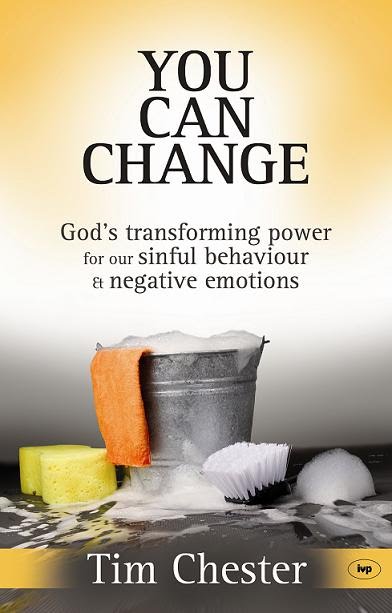 Tim Chester's You Can Change brought me to the foot of the cross, giving me a new joy in God's grace and a new motivation to change. He showed me my heart - the idols of people-pleasing and perfection, and the false beliefs that caused my anxiety and discouragement - and helped me to turn to God's glory and grace. So much heart-change in one book! You may remember that I blogged through it here.
Runners up: Martyn Lloyd Jones Spiritual Depression, Tim Chester The Busy Christian's Guide to Busyness (which I blogged through here), John Piper When I Don't Desire God, Elyse Fitzpatrick Overcoming Fear, Worry and Anxiety, Paul Tripp Lost in the Middle, and anything and everything by Ed Welch, particularly Lost in the Middle: Midlife and the Grace of God, which I'd recommend to anyone of any age.
Which books have helped you to change? Tell us here.
Monday, November 29, 2010
what I'm reading: one moment with the cross from Octavius Winslow
Here's a quote that sums up everything I've learnt about change during the last two years - and a personal favourite.

Quote is from Octavius Winslow The Foot of the Cross HT Of First Importance.
image is from Jules.K at flickr
One moment’s believing, close contact with the cross will do more to break the heart for sin, deepen the conviction of its exceeding sinfulness, and disenthrall the soul from all its bondage and its fears, bringing it into a sense of pardon and acceptance and assured hope, than a lifetime of the most rigid legal duties that ever riveted their iron chain upon the soul.

Quote is from Octavius Winslow The Foot of the Cross HT Of First Importance.
image is from Jules.K at flickr
Tuesday, November 23, 2010
how we change (14) conclusion: my story
Many months ago - on July 13th, 2009 - I started this series with a post on God's grace. It seems appropriate to finish it in the same way: with some reflections on grace I wrote last year soon after reading Tim Chester's You Can Change.
 I lie there and soak myself in God’s love.
It’s starting to dawn on me – after 30 years of being a Christian! – that nothing I do can change his love for me. No quiet times faithfully or unfaithfully performed. No backsliding into over-spending or over-eating. No failures to fulfil my responsibilities to husband or children or neighbours.
As a teenager, I’d write vows in my diary - “I promise to pray every day. I promise to read the Bible every day. I promise never to complain again.” – then wonder if God would strike me down when I broke them.
As a young woman, I’d wake in the night with a sick feeling in my stomach and write yet another midnight list of rules to control my spending, agonizing over whether I could possibly be a real Christian and give in to sin so often.
As a mother, I’d create elaborate plans for every aspect of marriage, homemaking, child-rearing and ministry, only to burn out after a month of trying to do everything and swear never to write a plan again.
None of it worked. Not for long, anyway. Until I realized that at the deepest level I’m a legalist, a perfectionist, a fulfiller of expectations, constantly trying to prove myself to God, myself, and others.
I believe the lie that I have to earn God’s love. My idol, my deepest desire, is to be worthy, complete, respected. It’s time to start believing God when he says I’m forgiven. It’s time to start resting in God’s grace.
 It doesn’t matter how other people see me. It doesn’t even matter how I see me. What matters is how God sees me, and he sees me through the lens of his grace, clothed in the perfect righteousness of his Son. He see me, and he forgives me and changes me into everything he wants me to be.
As I realize this, it’s like opening a door into a new world, glowing with grace and freedom. In this world, I don’t obey because I have to. I don’t obey because my self-concept will fall apart if I fail. I don’t obey because I’ll let people down if I don’t meet their expectations.
I obey because all I can see is Jesus dying on a cross for me.
images are from stock.xchng and from David Gunter at flickr
 I lie there and soak myself in God’s love.
It’s starting to dawn on me – after 30 years of being a Christian! – that nothing I do can change his love for me. No quiet times faithfully or unfaithfully performed. No backsliding into over-spending or over-eating. No failures to fulfil my responsibilities to husband or children or neighbours.
As a teenager, I’d write vows in my diary - “I promise to pray every day. I promise to read the Bible every day. I promise never to complain again.” – then wonder if God would strike me down when I broke them.
As a young woman, I’d wake in the night with a sick feeling in my stomach and write yet another midnight list of rules to control my spending, agonizing over whether I could possibly be a real Christian and give in to sin so often.
As a mother, I’d create elaborate plans for every aspect of marriage, homemaking, child-rearing and ministry, only to burn out after a month of trying to do everything and swear never to write a plan again.
None of it worked. Not for long, anyway. Until I realized that at the deepest level I’m a legalist, a perfectionist, a fulfiller of expectations, constantly trying to prove myself to God, myself, and others.
I believe the lie that I have to earn God’s love. My idol, my deepest desire, is to be worthy, complete, respected. It’s time to start believing God when he says I’m forgiven. It’s time to start resting in God’s grace.
 It doesn’t matter how other people see me. It doesn’t even matter how I see me. What matters is how God sees me, and he sees me through the lens of his grace, clothed in the perfect righteousness of his Son. He see me, and he forgives me and changes me into everything he wants me to be.
As I realize this, it’s like opening a door into a new world, glowing with grace and freedom. In this world, I don’t obey because I have to. I don’t obey because my self-concept will fall apart if I fail. I don’t obey because I’ll let people down if I don’t meet their expectations.
I obey because all I can see is Jesus dying on a cross for me.
images are from stock.xchng and from David Gunter at flickr
Monday, November 15, 2010
what I'm reading: when I'm still not changing from You Can Change
 Have you read You Can Change and you're still not changing? Do you keep falling back into sin? Do you wonder why you've plateaued in your growth?
Tim Chester says we can plateau for a couple of reasons: we stop fighting sin once we get rid of the obvious sins of behaviour, but never confront the more subtle sins of the heart; or we only think we've plateaued, because as we grow in godliness, the more subtle sins of the heart become clearer to us (I can testify to that!).
We might also stop growing because we're missing something. Here's Chester's summary of the steps in You Can Change, which I thought would be good revision for us all:
1. Keep returning to the cross to see your sin cancelled and to draw near to God in full assurance of welcome.
2. Keep looking to God instead of to sin for satisfaction, focusing on the four liberating truths of God's greatness, glory, goodness and grace.
3. Cut off, throw off, put off, kill off everything that might strengthen or provoke sinful desires.
4. Bring sin into the light through regular accountability to another Christian.
If you resist doing these four things, and we often resist numbers 3 and 4, it's a sign that you still treasure sin in your heart: sin is still more important to you than God. Turn to God in repentance, reflect on sin's consequences, meditate on the all-surpassing glory of Christ, and beg God to give you a love for him that eclipses your love for sin.
It's scary, isn't it, how much we resist true change! Let's keep fighting, and praying for God to help us love him more than we love sin.
Tuesday, November 9, 2010
how we change (13) a lifetime of change
 What do you expect when you pick up a book like You Can Change? Two years ago, when I started reading, I hoped that certain sinful patterns would be broken.
I chose a "change project" I'd been avoiding for years: perfectionism. As I read and worked through the exercises, I thought about self-improvement and proving myself, changing from the heart, grace and legalism, false beliefs and idols, choices and obstacles to change, disciplines and accountability. By the end of the book I'd made some breakthroughs.
It's over a year later, and where am I at? Still fighting perfectionism, that's where! Like all temptations, it's powerful, and it hasn't lessened with time. I have a better understanding of why I struggle and how to fight. Best of all, I've learned to flee to the cross. But I haven't found victory. Every day, I take up my weapons and fight again.
 Which is why the final chapter of You Can Change is a great way to finish the book. In it, Chester reminds us that, like a puppy at Christmas, change isn't for a day - it's for a lifetime. "It's a marathon, not a sprint." My sinful nature won't die until the day I die. Until then, every day, every moment, I'll be fighting. There are no days off in this war.
Once, when I found change this hard, I would have despaired. I would have tried a thousand sets of rules and resolutions, and despaired as I watched each one fail. I would have given up, because if I'm not going to change, then why bother? I needed a new motivation for change (grace, not proving myself); a new way to change (grace, not rules); and a new hope for change (grace, not willpower).
 Which brings me to the other reason I love the last chapter of You Can Change. It doesn't just remind us that change takes a lifetime; it reminds us that we can change, for we have God's grace. There are two images of God's grace that stay with me from my time reading this book:
- An image of God's grace surrounding and upholding me like an over-soft mattress (like our rather old mattress, in fact). I'll never forget the night I lay in bed and realised, more deeply than ever before, that I can't do anything to earn or change God's grace: I can only rest in it.
- An image of a stone rolling downhill. Chester pointed out, back in chapter 3, that change is less like pushing a boulder uphill and more like a boulder rolling downhill. It's harder to stop change than to keep in step with how God is changing me! Change is irrevocable and inevitable, for God's purposes don't fail.
 Change is slow, it's up-and-down, and sometimes I can't see it; but it's happening, because God's grace forgives and transforms me. I'll never stop sinning during this life. Every day, I fight for faith and repentance all over again. But God has given me everything I need to change. However often and terribly I fail, I needn't despair. I can change, because God is changing me.
We needn't and shouldn't despair...Sin is never the last word for the children of God. Grace is always the last word...There is hope for change. That hope is not in counsellors or methods or rules. That hope is a great and gracious Saviour who has broken the power of sin and placed his lifegiving Spirit in our hearts.Amen.
images are from stock.xchng
Thursday, October 21, 2010
how we change (12) supporting each other
 I often think of change as a solo effort. I change by examining my heart and filling my mind with God's truth and growing my faith and practising my repentance.
But change isn't something I do on my own. Change happens in the community of God's people. It happens as we speak the truth in love to each other (Eph 4:15, 29). It happens as, together, we grow into a community which displays the likeness of Christ.
The church is a better place for change than a therapy group, a counsellor's office or a retreat centre.Here are four things I've found help me change in community.
 1. Be honest about your sin.
Sin thrives on secrecy. The most stubborn sins are the ones no-one sees: self-pitying thoughts; harsh words behind closed doors; things we do to escape. But sin isn't meant to be kept private. God says, "confess your sins to each other and pray for each other" (Jam 5:16).
When we hide our sin, we cut ourselves off from encouragement, accountability and prayer. It's a vicious cycle, because when we keep silent, others keep silent too. Everyone assumes everyone else has it together, and we feel defeated, isolated and ashamed. "You don't have to tell everyone. But tell someone."
I love honesty, but I've learned the hard way that it must be helpful. Only tell others about your sin when it's loving and won't lead them astray. “Tell everyone you struggle; tell some people what you’re struggling with.” Confession is better upwards or sideways than downwards: confess to a mature Christian, not a young Christian.
When I feel too embarrassed to tell anyone about my sin, I remember God's words: “No temptation has overtaken you except what is common to [wo]man" (1 Cor 10:13). In my experience, mature Christian women welcome honesty and are eager to help me fight sin. A little embarrassment is worth it if it helps me change!
 2. Seek accountability.
I have two friends I can count on to ask me the hard questions. When we get together, we ask each other, "How's your prayer life going? Are you loving your husband sexually? What about that sin I know you struggle with?" We don't gossip, but we do talk honestly and encourage one another. We've agreed to SMS each other to pray during times of temptation.
If you struggle in a particular way, seek out a mature Christian, tell them the details of your sin, and ask for their advice and prayer. Give them permission to ask the hard questions - often! Organise to call or text them the moment you're tempted so they can pray for you.
 3. Speak the truth and accept it from others.
How do you respond when someone tells you about their sin? Too often, I make light of it. "You think that's bad? You should have heard me the other day!" "Yeah, we all do that." "That sounds really hard!" We can be great at sympathy, but not so good at speaking the truth in love (Eph 4:15).
When someone tells me about their sin, it's important not to play it down. I find it helpful to talk about how God has helped me with a similar sin. When possible, I ask about when they struggle and what lies and desires drive their sin, work out some practical strategies, pray for them, and follow up on the conversation later - and always, always, give them God's grace.
And if someone rebukes me, I'm learning not to laugh or shrug it off, but to listen with a humble heart. Even if their criticism is wrong, there's probably some truth in it. I pray about it and, if they're right, repent.
 4. Be part of an honest community.
Christians can be very good at pretending. It's easy to look around your church and think everyone else has it together. No wonder messed-up, broken people don't feel at home there! I love Chester's concept of church: a messy place full of broken people who are open about their struggles.
What if my church isn't like this? I can't change anyone else, but I can change me! Maybe after the service when someone asks how I am, I can talk about my struggle with impatience. Maybe during my next small group I can confess the discontent I've been battling. Maybe I can phone someone and ask them to pray for me when I'm tempted to impurity. If I'm more open, it will help others to be more open too.
Have you got any other ideas? How does the community of God's people help us to change? Have you told a mature Christian about the sin you're struggling with? What's one step you could take to seek help from other Christians as you battle sin?
Quotes and ideas are from chapter 8 of Tim Chester's You Can Change; final quote is from Chester Captured by a Better Vision 120.
images are from stock.xchng and from ShaZ Ni, rocket ship, lanuiop and Andrew Kirkley at flickr
Tuesday, September 28, 2010
how we change (11) strategies that support change
Remember that long-lost series on change? No, I haven't forgotten it! We were working through Tim Chester's You Can Change. Now we come to chapter 8: strategies that reinforce faith and repentance (and yes, I'll try to finish the series by the end of the year if you want to read along!).
 A few years ago, I planted a lemon tree. By now, it should have produced its first fruit. But it's a stunted, sad excuse for a tree. It's rarely watered and never fed, and it's shoulder-deep in weeds.
Change is like my tree. It grows in the soil of the Spirit-changed heart, from the roots of faith and repentance. But it only thrives when you water it and pluck the weeds. Temptation and harmful influences are two weeds that stunt change; God's word, prayer, Christian community, service, and (surprisingly) suffering, all feed change and help it grow.
Tim Chester says,
But wait a minute. Isn't change about grace, not rules? To grow, do we have to forbid pubs, parties, and popular movies? Do we have to practice certain disciplines: 30 minutes' prayer and Bible reading every day? Of course not! Dos and don'ts can't change our hearts. So how do these things fit into change?
 Sowing to the Spirit (watering change).
The longer I'm a Christian, the more I realise that things like prayer and Bible reading aren't a matter of rules, but a natural response to God's grace. It's hard to imagine a relationship with God that doesn't include listening to his voice (the Bible), seeking his help (prayer), encouraging his people (Christian community), and reaching out to others (service and evangelism).
I think of these things not as "spiritual disciplines" (as if there's a set of disciplines I do to gain God's blessing) but as outworkings of faith that grow my faith. Yes, doing them requires discipline; but I don't do them to get close to God, or to get God's grace - I have these already! I do them because I love Jesus, and long to grow deeper into his grace.
 Not sowing to the sinful nature (weeding change).
It's the same with things that provoke or strengthen sinful desires. What matters is not whether a certain practice is "forbidden", but the impact it has on me. I'd be crazy to do anything that jeopardises my growth. If a book fills my mind with impure images, why read it? If a certain place leads me into sin, why go there? Am I trying to be wiser than Jesus, who said to cut temptation out of my life? (Matt 5:29-30 cf 1 Tim 6:11; 2 Tim 2:22)
As Chester says, we'll want to be aware of two things: places, people or things that provoke sinful desires by exposing us to temptation, perhaps because they appeal to our particular weaknesses; and places, people or things that strengthen sinful desires by influencing us, perhaps by subtly shaping how we think.
 Some practical steps to take.
How do I make these guidelines personal? Here are two suggestions. (When I'm struggling, I do this as well as the kind of heart-work we've already talked about).
1. Take a close look at when you're tempted. What mood are you in? Where are you? What are you doing? What have you been viewing or reading? Write a list of situations, people,* places and things that it may be helpful for you to avoid.
2. Think about how to support change. Are there some Bible passages you could memorise? Would it help if you got more sleep and exercise? Is there someone you can call or text when you're tempted? Write a list of positive steps to take to support godly attitudes and actions.
Here are some examples from my own life:
- impatience and irritability: I try to get enough sleep
- gluttony: I don't buy food that is a weakness for me
- introspection: I find ways to serve others
- poor time management: I pray about my day before it begins
- perfectionism: I keep accountable to good friends
- shopaholism: I stay away from shops when I can
- anxiety: I've memorised verses about God's loving sovereignty.
Of course, none of these things replaces dealing with the deep-seated unbelief and idols of my heart. Only God's grace, working through faith and repentance, changes me on the inside. But doing these things feeds my faith, buys me time, starves sin, and supports my repentance.
If I want the tree of change to grow, it may be time to pull out some weeds and do some watering.
*I'm not saying we should avoid all the people that rub us up the wrong way, or we'd have to live on a desert island! People help us grow as we learn to love them. But we may need to stop spending time with a friend who consistently leads us into sin.
Today's post is based on chapter 8 of Tim Chester's You Can Change.
images are by GasBombGirl, Kit Keat, ashley.adcox and Flying House Studios at flickr
 A few years ago, I planted a lemon tree. By now, it should have produced its first fruit. But it's a stunted, sad excuse for a tree. It's rarely watered and never fed, and it's shoulder-deep in weeds.
The one who sows to please his sinful nature, from that nature will reap destruction; the one who sows to please the Spirit, from the Spirit will reap eternal life. (Gal 6:8)
Change is like my tree. It grows in the soil of the Spirit-changed heart, from the roots of faith and repentance. But it only thrives when you water it and pluck the weeds. Temptation and harmful influences are two weeds that stunt change; God's word, prayer, Christian community, service, and (surprisingly) suffering, all feed change and help it grow.
Tim Chester says,
Not sowing to sin = saying "no" to whatever strengthens my sinful desires = reinforcing repentance.
Sowing to the Spirit = saying "yes" to whatever strengthens my Spirit-inspired desires = reinforcing faith.
But wait a minute. Isn't change about grace, not rules? To grow, do we have to forbid pubs, parties, and popular movies? Do we have to practice certain disciplines: 30 minutes' prayer and Bible reading every day? Of course not! Dos and don'ts can't change our hearts. So how do these things fit into change?
Sowing to the Spirit (watering change).The longer I'm a Christian, the more I realise that things like prayer and Bible reading aren't a matter of rules, but a natural response to God's grace. It's hard to imagine a relationship with God that doesn't include listening to his voice (the Bible), seeking his help (prayer), encouraging his people (Christian community), and reaching out to others (service and evangelism).
I think of these things not as "spiritual disciplines" (as if there's a set of disciplines I do to gain God's blessing) but as outworkings of faith that grow my faith. Yes, doing them requires discipline; but I don't do them to get close to God, or to get God's grace - I have these already! I do them because I love Jesus, and long to grow deeper into his grace.
 Not sowing to the sinful nature (weeding change).
It's the same with things that provoke or strengthen sinful desires. What matters is not whether a certain practice is "forbidden", but the impact it has on me. I'd be crazy to do anything that jeopardises my growth. If a book fills my mind with impure images, why read it? If a certain place leads me into sin, why go there? Am I trying to be wiser than Jesus, who said to cut temptation out of my life? (Matt 5:29-30 cf 1 Tim 6:11; 2 Tim 2:22)
As Chester says, we'll want to be aware of two things: places, people or things that provoke sinful desires by exposing us to temptation, perhaps because they appeal to our particular weaknesses; and places, people or things that strengthen sinful desires by influencing us, perhaps by subtly shaping how we think.
 Some practical steps to take.
How do I make these guidelines personal? Here are two suggestions. (When I'm struggling, I do this as well as the kind of heart-work we've already talked about).
1. Take a close look at when you're tempted. What mood are you in? Where are you? What are you doing? What have you been viewing or reading? Write a list of situations, people,* places and things that it may be helpful for you to avoid.
2. Think about how to support change. Are there some Bible passages you could memorise? Would it help if you got more sleep and exercise? Is there someone you can call or text when you're tempted? Write a list of positive steps to take to support godly attitudes and actions.
Here are some examples from my own life:
- impatience and irritability: I try to get enough sleep
- gluttony: I don't buy food that is a weakness for me
- introspection: I find ways to serve others
- poor time management: I pray about my day before it begins
- perfectionism: I keep accountable to good friends
- shopaholism: I stay away from shops when I can
- anxiety: I've memorised verses about God's loving sovereignty.
Of course, none of these things replaces dealing with the deep-seated unbelief and idols of my heart. Only God's grace, working through faith and repentance, changes me on the inside. But doing these things feeds my faith, buys me time, starves sin, and supports my repentance.
If I want the tree of change to grow, it may be time to pull out some weeds and do some watering.
*I'm not saying we should avoid all the people that rub us up the wrong way, or we'd have to live on a desert island! People help us grow as we learn to love them. But we may need to stop spending time with a friend who consistently leads us into sin.
Today's post is based on chapter 8 of Tim Chester's You Can Change.
images are by GasBombGirl, Kit Keat, ashley.adcox and Flying House Studios at flickr
Wednesday, June 23, 2010
Jenny's reflections: when all your kids go to school
 And here's more reflections on the year your youngest child goes to school, from Jenny at No Reading at the Breakfast Table. I find myself going back again and again to her post What are you DOING?, about what it's been like adjusting to having no children at home. She says,
Over summer, I had a standard reply to everyone's questions about what I was going to do with ALL my spare time. I said that I planned to sit down, have a cup of tea and just stare at a blank wall for a while. In reality, it feels like three weeks ago I sat down, starting staring at the wall and then couldn't get up again - worn out from a decade (plus) of constant demands! Still haven't tidied up that play room properly yet.That's exactly how I feel, "worn out from a decade (plus) of constant demands". My feelings are a mixture of exhaustion (and I've still got a year to go in my young-child-rearing marathon!), anticipation (how I long for a few uninterrupted hours a day!), and apprehension (how I will miss having small kids at home!).
There's a kind of hollowness too, as the thing that has defined me and filled every spare moment for so many years - being pregnant and caring for very young children - is coming to an end. Who am I? How does God want me to use the years remaining to me? Will life always be this tiring? Very mid-life-crisisy, I know! But I'm realising that these are common feelings and questions for women during this season of life.
I'd love to hear your thoughts. If you're at this time of life, with your youngest child soon going to school; or if the transition has happened for you recently, or even a long time ago; or if you're anticipating it in a few years - how do you feel about it? What's your story? What are the issues you've had to deal with?
Enough rambling. More about all that another day (and yes, I do plan to come back to this issue, so please share your reflections with me!). In the meantime, you'll enjoy Jenny's posts:
Two Days, No Kids, Very Weird
Overscheduled Kids or Overscheduled Mum
What are you DOING?
Adjusting to Change (Badly)
PS to Adjusting to Change (Badly)
HT Meredith
image is from Jenny's most excellent blog No Reading at the Breakfast Table
Wednesday, February 10, 2010
how we change (10) what stops you changing?
You might remember last year's series on change. I blogged my way through 6 chapters of Tim Chester's You Can Change, and we talked about grace, legalism, and how to identify our false beliefs and idols. Today my series (finally!) continues with a post on how not to change ...
 I'm an expert on how not to change.
For over 10 years, over-spending was my besetting sin. I woke in the dark, sick to the stomach about my spending, and lay there creating elaborate plans for change that I never followed. Every conversation with my prayer-partners was peppered with confession. I sat in church and cried because I wasn't making any progress.
So what stopped me changing? Here's Tim Chester's list of proven ways not to change.
1. Proud self-reliance
 I had to despair of myself. I had to realise I was never going to get it right. I had to stop relying on my own programs for change. I also had to realise that there is a cure for despair: God's grace. God really does forgive me, and he really does promise to change me!
2. Proud self-justification
Excusing sin
I felt defeated by my sin. I felt overcome, helpless, despairing. I never dreamt I was excusing my sin. But that's exactly what I was doing:
 "True repentance grieves over sin; it never minimizes it." I'm not sure I minimized my over-spending - my heart was grieved by it (although perhaps not for the right reason, as we'll see). But these days, when my over-spending is more intermittent, I easily ignore it - and fall into old patterns of sin.
Hiding sin
3. Hating the consequences of sin, but not the sin itself.
 Yes, that was me! I wanted to avoid the consequences of sin without having to avoid sin. Although in my case it was the consequences of sin - a very large credit card debt - that forced me to change. At this point, I would have done anything! I cut off the things I loved: I kept out of shops when possible, and bought nothing unnecessary for months, until spending was no longer a habit.
I still struggle with besetting sins (don't we all!). I'm still tempted to despair when I can't seem to change. But if God helped me overcome 10 years' addiction to spending, he can help me with anything. So I move forward with greater confidence, knowing - from personal experience! - that there is hope for change. I can look back on yesterday's failures knowing I'm forgiven, and I can step into today knowing that God is transforming me through his grace.
All quotes are from chapter 7 of Tim Chester's You Can Change; asterisked quotes are cited in this chapter, and are by Jerry Bridges and Ed Welch; emphases are mine.
images are from stock.xchng except for third image which is by baking_in_pearls from flickr
 I'm an expert on how not to change.
For over 10 years, over-spending was my besetting sin. I woke in the dark, sick to the stomach about my spending, and lay there creating elaborate plans for change that I never followed. Every conversation with my prayer-partners was peppered with confession. I sat in church and cried because I wasn't making any progress.
So what stopped me changing? Here's Tim Chester's list of proven ways not to change.
1. Proud self-reliance
We're often more interested in our personal victory over sin than in pleasing God. We're mad at ourselves because we keep sinning. At the root of this is the belief that we can - or should - be strong enough to overcome our sin!Proud perfectionist that I am, this sums me up nicely. But 10 year's struggling with the same sin brought me to the end of myself. At this point there are only two steps to take:
If you're frustrated at your inability to change, then your first step is to give up - to give up on yourself. Repent of your self-reliance and self-confidence. Your second step is to rejoice in God's grace: his grace to forgive and his grace to transform.
 I had to despair of myself. I had to realise I was never going to get it right. I had to stop relying on my own programs for change. I also had to realise that there is a cure for despair: God's grace. God really does forgive me, and he really does promise to change me!
2. Proud self-justification
Excusing sin
I felt defeated by my sin. I felt overcome, helpless, despairing. I never dreamt I was excusing my sin. But that's exactly what I was doing:
When I say I am defeated by some sin, I am unconsciously slipping out from under my responsibility. I am saying something outside of me has defeated me. But when I say I am disobedient, that places the responsibility for my sin squarely on me. We may, in fact, be defeated, but the reason we are defeated is because we have chosen to disobey.*Minimizing sin
 "True repentance grieves over sin; it never minimizes it." I'm not sure I minimized my over-spending - my heart was grieved by it (although perhaps not for the right reason, as we'll see). But these days, when my over-spending is more intermittent, I easily ignore it - and fall into old patterns of sin.
Hiding sin
"It is one thing to make a resolution; it is something completely different to repent, diligently seek counsel, and, in concert with others, develop a plan that is concrete and Christ-centred."* ... Are you confessing your sin to a trusted Christian? ... Have you told those, such as your spouse, who are affected by your sin?I was always open about my sin, which won't surprise any readers of this blog! But I think my honesty was actually a way to keep others at arms' length (because if I accuse myself, you won't have to). My honesty wasn't really a way to seek help to develop a plan for change. I remember a friend saying, "Why don't you just get rid of your credit card?" I squirmed uncomfortably and ignored her advice. Which leads us to the next point ...
3. Hating the consequences of sin, but not the sin itself.
Often, we don't change because we don't really want to. ... We often want to change the consequences of sin, but not the sin itself. ... People ask me to help them sort out the mess of their lives, but they don't really want to change the behaviour that's creating the mess. ... We need to be violent with sin. If we hold back, it's almost certainly because we don't want to be violent towards something we still love.
 Yes, that was me! I wanted to avoid the consequences of sin without having to avoid sin. Although in my case it was the consequences of sin - a very large credit card debt - that forced me to change. At this point, I would have done anything! I cut off the things I loved: I kept out of shops when possible, and bought nothing unnecessary for months, until spending was no longer a habit.
I still struggle with besetting sins (don't we all!). I'm still tempted to despair when I can't seem to change. But if God helped me overcome 10 years' addiction to spending, he can help me with anything. So I move forward with greater confidence, knowing - from personal experience! - that there is hope for change. I can look back on yesterday's failures knowing I'm forgiven, and I can step into today knowing that God is transforming me through his grace.
All quotes are from chapter 7 of Tim Chester's You Can Change; asterisked quotes are cited in this chapter, and are by Jerry Bridges and Ed Welch; emphases are mine.
images are from stock.xchng except for third image which is by baking_in_pearls from flickr
Monday, December 7, 2009
of trees, trains and Christian growth
 There's a stand of huge old oak trees in the park where I walk. They have a slightly surprised air, as if they've been transplanted from a genteel English landscape and are wondering how they ended up here, surrounded by scruffy wattle trees under a burning Australian sun, with graffiti tags on their trunks and white cockatoos squawking from their branches like rowdy antipodean visitors.
Like all oaks, they are firmly rooted, growing down and out as much as up, offering a dense, dark shade. Every year of their long lives, they have put out new growth in spring, watched it harden into summer's dusty green, lost dry brown leaves in autumn, and bared their twisted black limbs in winter.
 There's a railway track running through the park. I watch the trains gleam and flash through the trees, humming and creaking over the heritage-listed timber bridge on its sturdy, numbered trestles. The trains are always in a hurry, tooting their horns, bustling self-importantly to the next station.
For over a century, the oaks have grown steadily as the trains have shed old fashions and adopted new ones—steam trains, red rattlers, blue trains, sleek silver trains, silver trains with green and gold, silver trains with blue and yellow stripes. (This is a Melbourne story; no doubt in your part of the world, the trains have different fashions.)
The trees and the trains bring to mind a Bible verse I read recently:
Therefore, as you received Christ Jesus the Lord, so walk in him, rooted and built up in him and established in the faith, just as you were taught, abounding in thanksgiving. (Col 2:6-7)
We don't grow as Christians by hurrying from place to place, taking on the colour of each year's new spiritual fad—second blessings, signs and wonders, slayings in the Spirit, guiding visions. We grow in the same way God's people have always grown: by sinking our roots deeper into Christ. Here, fed and nourished by the gospel, we gain an enduring wisdom. We give shelter. We stand firm through all the seasons and storms of life.
May God help us to be more like trees than trains.
This is reprinted from last Friday's post in The Sola Panel.
images are from formalfallacy and Mugofevil at flickr
Tuesday, November 17, 2009
a worksheet for changing your behaviour
 A couple of months ago, I posted some questionnaires to help you identify the lies and idols of your heart. Since then, we've talked about how important it is to not just change our thinking, but also to change our behaviour - to put off the old self and put on the new (Eph 4:22-24).
Today I'd like to tell you about a worksheet, inspired (again!) by Elyse Fitzpatrick's Idols of the Heart, to help you take practical steps to change your attitudes and actions.
Choose a habitual sin that you struggle with, or a persistent negative emotion like anger, guilt, despondency or anxiety. Draw up four columns on a page. Write these headings and questions at the top of the columns:
Put off
What attitudes and actions does God want you to put off?
What areas of temptation can you cut out?
Renewed thoughts
What thoughts of God’s truth and the gospel would help you combat these attitudes and actions?
Put on
What attitudes and actions does God want you to put on?
What would support this change (e.g. memorising relevant Bible verses, being accountable to someone)?
Specific actions
What specific steps can you take to start practising these new attitudes and actions?
What specific steps can you take to support this change?
I hope you find this as helpful as I have!
adapted from the worksheet in Elyse Fitzpatrick's Idols of the Heart 176
image is by TheAlieness at flickr
Tuesday, November 10, 2009
Martyn Lloyd Jones: the practicalities of putting off

You were taught, with regard to your former way of life, to put off your old self, which is being corrupted by its deceitful desires; to be made new in the attitude of your minds; and to put on the new self, created to be like God in true righteousness and holiness. (Eph 4:22-24, my emphasis)It's all very well to say "put off" the old self and "put on" the new. How do you do it in practice? Last week I shared an excerpt from Martyn Lloyd Jones's Exposition of Ephesians where he talks about the "principle" of putting off the old self. This week, I'd like to share his "practical application", where he tells us how to put off the old self.
If you're observant, you'll notice that these"how to's" are very similar to Tim Chester's in You Can Change. Martyn Lloyd Jones's first three points are really about faith: remembering who we are in Jesus. His fourth and last are about repentance: turning from sin. His fifth point is about avoiding temptation, one of Chester's strategies for supporting faith and repentance that we'll cover later this term.
The first essential is, that we have to remind ourselves of who we are and what we are. ...The whole art of Christian living is to know how to talk to yourself. ... A Christian is a preacher, he preaches to himself. You start your day by telling yourself, Now I am the new man, I am no longer the old man; my old man has been crucified with Christ ... It is not surprising that we fail so much. We do not start the day as we should. We groan, Here are these thoughts again, and here is the problem, another eighteen hours or so before me, what can I do? And before we realise it, we are already defeated. Let us therefore remind ourselves who we are ...
The second essential follows obviously ... We are to remind ourselves again of the nature and the character of the old life. [Eph 4:17-19, 22] ...I suppose I have to say this more frequently than anything else in my pastoral work. People come about particular problems; they tell me that they have been praying to be delivered ... I say to them, Have you ever really looked this thing in the face? You are frightened of it, you are running away from it, you are cowering ... But now, wait a moment. Examine this thing, put it up in front of you, analyse it and dissect it, see it for what it is. That is half the battle. And then ... you will see that the whole thing must be got rid of. Look at it and face it, instead of running away from it. ...
And then there is a third point. Impress upon yourself the utter inconsistency of claiming to be a Christian but continuing to live in the old way.So obvious, is it not? And yet how we all fail to do it! You have to ... say to yourself: ... I am being utterly inconsistent ... As a Christian ... I am saying that I am a partaker of the divine nature, that Christ died to rescue me from this present evil world, that I have been translated from the kingdom of darkness into the kingdom of God's dear Son. ... Is my conduct and my behaviour to be that of the old realm when I claim to belong to this new realm? [Phil 1:27] ... There are certain things that are incompatible with this new life. Put them off! Get rid of them!
But we must go on to the next step of obedience to the gospel. ... Have nothing at all to do with the works of darkness. [Eph 5:11]Be drastic. Have no dealings at all with them. ... Watch the beginning. Have no parleying, have no discussion, have nothing at all to do with sin ... The moment you even listen to the devil you have practically gone under. If you have a discussion with him, ... you are already beaten, he will defeat you every time; he is subtle, he is clever ... If you begin to have any parleyings with sin, you are done for. ... If you are in doubt about a thing, say No! Err on that side rather than on the other. Things that are even doubtful should not be touched. [Rom 14:23]
Next we come to another positive injunction which I want to emphasise. ... Do not be fool enough to lead yourself into temptation. [Rom 13:14]There are certain places that are bad for you - Stay out of them! ... You know beforehand that if you go in, the flesh will be stimulated. ... Therefore, never go into such a place. And not only places, but also people. ... You do not pray about this, you do not argue, you do not need special guidance about this. If experience teaches you that such a person invariably tends to have a bad influence upon you, avoid such a person. ... The same holds good with respect to reading ... So be discriminating and careful as you read ... Avoid that which tends to harm you and to drag you down. ... If there is something that is enticing, do not look at it! ... Make a covenant with your eyes, look straight on [Job 31:1, 7, Prov 4:25], do not let your eyes wander, do not let them lust after things, do not let them turn from the straight path ... : you do not merely pray about it; you must just not look! ...
And that brings me to the last principle - I have tried to put the principles in ascending order - ... mortify the flesh [Rom 8:13, Col 3:5] ...Mortify means to deaden, it means deliberately to attack, it means to starve ... 'I keep under my body, and bring it into subjection'! [1 Cor 9:25, 27]. ... I am like a boxer, I am not beating the air, I am pummelling myself, I am hitting myself black and blue, I am giving myself black eyes; that this flesh may not get me down. I keep my body under, and bring it into subjection. ... So we not only do not make provision for the flesh, we must mortify the flesh, keep it under, keep it down, realising that unless we do so, it will get us down temporarily and we shall be living a contradictory life. ...
Put off the old man! And do it in detail. The Apostle goes on to details - lying, stealing, corrupt communications. He takes them up one by one, and he says you have to apply the principles with regard to every single item. And thus you will put off the old man that is corrupt and dying and decaying, ... that we may no longer disgrace the fair and glorious name of our blessed Lord and Saviour Jesus Christ.


from Martyn Lloyd Jones's comments on Ephesians 4:22-24 in his Exposition of Ephesians; longer emphases mine
images are from Hope., tilaneseven, adedip, ashley.adcox, Phil Dragash, Geekgirly, and Alva+Chien at flickr
Tuesday, November 3, 2009
Martyn Lloyd Jones: don't pray, put off!
A week ago I talked about how important it is that we don't just work on changing our attitudes, but also our behaviour. So I was interested to hear about a conversation my friend Jenny had a couple of weeks ago about this very topic.One of her friends told her how helpful she'd found Martyn Lloyd Jones's reflections on Ephesians 4:22-24:
You were taught, with regard to your former way of life, to put off your old self, which is being corrupted by its deceitful desires; to be made new in the attitude of your minds; and to put on the new self, created to be like God in true righteousness and holiness. (Eph 4:22-24, my emphasis)She kindly sent Martyn Lloyd Jones's commentary on these verses to me, and because it's not easy to get hold of - unless you have all 8 volumes of his Exposition of Ephesians! - I'll post an excerpt this week and next week.
You'll enjoy the story about the lady and the thunderstorms! Or you might like to print the whole quote out and reflect on it as you read the Bible sometime this week.
It is not enough just to say, Put off the old man, put on the new! ... The "putting off" is something that the Christian has to do. It is not something that is done for him. ...Putting off the old man is not something that is to be prayed about. That sounds most unspiritual, does it not? Imagine a preacher in a Christian pulpit telling people that they are not to pray about this matter! ... Not at all, says Paul; ... put off the old man; get on with it! There is something almost violent about this; and I think it needs violence, because there is a great deal of sickly sentimentality and false piety concerning this matter, which leads certain people to live a kind of spiritual life ever in the doldrums. ...
But what if a believer talks about his lack of strength and power? The answer to that is, that as a regenerate creature, a new-born being, he has the power. If in the New Testament we are commanded to do a thing, we may rightly expect to receive from the Lord the power to do it ...Many years ago a lady came to see me about a problem which had been crippling her life for about twenty-two years. It may sound to others a trivial thing, but it was spoiling her life. She had a phobia, a terror, a horror, of thunderstorms. She once had been in a terrible thunderstorm and thought she was going to be killed, and that had fixed on her mind. And in the end it had come to this, that if she were walking to her place of worship on a Sunday morning and happened to see a black cloud, this fear would immediately suggest a coming thunderstorm, and instead of going to church she would go home because of her fear. This phobia had taken many forms: it had prevented her doing many things she had wanted to do, and it had created difficulties in the family; one can imagine the problems that would arise. ... Well now, I said, what have you been doing about it? She replied, I have done everything I can; I have talked to all sorts of people. I said, I suppose you have prayed about it? She said, I pray and nothing else, I am always praying about it. I replied, That is probably why the problem has persisted! And I continued, What you need is not to pray, but to think! And then I simply pointed out to her what a bad testimony this was in a Christian person such as she was; had she ever thought of that? Had she ever asked herself the question, Why should I be more afraid of a thunderstorm than anybody else? If all these other people can continue their journey to a place or worship, why should not I? Why is this trouble so peculiar to myself? She had never thought of that. Instead, she had been praying sincerely and honestly, and with great intensity, for twenty-two years to be delivered from the fear of thunderstorms, but the fear remained and was increasing. ...
There are points ... about which you do not need to pray, but you do need to think and to apply the doctrine. You put off the old man! You need not pray for guidance about this! ... This is not a matter of praying, this is a matter of doing. And so we see that the devil in his subtlety and as an angel of light can sometimes encourage us to pray in a blind and unintelligent manner ...
Many Christians are familiar with the teaching which says ... 'Let go and let God!' ... and there are people who have been trying to practise it. But they have not been delivered from their troubles. They may have had temporary deliverance while they were in meetings, but the trouble comes back again ...You do not ask God to take the old man from you, you put him off! ... We do not just wait passively, or relax and expect it to be accomplished for us. Not at all! Put off! Stop doing certain things ... If you and I are born again, the Spirit of God and of Christ is in us, the Holy Spirit is in us, the power is there. And we have to realise this, and in the strength of divine might and power we act, we do this thing. ...
You have got to do it, and I have got to do it; it is not done for us; evil is not all taken out of us in a marvellous, thrilling experience ... And it is to be done through the Spirit ... ; ... in his power ... Such is the Christian! ... Put off the old man!


All very well! But how do you do this in practice? Next week, I'll share Martyn Lloyd Jones's practical suggestions for putting off the old self. If you'd like to see the full excerpt, please contact me.
images are from Hope.*, nicky.reynolds, rachel titriga and thescotty from flickr, except for image of lightning, which is from stock.xchng
Wednesday, October 28, 2009
CS Lewis on love, feelings and the will
 On Monday I mentioned that it's not just our beliefs that change our behaviour, but also our behaviour that changes our beliefs.
Actually, it's not so much that our behaviour changes our beliefs (change is from the heart) but that our behaviour strengthens our beliefs when it comes from a changed heart.
If a small, weak, faltering faith acts in love and obedience, this love and obedience will rebound and grow that faith. Faith and repentance grow stronger as they express themselves in love.
Here CS Lewis says something similar: that the choice to love grows the feeling or attitude of love.
Love, in the Christian sense, does not mean an emotion. It is a state not of the feelings but of the will ...
Do not waste time bothering whether you 'love' your neighbor; act as if you did. As soon as we do this we find one of the great secrets. When you are behaving as if you loved someone, you will presently come to love him. ...
This same spiritual law works terribly in the opposite direction. ... The more cruel you are, the more you will hate; and the more you hate, the more cruel you will become — and so on in a vicious circle for ever.Good and evil both increase at compound interest. That is why the little decisions you and I make every day are of such infinite importance. The smallest good act today is the capture of a strategic point from which, a few months later, you may be able to go on to victories you never dreamed of. An apparently trivial indulgence in lust or anger today is the loss of a ridge or railway line or bridgehead from which the enemy may launch an attack otherwise impossible. ...
On the whole, God's love for us is a much safer subject to think about than our love for Him. Nobody can always have devout feelings: and even if we could, feelings are not what God principally cares about. Christian Love, either towards God or towards man, is an affair of the will. If we are trying to do His will we are obeying the commandment, 'Thou shalt love the Lord thy God'. He will give us feelings of love if He pleases. We cannot create them for ourselves, and we must not demand them as a right. But the great thing to remember is that, though our feelings come and go, His love for us does not. It is not wearied by our sins, or our indifference; and, therefore, it is quite relentless in its determination that we shall be cured of those sins, at whatever cost to us, at whatever cost to Him.

from CS Lewis Mere Christianity chapter 9
images are from Divine Harvester and ' B a r c a at flickr
Subscribe to:
Posts (Atom)